

PPDT gets 18 new members as Judiciary prepares for 2027 elections

AI summary
**NAIROBI, Kenya, Nov 17 — Chief Justice Martha Koome has called for early preparations to strengthen the resolution of political party disputes ahead of the 2027 General Election. **
The CJ has warned that electoral justice will depend on the independence, efficiency and preparedness of the institutions mandated to handle disputes.
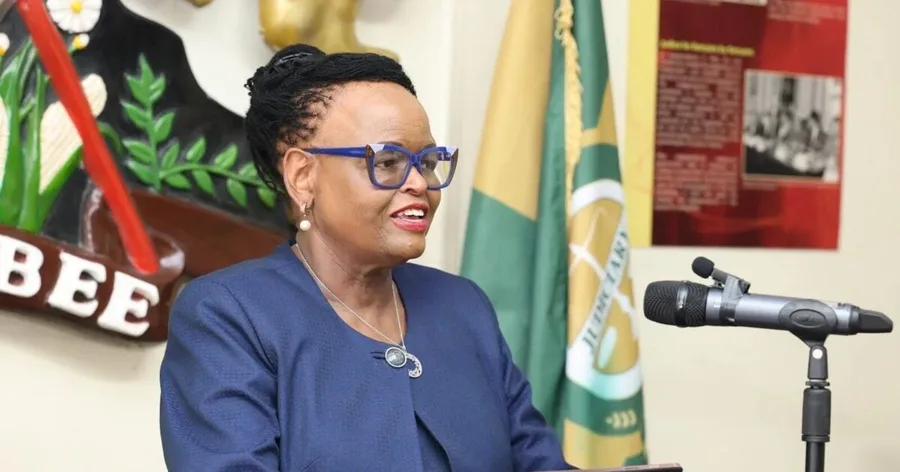
Koome made the remarks on Tuesday while presiding over the swearing-in of 18 newly appointed ad hoc members of the Political Parties Disputes Tribunal (PPDT), in a move aimed at boosting its capacity ahead of the election period.
The swearing-in ceremony was conducted by Chief Registrar of the Judiciary Winfridah Mokaya.
Koome said the integrity of elections begins within political parties, particularly in how they conduct internal affairs, undertake nominations, resolve disagreements and protect the rights of their members.
Koome made the remarks on Tuesday while presiding over the swearing-in of 18 newly appointed ad hoc members of the Political Parties Disputes Tribunal (PPDT), in a move aimed at boosting its capacity ahead of the election period/Judiciary Press
She urged the Tribunal to build on the experience gained during the 2022 electoral cycle to strengthen public confidence in electoral justice and ensure disputes are resolved within the required timelines.
During the 2022 pre-election period, the Tribunal heard and determined 314 disputes, supported by the deployment of 18 ad hoc members and the establishment of eight panels across seven stations.
The Chief Justice also cited the adoption of electronic filing, the Case Tracking System and virtual hearings as measures that improved access to justice and enhanced the Tribunal’s capacity to handle disputes.
Ahead of the 2027 polls, she called for comprehensive early preparation, enhanced training of Tribunal members, stronger case management, sustained decentralisation and improved quality of decisions.
Koome emphasised that electoral justice must be both timely and legally sound, with decisions that are well reasoned, consistent with established jurisprudence and supported by effective remedies.
She also urged political parties to strengthen their internal dispute resolution mechanisms and called for closer coordination among institutions to minimise uncertainty in the handling of electoral disputes.
The Registrar of Tribunals, working with the PPDT, the Judiciary Committee on Elections and the Kenya Judiciary Academy, was tasked with developing a comprehensive 2027 readiness plan.
The plan will cover training, staffing, technology, regional operations, public communication and performance standards.
Addressing the newly sworn-in members, Koome cautioned against political pressure, personal interests and external influence, urging them to discharge their responsibilities with independence, impartiality and integrity.
She said their decisions should be guided solely by the Constitution, the law and the evidence, particularly given the politically charged environment surrounding electoral disputes.
The 18 appointments comprise nine members under Section 39A(1)(a) and another nine under Section 39A(1)(b) of the Political Parties Act.
Those appointed under Section 39A(1)(a) are Brian Nyabuti Onderi, George Ngugi Gathuka, Joyann Makena Mbwiria, Maulline Gragau, Ogada Alvin Meso, Ruth Akoth Otieno, Abigael Buyanzi Samin, Bennette Wamwene Nzamba and Jane Wanjiku Ngochi.
The members appointed under Section 39A(1)(b) are Victor Kiari Machoka, Mohamed Omar Haji, Antony Mmbaya Lumula, Alfred Otieno Onde, Namae Rose Sitati, Boaz Oyoo Were, Andrew G. Waruhiu, Joseph Riwongole Ngoriakou and Isaiah Sifuna Walubengo.
The PPDT is mandated to determine disputes between members of political parties, between political parties and their members, and between different political parties.
Its jurisdiction also covers disputes involving independent candidates and political parties, as well as disagreements arising from coalition agreements, as provided for under the law.
The Tribunal provides a specialised forum for resolving internal party disputes and plays a key role in promoting internal party democracy, accountability and compliance with constitutional and statutory requirements.
Its capacity to handle disputes is expected to come under increased pressure as political parties prepare for the 2027 General Election, particularly during nomination processes and the formation of political coalitions.
Follow the story
About this article
- Length
- 630 words · 3 min read
- Published
- November 17, 2026
- Byline
- Capital FM
- Source
- Capital FM Kenya