

Ato Forson woos investors with US$10bn New Economy investment plan

AI summary
Finance Minister Dr Cassiel Ato Forson has called on local and international investors to take advantage of opportunities under the government’s New Economy programme, backed by a planned US$10 billion public investment over four years.
He said the investment would target key sectors of the economy to expand local production, support business growth and create jobs.
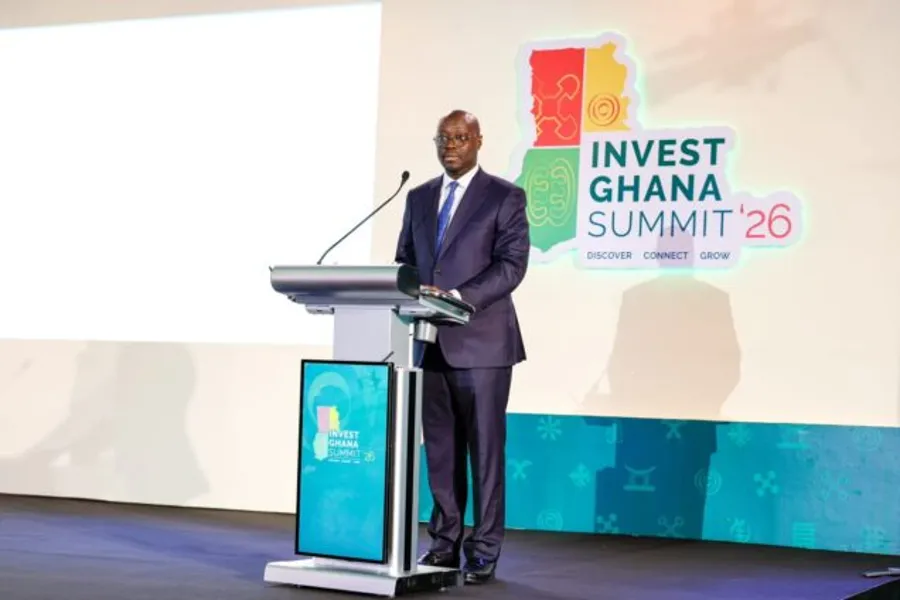
Speaking at the Invest Ghana Summit in Accra on November 16, Dr Forson urged investors to establish and expand businesses in Ghana to serve both the domestic market and the wider African region.
“Ghana is ready to produce more at home and sell more to the world,” he said.
The Minister explained that the four-year investment plan had been outlined in the 2027 Budget, with more than US$2.5 billion earmarked for 2027 alone.
He said government would channel resources into electricity, irrigation and transport infrastructure to improve the operating environment for businesses under President John Dramani Mahama’s New Economy programme.
Dr Forson identified macroeconomic stability, fiscal discipline and access to affordable financing as essential conditions for attracting investment and supporting long-term business growth.
“Fiscal discipline will protect the stability that allows you to price a contract, finance a factory and invest for the long term,” he stated.
He outlined investment prospects in agriculture, energy, mineral processing, manufacturing, tourism and technology.
In agriculture, he said the planned establishment of rice hubs would create opportunities for investors in irrigation, storage, milling and packaging.
Government is also proposing that public institutions prioritise locally produced rice and other food staples, creating a potential market for local processors capable of meeting quality standards and maintaining consistent supply.
On energy, the Finance Minister said improved power supply would enable factories to maximise the use of existing equipment, increase production and operate additional shifts.
He encouraged businesses to explore opportunities in solar energy, battery storage, equipment supply and industrial power system maintenance.
Dr Forson also announced opportunities in the Western Region, where government is establishing a critical minerals processing enclave to attract investment in plants that would transform locally mined manganese and bauxite into higher-value products.
He said the manufacturing sector also offered prospects in garments and pharmaceuticals, particularly for businesses capable of supplying uniforms, protective clothing and medicines to meet local demand and compete for orders across Africa.
The Minister further identified tourism and the creative arts as areas with investment potential in hotels, entertainment venues and productions.
Technology companies, he added, could support businesses with digital platforms for reaching customers, processing payments and facilitating the movement of goods across borders.
He urged investors to factor in the African Continental Free Trade Area (AfCFTA) when determining the scale of their operations in Ghana, noting that the country could serve as a production base for the wider African market.
“Your first customer may be in Ghana. Your next market could be anywhere on the continent,” he said.
Dr Forson encouraged local businesses to present expansion proposals they had been unable to finance, while urging international investors to partner with Ghanaian companies with knowledge of the local market.
He also called on banks and development finance institutions to work with prospective investors to identify financing arrangements for viable projects.
The Finance Minister challenged participants to turn discussions at the summit into concrete investment commitments, urging them to leave with potential partners, projects to explore and follow-up meetings scheduled.
“I would like you to leave Accra with a partner you can call, a project you can examine and a meeting in the diary,” he said.
He concluded by inviting businesses to invest in Ghana, expand local production and take advantage of opportunities in the country’s economy.
“Invest in Ghana, produce here and grow with us.”
READ ALSO:
MIIF exceeds 2026 mineral royalty target with over GH¢9bn collected by November
Nsafoah Poku blames BoG liquidity mop-up for slowing economic growth
Follow the story
About this article
- Length
- 636 words · 3 min read
- Published
- November 17, 2026
- Byline
- Faridatu Seidu
- Source
- Adomonline.com