

Study reveals rising ‘double threat’ of wildfire smoke and heatwaves in Indonesia

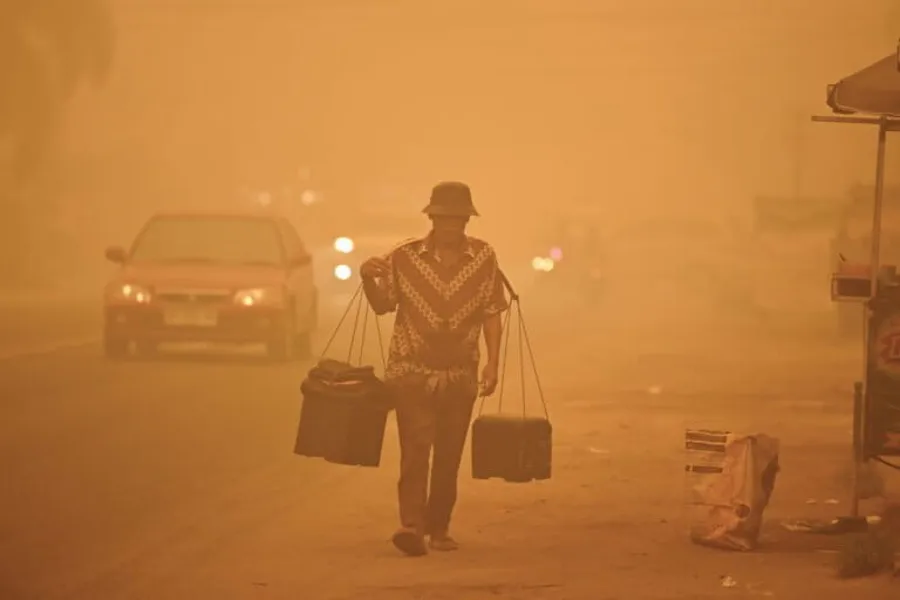
JAKARTA — While the worst of Indonesia’s wildfire and haze season for 2026 may be over with fewer hotspots detected in recent weeks, this wasn’t the only hazard faced by residents in the months-long crisis. Take, for example, Palangka Raya in Central Kalimantan province, one of the areas worst affected by this year’s wildfires in the country. From August to October 2026, fine-particle pollution in the provincial capital averaged nearly 10 times the 2021 to 2025 level, according to data from Indonesia’s meteorological agency, BMKG. Meanwhile, as haze choked the city in August, its residents also experienced a heatwave, according to data from BMKG. Exposure to wildfire air pollution and heatwaves on the same days has become more common globally, according to a new study published in the journal Science Advances. Researchers from Monash University, in Melbourne, Australia, analyzed 20 years of data, from 2000 to 2019, and found that, on average, 916 million people, or 56% of the global population, experienced one co-exposure day annually. The total number of people increased by 287 million from one decade to the next, according to the study. The top five countries worst affected were the Democratic Republic of the Congo, Indonesia, Mexico, Brazil and Russia. The study blamed the double exposure on climate change, saying it “has increased the frequency and intensity of concurrent heatwaves and landscape fire events, resulting in more profound impacts.” A student goes to school wearing a mask in the haze that blankets the city of Palangka Raya,…This article was originally published on
Mongabay
Follow the story
About this article
- Length
- 256 words · 1 min read
- Published
- November 25, 2026
- Byline
- Winda Charmila
- Source
- Conservation news