

Nigerian Air Force Plane Crash in Ondo: Unanswered Questions and What We Know About the NGR 931 Tragedy

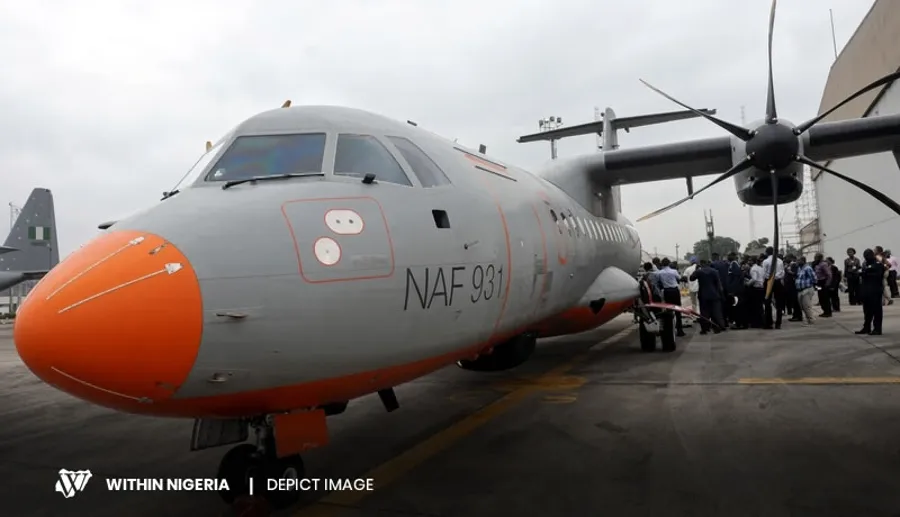
A Nigerian Air Force aircraft carrying 32 people went down in a swamp in Igbokoda, Ondo State, on Monday morning, October 5, 2026. Rescuers found no survivors. By Tuesday, the families of those on board were waiting for names, and the rest of the country was waiting for answers.
The plane was an ATR-42 with the tail number NGR 931. It was flying from Benin City to Lagos on what the Nigerian Air Force (NAF) called a routine mission. At about 9:13 a.m., air traffic controllers lost contact with it. It came down in a swampy stretch of land opposite the Naval Base in Igbokoda, the headquarters of Ilaje Local Government Area.
Here is a plain account of what has been confirmed, what is still unclear, and why this crash has reopened an uncomfortable conversation about military aviation in Nigeria.
The NGR 931 crash at a glance
-
Date:
Monday, October 5, 2026
-
Aircraft:
Nigerian Air Force ATR-42, tail number NGR 931
-
Route:
Benin City to Lagos
-
People on board:
32, made up of 25 passengers and seven crew, according to Aviation Minister Festus Keyamo
-
Last contact:
about 9:13 a.m.
-
Crash site:
swamp opposite the Naval Base, Igbokoda, Ilaje LGA, Ondo State
-
Survivors:
none found, per Ondo State Governor Lucky Aiyedatiwa
-
Cause:
not yet established
How the news broke
Word of the crash did not arrive cleanly. Early reports from Igbokoda spoke of a helicopter coming down, and a resident told one newspaper exactly that. Residents of the riverside town had heard a loud blast from the direction of the waterways, and people rushed towards it.
Minister Keyamo then went public on X, saying air traffic controllers had told him a military aircraft with tail number NGR 931 had disappeared while heading to Lagos from Benin. The Nigerian Air Force followed with its own statement. Its Director of Public Relations and Information, Air Commodore Ehimen Ejodame, confirmed an ATR-42 had crashed in the Igbokoda area and said a search and rescue operation had been activated, working with other agencies.
That corrected the helicopter story. It also confirmed what many had feared by mid-morning: this was a large aircraft with a lot of people on it.
What witnesses and rescuers found
Governor Aiyedatiwa said word of the crash reached him at about 10:30 a.m. Speaking on Channels Television, he said witnesses reported seeing the aircraft dive into the swamp. Rescue teams recovered sections of a wing, identification cards and military uniforms, which helped confirm quickly that it was a military plane. He said they could not find anyone alive.
Michael Achimugu, the Nigerian Civil Aviation Authority’s director of public affairs, told reporters that bodies were being recovered from the wreckage.
Residents who spoke to Daily Trust described a harder picture. One person said he saw pieces of the plane, scattered clothes and body parts on the waterlogged ground, with other bodies still in the water. Press reports say the passengers included family members of military personnel, alongside military men and the crew.
Several agencies joined the response: the Nigerian Navy, whose base sits right across from the crash site, the National Emergency Management Agency (NEMA), the Ondo State Emergency Management Agency, the police and the Nigerian Red Cross. The governor also directed the state’s emergency and security agencies to help the Air Force secure the site.
Who was on board?
This is the question the families are asking, and officially there is no answer yet. The Presidency has said the Air Force will release the names of the dead only after their families have been contacted. As of Tuesday morning, no list had been published.
You will see names and ranks floating around on social media and in some online reports. Treat them with caution until the Nigerian Air Force confirms them. In a crash like this, rumours move faster than facts, and a wrong name can reach a family before the official call does.
What the government has said
President Bola Tinubu ordered the Nigerian Air Force to begin a full investigation immediately. In a statement, he said he had been briefed by the Chief of Air Staff and wanted the cause found so that a repeat could be prevented. He also sent condolences to the families of the passengers and crew and to the NAF.
Keyamo made a point of saying that the control and regulation of military aircraft fall outside the Ministry of Aviation and the NCAA. He said he had spoken with the Chief of Air Staff and promised the ministry’s full cooperation in the rescue effort.
That distinction matters for the investigation. The Nigerian Safety Investigation Bureau (NSIB), which handles civil aviation accidents, has said it can take part only if the Air Force formally invites it. Whether that invitation comes is one of the things to watch in the coming days.
What caused the crash?
Nobody knows yet, and anyone who tells you otherwise is guessing.
The Air Force has not given a cause, and there has been no official word on the weather at the time, the condition of the aircraft, or what the crew reported before contact was lost. Investigators will normally look at the wreckage, the flight recorders if they are recovered intact, air traffic control records and the maintenance history of the plane. That work usually takes weeks, and often longer.
What can be said is that the ATR-42 is a twin-engine turboprop widely used for regional flights, and that the Nigerian Air Force flies the type on missions that include maritime patrol and surveillance.
A troubled history that people have not forgotten
The crash lands in a country where military air accidents have left a long trail of grief. The Guardian noted that this latest accident has renewed scrutiny of the military’s record of aviation losses over the past decade.
The memory most Nigerians reach for is 2021. In February of that year, an Air Force Beechcraft King Air 350i crashed short of the Abuja airport runway after reporting engine failure, killing all seven people on board. Three months later, on May 21, another King Air crashed near Kaduna airport in poor weather, killing 11 people, including Chief of Army Staff Lt. Gen. Ibrahim Attahiru. A safety audit of the Air Force’s operational and engineering units was ordered after those accidents.
Further back, in September 1992, an Air Force Hercules C-130 crashed shortly after taking off from Lagos, killing all 158 people on board. It stands among the deadliest military air disasters the country has seen.
None of this says anything about what happened on NGR 931. But it explains why so many people want the investigation to be open, and why they will want to see its findings published, not filed away.
Frequently asked questions
What happened to the Nigerian Air Force plane in Ondo State?
An ATR-42 with tail number NGR 931 crashed into a swamp near the Naval Base in Igbokoda, Ilaje LGA, on Monday, October 5, 2026, after losing contact with air traffic controllers at about 9:13 a.m. It was flying from Benin to Lagos.
How many people were on board?
Aviation Minister Festus Keyamo said 32 people were on the aircraft: 25 passengers and seven crew members. The Ondo State governor said rescuers found no survivors.
What caused the NGR 931 crash?
The cause has not been established. President Tinubu has directed the Nigerian Air Force to carry out a thorough investigation.
Will the NSIB investigate?
The Nigerian Safety Investigation Bureau says it can take part only if the Nigerian Air Force formally invites it.
The post Nigerian Air Force Plane Crash in Ondo: Unanswered Questions and What We Know About the NGR 931 Tragedy appeared first on WITHIN NIGERIA.
Follow the story
About this article
- Length
- 1,285 words · 6 min read
- Published
- October 6, 2026
- Byline
- paulcraft
- Source
- Within Nigeria