

Cricket Cranes: From second-round surge to Final heartbreak

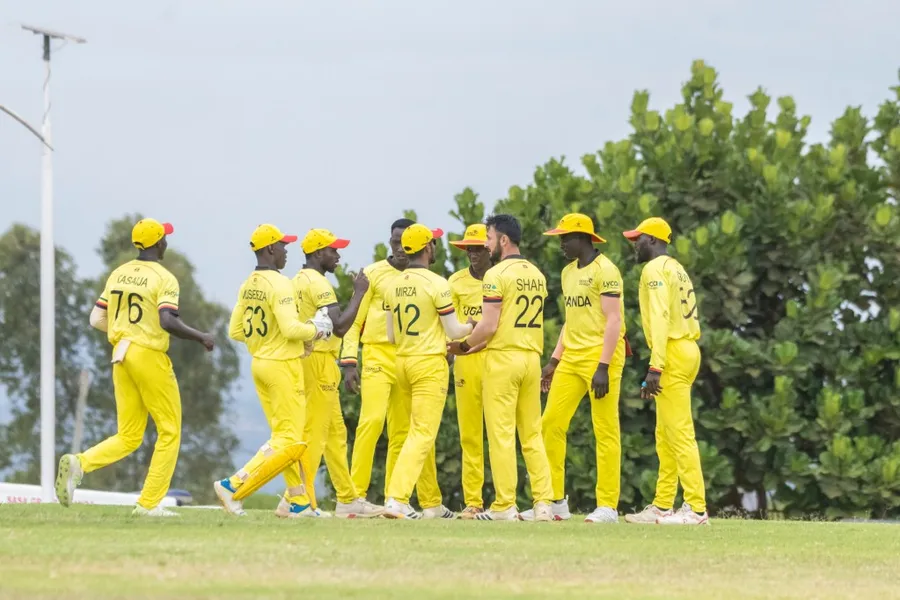
Uganda’s Cricket Cranes finished the ILT20 Continental Cup with no shortage of cricketing lessons.
The first round had painted Uganda as a side with plenty of runs in the bat, but one that was giving opponents too many opportunities through loose fielding, extras and lapses in discipline. The batting had fired, but the feeling was that Uganda were making matches harder than they needed to be.
The second round was different.
This was Uganda with sharper teeth. The Cricket Cranes won four successive matches against Sierra Leone, Botswana, Rwanda and Kenya, and in the process displayed a better balance between bat and ball. The bowling became more influential, the batting continued to produce fireworks and the team showed a greater ability to control games.
But just when the second round suggested Uganda had solved most of their problems, the final against Kenya brought the warning signs back into focus.
Uganda lost by 39 runs.
The trophy slipped away, but the campaign left behind a fairly clear roadmap for what must improve before the Cricket Cranes head into the ICC Men’s T20 World Cup Africa Sub-Regional Qualifier C in Abuja.
The biggest difference between Uganda’s first and second rounds was not necessarily the runs. Uganda had been scoring runs from the beginning of the tournament.
The difference was how the team was winning matches. In the first round, the batting was doing much of the heavy lifting, while fielding and bowling discipline remained concerns. The defeat to Kenya was particularly revealing, with Uganda posting a competitive score but then failing to contain the Kenyan chase.
The second round brought a different response. Against Sierra Leone, Uganda dismissed their opponents for just 55 and chased the target in seven overs to win by eight wickets. Against Botswana, they bowled the opposition to 119/8 before completing the chase in 15 overs. Against Rwanda, Uganda combined a huge batting performance with nine wickets, winning by 72 runs. Then came the statement win over Kenya 197/7 followed by Kenya’s dismissal for 150. The second round was therefore less about Uganda simply having good batsmen and more about Uganda controlling the whole cricket match.
Gerald Olipa
Olipa turned up the heat
Gerald Olipa was one of the biggest stories of Uganda’s second round. He had already been among Uganda’s leading performers in the first round, but the second round elevated his influence. Against Sierra Leone, he scored 21 from nine balls and then produced extraordinary bowling figures of 3/1 from 2.4 overs. Against Botswana, he struck 19 from eight balls. Against Rwanda, he made 35 from 19.
Then came the performance that defined the round. Against Kenya, Olipa smashed 95 from 52 balls, with six fours and eight sixes, striking at 182.69. Uganda recovered from losing two early wickets to post 197/7, with Olipa at the centre of the acceleration.
The innings was especially impressive because Uganda had reached only 41/2 at the end of the powerplay. Rather than allowing the early wickets to dictate the innings, Olipa and Riazat Ali Shah rebuilt before Uganda exploded in the second half.
Olipa’s second-round contribution was therefore not simply about hitting boundaries. He became Uganda’s momentum player, the man capable of changing the speed and direction of an innings.
Robinson Obuya
Robinson Obuya was another major second-round standout. His earlier contributions had already shown his ability to score quickly, but his 118 against Rwanda was the innings that truly announced his authority. He struck eight fours and eight sixes in a 70-ball unbeaten century as Uganda posted 188/2. It was a different kind of contribution from Olipa’s explosive 95.
Obuya stayed long enough to control the innings while still maintaining a remarkable scoring rate. His century gave Uganda the platform to turn a good batting performance into a huge one. The combination of Obuya’s ability to bat deep and Olipa’sacceleration gave Uganda a dangerous one-two punch.
Joseph Baguma
Joseph Baguma may not have attracted the same headlines as Olipa or Obuya, but his consistency was one of Uganda’s biggest second-round positives. He took two wickets against Sierra Leone, three against Botswana and three against Rwanda. Against Kenya, he added two more in Uganda’s 47-run victory. His figures told the story of a bowler who repeatedly found a way to contribute.
The 3/20 against Botswana, 3/22 against Rwanda and 2/16 against Kenya were particularly important because they meant Uganda were not relying entirely on their batsmen to win games.
Enock Kasaija also grew into the tournament. He took two wickets against Sierra Leone, one against Botswana and then produced 3/28 against Kenya in the 47-run victory.
Juma Miyagi was another important contributor, especially against Rwanda, where he returned 2/8. He then took three wickets against Kenya in the first meeting between the sides in the second round.
The bowling unit had therefore become much more than a supporting cast.
Uganda was taking wickets. Uganda was squeezing runs; and Uganda were making opponents earn their runs.
That was a major improvement from the first-round concerns about discipline and fielding. The improvement was not perfect; even in the second round, Uganda’s batting still had areas that needed attention.
Against Botswana, the Cranes successfully chased 120, but they lost five wickets in doing so. Robinson Obuya made 32, Charles Musemeza 39 and Olipa 19, yet the innings still experienced a middle-order wobble.
That pattern would later prove costly. Mirza Anas Baig also struggled for consistency. He scored 19 against Rwanda and five against Kenya, but had a duck against Sierra Leone.
Musemeza had a valuable 39 against Botswana, but his next three scores were 20, nine and 12.
Ronald Lutaaya’s returns were also limited. The message was becoming increasingly obvious: Uganda had several match-winners, but needed more consistency around them.
The Kenya win looked like the perfect final rehearsal. The second-round meeting with Kenya seemed to provide the perfect answer to Uganda’s first-round defeat.
Kenya had beaten Uganda by eight wickets in their earlier meeting, exposing weaknesses in Uganda’s bowling and fielding. Uganda responded emphatically. Olipa’s 95 powered Uganda to 197/7. Riazat added 32, Kenneth Waiswa 17 and Charles Musemeza 20.
Then the bowlers finished the job. Kasaija took 3/28. Miyagi claimed 3/39. Baguma took 2/16. Matthew Musinguzi added two wickets. Kenya were bowled out for 150 and Uganda won by 47 runs.
It was Uganda’s seventh victory in eight matches and put them top of the round-robin table on net run rate. For a moment, everything appeared to be clicking. Then came the final.
And then the final went the other way. The final was almost a mirror image of the second-round success. Kenya made 170/7.
Uganda’s bowling was competitive for much of the innings, but the final five overs proved expensive. Kenya accelerated at precisely the point where Uganda needed control, turning a manageable total into a challenging one.
Kasaija finished with two wickets, while Miyagi, Riazat, Musinguzi and Baguma took one each. But 170 was now on the board.
Uganda needed a strong start. Instead, the chase became a collapse.
Robinson Obuya fell for seven, Charles Musemeza made 12, Mirza Anas Baig was dismissed for a duck, and Gerald Olipa, Uganda’s second-round batting destroyer also fell for a duck.
Ronald Lutaaya followed for two. At 25/5, Uganda’s chase was already in deep trouble. Riazat fought, but the mountain was too high. The captain did what captains are expected to do in difficult moments. His 53 from 33 balls, containing four fours and three sixes, gave Uganda a glimmer of hope. Kenneth Waiswa added 17 from 13 balls.
Riazat Ali Shah
But the damage had already been done. When Riazat fell with Uganda on 116, the chase effectively lost its final thread.Uganda were bowled out for 131 in 17.5 overs. Kenya won by 39 runs.
And so Kenya had beaten Uganda twice in the tournament but the second victory mattered most.
What went wrong?
First, Kenya’s acceleration at the back end of their innings. Secondly, Uganda’s top-order collapse.
The Cricket Cranes had spent the second round demonstrating their ability to recover from early setbacks. Against Kenya just a day earlier, they lost two early wickets but rebuilt and then scored 127 runs in the final ten overs.
In the final, they never got the opportunity to repeat the trick. Five wickets for 25 runs changed everything.
Riazat’s resistance was brave, but T20 cricket is rarely kind to a side forced into recovery from such a position.
The ILT20 should therefore not be viewed simply as a missed trophy. It was a preparation ground for Uganda’s next major assignment: the ICC Men’s T20 World Cup Africa Sub-Regional Qualifier C in Abuja from October 18 to 26, 2026.
Nigeria, Gambia, Lesotho, Mozambique, Uganda and Zambia will compete, with the top two teams advancing to the Africa Qualifier Final.
Uganda now have a fairly clear checklist.
1. Keep the batting aggression
Olipa, Obuya and Riazat have demonstrated that Uganda possess genuine T20 batting firepower.
That should not be abandoned. Instead, the aggression needs to be supported by better decision-making when wickets fall.
2. Stop the clusters
The repeated five-wicket collapses are the biggest concern.Losing five wickets against Botswana did not prevent victory because the target was modest. Losing five for 25 in the final against Kenya was fatal. Uganda must learn to break that pattern.
3. Make the death overs count
The final showed how quickly a controlled bowling performance can unravel. Uganda had kept Kenya in check for much of the innings, but the late acceleration pushed the total to 170. The death overs therefore deserve particular attention before Abuja.
4. Maintain the second-round bowling standards
Baguma, Kasaija and Miyagi showed that Uganda have the bowling resources to win T20 matches. The challenge is reproducing that pressure consistently.
5. Fielding and discipline cannot return to first-round levels
The first round’s biggest warning was the number of runs Uganda gave away through extras and fielding lapses. The second round showed improvement, but Abuja will be about margins. Uganda cannot afford to hand opponents free runs and extra lives.
The Cricket Cranes’ ILT20 campaign ultimately ended without the trophy, but the second round offered considerably more encouragement than the first.
That may be the most important lesson Uganda carry to Abuja.The Cricket Cranes have explosive batsmen, wicket-taking bowlers and enough experience to compete. What they now need is consistency the ability to take a good performance and finish it, rather than allowing one bad passage to rewrite the entire script.
In the ILT20, Kenya had the final word.
In Abuja, Uganda will have another chance to write its own.
The post Cricket Cranes: From second-round surge to Final heartbreak appeared first on Kawowo Sports.
Follow the story
About this article
- Length
- 1,781 words · 9 min read
- Published
- September 22, 2026
- Byline
- Grace Kemigisa
- Source
- Kawowo Sports