

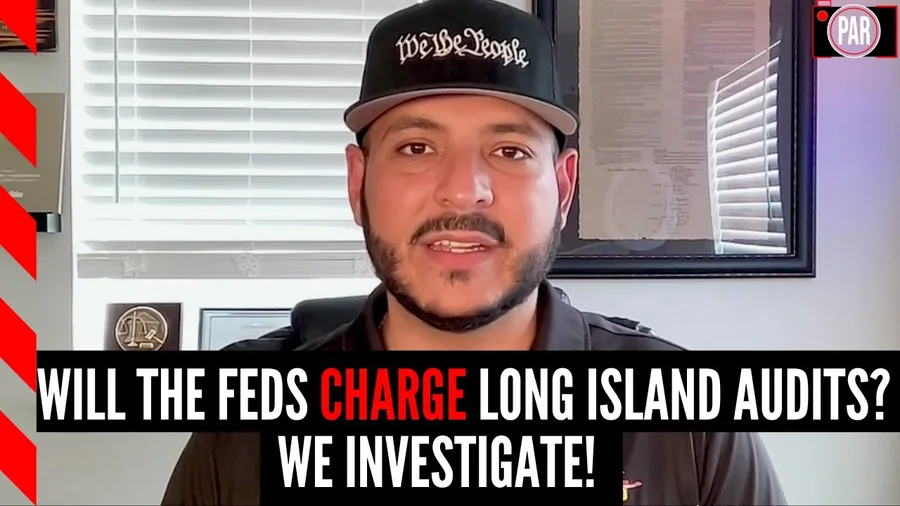
Long Island Audit: Will the FEDS Indict this cop watcher?
Taya Graham and Stephen Janis begin an investigation into the allegations that cop watcher SeanPaul Reyes is being surveilled by law enforcement and may potentially be at the center of an indictment to make an example of the cop watching community.

AI summary
Popular cop watcher Long Island Audit has garnered a massive audience documenting his efforts to hold law enforcement accountable. But his work has also lead to pushback. Recently Sean has received emails warning him that he may be a target of serious investigation. Taya Graham and Stephen Janis explore and discuss these threats with Sean to determine is they are credible, and if so the consequences for him and the broader implications for the cop watcher movement.
Credits:
- Production: Taya Graham, Stephen Janis
- Post-production: David Hebden
Transcript
The following is a rushed transcript and may contain errors. It will be updated.
Taya Graham:
Hello, my name is Taya Graham, and welcome to the Police Accountability Report: Breaking News Edition. As we always make clear, this show has a single purpose: holding the politically powerful institution of policing accountable. Now to do so, we don’t just focus on the bad behavior of individual cops. Instead, we examine the system that makes bad policing possible.
And today, we will achieve that goal by reporting on a disturbing story that has been growing more and more alarming as it unfolds. I’m talking about the current ordeal of cop watcher Long Island Audit.
As you already know, Long Island Audit, also known as SeanPaul Reyes, has been covering police misconduct for roughly five years. His provocative videos and creative tactics have garnered him millions of subscribers and a huge audience, but it has also attracted the attention of law enforcement, according to SeanPaul. And some of that attention could have significant consequences for him and his family.
This comes on top of a broad demonetization of cop watching and auditing videos. So to unpack what’s happening and the consequences for SeanPaul, we will be speaking to him shortly.
But first, I want to turn to my reporting partner about the importance of the First Amendment and the pushback he encountered from law enforcement during his reporting. Stephen Janis, thank you so much for joining me.
Stephen Janis:
Taya, thanks for having me. I appreciate it.
Taya Graham:
Well, unfortunately, I dragged you inside to talk about something a little disturbing.
Stephen Janis:
Yeah, very, very disturbing. And when I was reading what Sean had sent us about what’s happening to him, I was thinking about some of my own situations. Just recently we were reporting on the firing of the first Black police chief of Pokemoke City, which is a small town on the Eastern Shore. We were investigated as part of a grand jury investigation into an interview we tried to do with one of the witnesses in the case, and they made our lives miserable. But I think the point behind it was that they wanted to prevent us from reporting on this story. The witness had lied, the prosecutors were basically covering up and they didn’t want us to know about it. And the way they intimidated us was impaneling a grand jury and starting to investigate us and lawyers telling me they’re going to show up at your work, they might show up at your house, but they’re going to show up.
And fortunately, the judge in the case though it was absolutely invalid and it never went forward. But we were very much on the verge of it, very least being called in front of a grand jury, which has all sorts of fraud implications. So I really, really have problems with the idea of law enforcement criminalizing speech or dissent. And I think that’s why we need to unpack this in detail and understand what’s really going on here and the implications that go beyond just SeanPaul’s work and his career, but the implications for all people who use the First Amendment as a tool for their reporting or their dissent or anything.
Taya Graham:
Absolutely. I think everyone out there needs to care about the First Amendment. You have to exercise your rights or you’re going to miss them when you lose them.
All right, so let’s bring in our guest, Long Island Audit. SeanPaul, thank you so much for joining us.
SeanPaul Reyes:
Thank you so much for having me. It’s always a pleasure to be on with you guys.
Taya Graham:
So first I have to ask you, how are you doing?
SeanPaul Reyes:
I wouldn’t say I’m paranoid, but I’m definitely cautious. I’m definitely vigilant of my surroundings now. My life has definitely changed. My family’s life has definitely changed from this information that has been revealed and just being cautious and obeying the law like normal, just hoping that evil people don’t do evil things.
Taya Graham:
So SeanPaul, you’ve received some pretty disturbing messages. I’m going to put one on the screen and read a little, but I’m just going to say something first. While we can discuss the nature of the threats, we cannot name or disclose any information that would point to a particular person or even hint at a particular agency. And the reason for this is clear. At this point, we cannot confirm this information. And for all we know, it could simply be a way to scare or intimidate you, but we feel that it is noteworthy because of the far-reaching implications if it’s true. However, we also have to abide by our journalistic ethics and not disclose something about a specific person or entity that is so far unproven or that we have not ourselves confirmed. So we’re just going to keep that in mind as we discuss this.
So I’m going to put up the first threat and Cam, if you could put up Long Island Audit JPEG one and then two as I read.
I hope this email finds you well. If I didn’t write this email and something happened to you, I wouldn’t be able to live with myself. At the same time, I’m not a supporter of yours or agree with the tactics you choose to expose police, politicians and the like. I also don’t like or agree with violence. With that said, let me get to the point of my email. SeanPaul, you are in grave danger. Your home is about to be raided sometime soon during the month of September. From what I understand, a search warrant will be approved to search for some investigative paperwork that you illegally got or received. The warrant will be also used to search for communications between you and other cop watchers.
I believe this warrant will be served by [redacted]. You are being investigated for being the leader of an anti-police government terrorist group. You’re probably wondering how I know this. OK, Sean, just even reading that just made my stomach knot up. How did you feel when you received this message? And since you’ve received it, have you learned anything else about what might happen?
SeanPaul Reyes:
Well, this was the second message in a line of messages that I received as far as warnings go. When I read this one, what stood out to me the most was the fact that they’re not even a supporter, allegedly. Again, I don’t know. I can’t confirm who these people are. I can’t confirm that they are who they say they are, rather. The people that they claim to be do exist, but I can’t confirm who they are. I’m working on that now. But these people are terrified and they don’t agree with what’s happening to me. They don’t agree with my tactics, as you heard, but they don’t agree with violence, and they believe that the government is going to be using violence in order to chill my free speech and intimidate me and stop me from asking questions. And that’s always concerning to me, especially because I live with my wife and my two young children who are three and four years old, and it’s definitely something that they didn’t sign up for and it’s not something that should be acceptable under our Constitution, under our First Amendment.
This should not be happening, this kind of threats.
Stephen Janis:
You know, Sean, journalists come into possession of all sorts of documents. What is the nexus of this warrant? What exactly could they be trying to do or trying to get from you or what could they use as fodder to get a judge to approve this? It sounds pretty farfetched to me, but I was just wondering if you had any idea of what they might be trying to do here.
SeanPaul Reyes:
Yeah, Stephen, it is farfetched, and I have no idea. I’ve racked my brain for hours trying to figure out what exactly is this evidence that I illegally obtained, allegedly. I have no idea. Everything that I’ve ever obtained has been legally and through the FOIA process, either through the federal FOIA process or New York State FOIA commissions. It’s always been legally obtained through open records requests. So I have no idea. Again, it’s just concerning to me that this would happen.
And the circumstantial evidence that comes along with it, these emails are that the Suffolk County District Attorney Ray’s Attorney’s office he did in fact subpoena 14 months of my financial records from various social media accounts that have been confirmed to me, Facebook, TikTok, Google. There could be others. They do not have to let you know. The reason why I know that they requested 14 months from those particular social media agencies companies is because the social media companies themselves advised me that they were going to be handing over this information, but there could be bank accounts. My lawyer tells me there could be a myriad of other options of them trying to get financial. And on a violation trespass, which doesn’t even amount to a crime, it’s a violation of law no different than a parking ticket or a speeding ticket, for them to request such substantial information, financial information from me leads me to believe that there’s more going on here than a trespass violation And it’s financial records, RICO, go hand in hand. So it’s definitely something that’s concerning to me and my attorneys and I are watching out for.
Stephen Janis:
Well, just to make a finer point here, I would come into possession of all sorts of documents as a reporter, like homicide records, stuff that wasn’t public, but it was never illegal. You can’t prosecute someone if someone… You could prosecute a person who leaked it possibly, but of course these are state records, so they’re not classified to begin with. But you can’t prosecute someone if someone came to your doorstep and dropped off a bunch of internal records from, say, any police department, that’s not illegal, right? I mean, that’s like First Amendment journalism. I mean, it sounds kind of sketchy.
SeanPaul Reyes:
Yeah, it definitely is sketchy. Again, I’ve only ever obtained documents legally. I haven’t even obtained anything sensitive or anything where the general public wouldn’t have access to them anyway. And like you said, Stephen, if somebody came and dropped something off at my house that was confidential information, not subject to FOIA, as long as it’s not top secret classified, we’re talking about state documents here, I don’t see where the crime would be. But again, that hasn’t even risen to that level. Everything I’ve ever received has been in the course of investigations through open records requests.
And at the end of the day, they know that. I mean, they have to know that. I don’t know what type of case they’re trying to build. I’m not a criminal. I do not engage in RICO, don’t have some criminal enterprise. I’m a law-abiding citizen with a company incorporated in New York state. I pay my taxes. Everything is legitimate about me. So I’m not really worried about the strength of a case that they can bring against me, but you can indict a ham sandwich is that old saying that you can indict a ham sandwich and on a RICO case, that would be hundreds of thousands of dollars in attorney’s fees. And as I always say on my channel, the process is the punishment. So I wouldn’t put it past them to just do it. We’ve seen it with this federal government already in different instances and the weaponization of the justice system. But to use it, that’s what makes it even more concerning for me is that we’ve seen it happen before. So now I’m not on the list of the friendly people to the administration for my views on ICE, for law enforcement with Lucivillo and my criticism of Suffolk County Police Union. So there’s a lot going on and I know that I’m innocent. I haven’t committed any crimes, but it’s definitely concerning, especially for my wife and my family, my mother, my children. It’s concerning information, especially the violence part of it.
Stephen Janis:
It’s totally understandable. And it’s very scary that they’re going after your financial records, which seem to me completely irrelevant to anything that they’re going to, whatever they’re pursuing. Go ahead, Taya, sorry.
Taya Graham:
No, I was just thinking if you’re guilty, you need one lawyer. If you’re innocent, you need two. Honestly, this is incredibly disturbing.
Now, you did mention that you might have some lawyers. It sounds to me like you might need a team of them. And if you don’t have lawyers, how are you prepared to defend yourself if worst comes to worst and you’re actually are raided?
SeanPaul Reyes:
Well, I do have a New York state attorney already. His name is Jacob Uriel. He is always on retainer for my company and for myself personally for any sort of criminal charges or civil things that are happening, but I would need more than just him. I would hire a team. There’s one thing that I would never do is be facing down the barrel of fraudulent, made-up RICO charges and take that lightly. So I would have to do what I have to do. Again, the process is the punishment. If I got to take out loans and I have to do what I need to do, a home equity line of credit to be able to pay for this legal defense, whatever needs to be done is going to get done. And that’s why I made the video that I did where I spoke about this because at the end of the day, if they have a valid search warrant, I’m not going to stop them.
I’m not violent. They can search my property. Whatever the warrant says they need to search, they can search. I have nothing to hide. I’ve not moved anything from my house since learning this. Nothing has changed about my routines because there’s nothing to change. But the only thing that concerned me was the allegations of using some sort of SWAT team in order to enter my house. And again, more process is the punishment to intimidate me, intimidate my family. And I think that’s a very dangerous, volatile escalation that doesn’t need to happen even if they are investigating some sort of RICO case. And I wanted to make that clear to the public that I’m not a threat to law enforcement. Law enforcement knows that. I’m not engaging in any criminal activity, but I will comply with any court order for a search warrant or anything like that and we can handle it in court.
But to terrify my family with flash bangs and entering in at 3:00 in the morning is just not necessary.
Stephen Janis:
Yeah. I mean, I’ve watched a ton of your videos. I’ve never seen you engage in violence or even threats. Have you ever, as a cop watcher, threatened to do something violent or acted in any violent way during a cop watch? I mean, is there anything that you’ve ever done? And I’m just asking for the record here to make sure it’s on the record, depending on what happens. Have you ever?
SeanPaul Reyes:
Yeah. So in my entire career, I’ve never made any threats of violence or engaged in any acts of violence or even used profanity against law enforcement officers, which is my First Amendment right. I don’t believe that that serves the purpose of what I’m trying to accomplish. And I think the results of my activism and my journalism speak for themselves when police departments till this day continue to invite me to do trainings with them, ride alongs, district attorney’s offices, police departments, all facets of law enforcement want to come together with me and show that they are transparent, that they’re willing to learn, to hear a different perspective, not because I’m some sort of law or legal expert, but because I’m a real life person who has garnered a lot of supporters and I’ve dealt with a lot of police interactions from across the country, from New York to California and everywhere in between.
So I think they value that insight. Until this day, I receive requests to do trainings with law enforcement officers. So if law enforcement agencies though I was some sort of threat or had any sort of violent intent, they wouldn’t be wanting to work with me. So no, my videos speak for themselves, Stephen. I’ve never even cursed. I’ve never even raised my voice. I can defend myself and I can have my little quick witty remarks, I would call them witty remarks. But as far as violence, no, I’ve never engaged in violence and I abhor violence and I always want people to be peaceful because it distracts away from the message of accountability and transparency.
Stephen Janis:
And it’s funny, Sean, we know a lot of cop watchers who curse, but I noticed that you don’t even curse. You keep it pretty friendly. I mean, even in the —
Taya Graham:
Keep it professional.
Stephen Janis:
Yeah.
SeanPaul Reyes:
There was one time I was doing a cop watch in Connecticut and somebody, an officer, a state trooper had somebody pulled over on the side of the road. This was just recently, a couple weeks ago. And I told him, well, thanks for not spitting in my face. Because of course, Brian Fahey, the former sergeant spit in my face. And he looked confused and he said, well, why would I do that? You’re one of the most polite auditors I’ve ever seen in my life. He was like, you’re a very nice guy. And I’m like, well, there you go. There’s one of them. But again, and there’s a lot of law enforcement officers out there that support me behind the scenes. This is how I get a lot of this information. And again, because they know I’m not anti-law enforcement. I’m anti the apparatus of the police unions, the administration in protecting misconduct by officers, by not having accountability or transparency in these investigations.
Taya Graham:
I’m really glad we put that on the record, but let me just read the next communication you received, once again, with all the identifying information redacted. Quote, “They’ve been doing a lot of digging into your past and your family’s past. I’m not sure if you’ve noticed, but undercover officers are following you. But that’s not the most alarming thing that they’re doing. They’re currently in talks with the Department of Justice trying to figure out possible federal crimes they can prosecute you with. They’ve come up with a plan to arrest you and prosecute you on a RICO case. When I heard this, I couldn’t believe it. I even said, ‘Do you really believe you can indict him on RICO?’ They laughed and said, ‘Absolutely.’ The goal isn’t even to have you found guilty. They want to make you spend all your money defending yourself and at the same time, make you the national poster child for YouTube domestic terrorists. I know this email may shock you, but I’m telling you, they’re coming after you hard. You have no idea the reach these people have. I hope this email helps you protect yourself against these people.”
OK. Again, let me just get your reaction when you received it and did you think it was legitimate?
SeanPaul Reyes:
So I received that email first before the second one, but my reaction was the same. I receive a lot of shocking emails. I’ve received many death threats. I don’t speak about them all the time because it’s unfortunately a part of society. There are some sick individuals out there who will threaten your children, who will threaten your family members, your own life, and engage in some sort of hateful just vengeance against you. I don’t know what it is, but it’s sick. And I don’t talk about that all the time, but when I’m getting these sorts of emails and they all seem to have common threads: RICO cases, federal cases, poster boy for YouTube domestic terrorism, and they’re coming from separate people, separate email addresses, email addresses that have been created years and years ago. Again, I’ve looked into this a little bit, and we do not know for a fact if these are actually legit or they could be coming from the people just trying to scare me, but it’s definitely intimidating to me and concerning because my family’s at stake here, that I can defend myself and I can hire lawyers and the people have my back, but I would just hate it.
It would be something that I couldn’t even comprehend if my three and four-year-old boys, who actually look up to the police at this point and they see them as heroes, and I don’t want to disillusion them from that at three and four years old and traumatize them. Or even my wife who’s dealt with her own tyranny back in her home country that she fled to come here. She was a patriot in her country. She loved freedom and to see this. I’ve had mass law enforcement officers from Nassau County come to my house before and try and run me off the road. And these are things that have been happening to me, these intimidation tactics, trying to pick you up on a Friday night so you have to spend the weekend in jail, holding you for eight hours on a desk appearance ticket, which should only take like an hour.
These are the kinds of intimidation tactics, scare tactics that I’ve seen that law enforcement will unfortunately engage in to get you to stop talking about what they don’t want you to talk about. They hate the First Amendment. These individuals particularly hate the First Amendment. They don’t like what I do. They don’t like that I make money while doing it and they want to stop that at all costs. I’m going to keep fighting. I’m going to keep speaking truth to power because if I give up, all these people, millions of people have given me a voice, a strong voice, a platform, and if I give up, I feel like I would be letting them down. So I’m going to keep fighting, but I’m going to remain vigilant, and I’m going to continue speaking truth to power, but I have to be careful for my family because that’s where my loyalty lies first.
Stephen Janis:
I mean, this is a horrible thing to contemplate, but have you talked to your family? Have you prepared them at all? Have you told them about these messages, and have you told them what to prepare for? I mean, it’s a horrible question. I hate to ask it, but I know there are real consequences of just even these threats themselves are sort of you having to shoulder the burden. Have you talked to them about it?
SeanPaul Reyes:
Yeah. It’s unfortunate that I had to explain to my wife, my sister, my mother, my brother, all of these different things on secure lines, because I don’t know if they’re even listening to my phone at this point, but I had to let them know, and they’re obviously very concerned. And I think the saddest part and the most unfortunate that broke my heart is I had to prepare my children because I didn’t want them… My main job is to protect them from any sort of trauma or any set of issues. And I’m friends with law enforcement officers, so there’s been law enforcement officers that come over my house with their guns and their badges that my children have seen that they’re friendly with. And I told them, Daddy’s friends with the police. You know this, right? Yeah, you work with the police. Well, daddy’s friends with the police and if the police ever come here, it’s because they just want to work with daddy.
Don’t be scared of the police. They’re our friends. Don’t be scared. You’ll be fine. So in case some sort of raid happened or anything like that, I didn’t want my kids to… And that was a hard conversation. I got to tell you, Stephen, it was a hard conversation to have with a three- and four-year-old trying to get them to understand police are good, they’re our friends, and don’t be scared of them that maybe they want to talk to us or come visit how my lawyer visits. Because I have a bunch of friends that are lawyers, police officers, et cetera, and they come and visit and we have a good time and they play with the kids and they bring their kids over and some menace to society I am, apparently. It’s ridiculous what’s going on. Nobody should have to feel this way. And the difference is that when I believe that these law enforcement officers do receive death threats and things like that, because it’s just on both sides, the internet and people are just unhinged and they have a lot of anger, pent up anger built up on both sides.
And I call that out and I make sure in my videos, I say, please be peaceful. Do not engage in this kind of violent rhetoric and threatening rhetoric with law enforcement officers. It’s not productive and it’s going to get you in trouble. It’s going to hurt the movement. They’re going to label us domestic terrorists. They’re already doing that on the federal side. We’ve seen people film the police and DHS agents will say now, hey, congratulations, you’re now on a domestic terrorist list.
So me being the poster boy for domestic terrorism in the United States, according to the federal or state government or whoever, I feel like they could have found somebody better because I work with the police and that will come out once they try and label me that.
But I think what really happens is what’s really going on here, Stephen and Taya, is that they understand that I’m more of a threat to their sort of system than somebody who’s filming outside of a restaurant or whatever the case may be because I’m looking into their finances, $15 million for the PBA. I’m asking the questions about these hundreds of millions of dollars in lawsuit settlements. I’m speaking at the public meetings, and they see that as a threat. And it’s not a violent threat, it’s just me exercising my rights peacefully. That’s all I’m doing and they don’t like it.
Taya Graham:
I know Stephen has had direct experience with taking a look at the financials of police officers and having the hammer come down on him through his editor.
Stephen Janis:
We were the first publication that published the overtime earnings of the Baltimore City Police Department back in —
Taya Graham:
And they were not pleased.
Stephen Janis:
That was like 2007. We got death threats. They called our office and threatened us and it was scary.
Taya Graham:
Tried to get Stephen fired.
Stephen Janis:
And then the next day they arrested my editor on bogus charges and threw him in jail. So when you touch the money… I’m not saying touch the money.
Taya Graham:
That’s the third rail.
Stephen Janis:
But when you start to expose spending, how much police make and how well they do as per taxpayers, yeah, that’s when things get dicey. Yes.
Taya Graham:
Yes. Yeah. When you start showing the salaries, when you start showing the overtime —
Stephen Janis:
I totally forgot about that.
Taya Graham:
When you start showing take-home cars, that’s when things get really bad. And for the record, his editor was arrested for holding a gun inside of his own home. So that’s a whole other story [crosstalk], maybe sometime we’ll share.
Stephen Janis:
It’s a long story. The charges were eventually dropped. But the point wasn’t, as you point out, not to throw him in jail and convict him of a crime that was not a crime. The point was to scare him and to scare us.
SeanPaul Reyes:
That’s what they do. They’ve done it. They’ve used tactics similar when I rented… The reason why I owned a 14-foot LED billboard truck in the first place is because when I used to rent them for protests, the district attorney’s offices would send subpoenas for felonies for documentation to these billboard truck companies.
Taya Graham:
Oh, wow.
Stephen Janis:
Really?
Taya Graham:
It was done not because they were investigating some sort of felony, not because they cared about the contract or anything like that. It’s because it was used as a tool to intimidate these companies to say, hey, if you rent the billboard truck to Mr. Reyes, you’re going to keep getting subpoenas. We’re going to look into your financials. We’re going to make sure you’re on the up and up. And that’s the whole reason why I bought my own billboard truck so they couldn’t intimidate people. But now they’re just working to intimidate me. They hate the billboard truck, and I get it. Nobody wants a billboard truck in front of their residence, in front of their city hall, in front of their police department. But guess what? It’s my First Amendment right. It’s the only tool that I have for accountability, for transparency, and I’m going to use it to the fullest extent because it’s my right.
You know what? Let me take a look at the RICO statute. I’m going to have —
Stephen Janis:
Yeah, let’s take a look because this RICO thing is very strange.
Taya Graham:
Yeah. And to me, this is very scary. I know this has previously been weaponized against folks in Cop City in Georgia.
Stephen Janis:
Yes, that’s a good point.
Taya Graham:
I also saw it was possibly going to be weaponized against some cop watchers in Texas. I think HBO Matt was part of that crew. So I know the RICO statute can be kind of scary. So we’re going to have Cam put JPEG 4 on the screen. Now, this law is pretty complicated, but the gist of it is, and the most important aspect of it is, is that the idea of a predicate crime, and that’s basically sort of a core component of the law. So I’m just going to go through and read what it means.
So “predicate acts, unlawful predicate acts that can form the basis of a RICO charge include state felony crimes involving acts or threats of murder, kidnapping, gambling, arson, robbery, bribery, extortion, obscenity, or dealing in a controlled substance. Predicate acts also include over 100 federal crimes, among them bribery, various forms of fraud, money laundering, embezzlement, obstruction of justice, witness tampering, and trafficking in persons.”
OK, so there’s a lot to unpack here, but I don’t see “using a camera to film public officials” on this list. I mean, how can they turn what you do into any of these crimes?
SeanPaul Reyes:
Well, the way I see it is I’ve seen them turn a traffic sign into notice of a no trespassing sign. I’ve seen them do magic in the criminal justice system. I’ve seen them twist things and come to different conclusions that a rational, logical person wouldn’t do. So I don’t put it past them. I was talking to my lawyer the other day, and this is not… They’re the most evil people ever, these people that are trying to do this, so it’s not like I’m giving them any tips or anything, but they would say, well, he gave me an example. Well, you need a criminal enterprise. They’re going to say that it’s Long Island Audit Inc. that’s generating you this money and your actions, you, by exercising your First Amendment right, you are intimidating elected officials to stop them from carrying out their duties. And it could be as simple as that, money coming in for “intimidation,” what they’re alleging is some sort of intimidation, which is really just First Amendment protected speech, criticizing your government, protesting your government.
And they’ll try and twist that somehow and try and find a crime. And again, you can indict a ham sandwich. So they’re going to be able to do this if they really want to. The question is how long will it take me to get justice and to be able to fight back against this? And that’s their whole game, in my opinion, is the process is the punishment. They didn’t arrest your editor to try and get him to go to prison. They did it to scare him. They did it to make him hire an attorney, make him waste his money. These are why they do these things. And that’s why people that speak truth to power are so important. I’m so grateful and honored to have so many people who have come to my back to support me and help me because this is what they’ll try and do, but the people have my back and I’m going to keep moving forward.
Stephen Janis:
OK. I just want to put a finer point on this. Now, there was something I was thinking about with this whole thing and this whole idea that you’re terrorizing people. If the union president doesn’t come out of that office building, there’s no story. If Brian Fahey doesn’t come out of his house when you knock on the door, just ignores you, none of that ever happens. That’s two that I can think of where if they had just ignored you, it’s all over. There’s no video. There’s no nothing. They participated in this. You weren’t able to, let’s say, walk into someone’s home or office. You knocked on a door in both cases, said, I want to speak to someone, and then they decide to come out and confront you, but they could have just stayed inside their house. It wasn’t like you did anything other than knock.
I’ve watched these videos in great detail. You just knock and ask to speak to someone. That’s not intimidation. That’s not any form of trying to harass or impede or obstruct. It’s asking to speak to someone. That’s a basic First Amendment right. But if they don’t come out and confront you, then there’s nothing that happened. They could easily have neutralized you by simply ignoring you. What do you say to that?
SeanPaul Reyes:
I mean, that’s what happens time and time again. That’s the whole reason that this channel is what it is. The Long Island audit is what it is. It’s the overreaction and the lack of control of their emotions from people in power because they’ve been getting away with it for so long, and then they run into somebody like me with millions of people who support me and millions of people who are going to watch the videos and see it, and they’re going to look bad and their ego gets the best of them in the moment. Even Brian Fahey admitted to the law enforcement officer on the scene that he didn’t handle it right. He knew that after the fact, but at the end of the day, I am just knocking or I’m going somewhere and I’m asking questions and their ego, their lack of control to control their emotions, it just escalates this situation to something criminal.
And then they want to play the victim. And that’s the worst part is that they blame me for their own actions. If I knock on your door and you pull a gun, you spit in my face, somehow I’m the one that was convicted of a crime in that whole scenario. It doesn’t make any sense. The gaslighting is unreal because all I did was knock on the door and then halfway back, making my way back to the public street, a man comes out with a gun, spits in my face. He has no criminal record and I get convicted of a misdemeanor over a private road, dead end, no trespassing sign that apparently means — Dead end no turnaround sign, excuse me.
Stephen Janis:
Think about how those videos would be if they hadn’t come out. It would be just you knocking the door, I guess they’re not here, going out, getting back in your truck and driving off, or police union headquarters, getting back in your truck and driving away. So take those components as they are. There’s nothing illegal or terroristic or anything about knocking on a door and asking to speak to someone.
SeanPaul Reyes:
It’s also not trespassing to walk away from the police union headquarters, but I was charged with it anyway. They will do whatever. HBO Matt, Taya, you brought him up. He was charged with organized crime. These things are ridiculous, but law enforcement agencies, the system itself will try and protect it. And we’ve had law enforcement agents that I’ve spoken to that have told me IA and all these different accountability apparatuses, they’re not for accountability. They’re meant to protect the badge. They’re meant to protect the image of the police officers and let them get away with as much as they possibly can. And it’s unfortunate, and that’s what they do, though.
Taya Graham:
Something I was thinking of when Stephen said if the police officers were just able to deescalate, to handle their emotions, then there wouldn’t be any video. But unfortunately, there are a lot of officers that don’t seem to, let’s say, understand people’s First Amendment rights, which is why there’s so many cop watching and auditor channels. Have you heard anything more about the demonetization of cop watchers and auditors? Have you heard any more about how widespread it is, and have you been able to appeal, and just how are you adapting? Because I believe your channel was demonetized, is that correct?
SeanPaul Reyes:
Yeah. So my channel was demonetized on the same day as everyone else. And the police union president Lucavila was actively talking about getting YouTubers demonetized on radio programs. So as far as how widespread it is, it seems to be as widespread as it is because it’s a lot of people. I haven’t talked to every single one of them. I’m very busy. I’m very worried about my life and there’s a lot going on right now, but seems like it’s caught a lot of people in the First Amendment auditing community and including myself. And I have filed an appeal, and the person who responded to my appeal said something very interesting and I actually conferred with other auditors and other YouTube channels who have sent appeals that if they got something similar back, but they’re saying that they’re looking, in short, they’re saying he said that we’re going to look into this. We understand that you’re frustrated. I hope you and your family are safe, SeanPaul.
Stephen Janis:
What?
SeanPaul Reyes:
So I though that was a little strange.
Stephen Janis:
That’s what YouTube said to you?
SeanPaul Reyes:
Yeah. YouTube representative when they put in my appeal said, SeanPaul, I hope you and your family are safe.
Taya Graham:
Wow.
Stephen Janis:
Woah.
Taya Graham:
That’s very odd.
SeanPaul Reyes:
So I though that was interesting. And no other YouTube channel received some sort of hope you and your family are safe kind of deal. The rest of it was pretty much generic we’re going to look into it, but it was definitely interesting.
Stephen Janis:
So wait, and you talked to other auditors and they didn’t receive that message?
Taya Graham:
They did not receive a similar message of, I hope you and your family are safe.
SeanPaul Reyes:
Yeah. Nobody got the hope you and your family are safe except for me out of the people I’ve talked to. So I thought that was definitely interesting given what’s going on. And again, I don’t want people to think people are like, oh, he’s connecting this with this, with this, with this and trying to sell us this. I’m not trying to sell you anything. This is my life. This is my theory based on all of the circumstantial evidence, based on these sources. I’m just trying to put two and two together the best I can. If I have a smoking gun, you guys will be the first to know, but it’s just definitely strange. And I’ve been navigating it. The people have been supporting me over on Patreon and it’s been very successful there. And I’ve been doing a lot of behind the scenes stuff. I’m uploading a video today.
And if I become funded by the people, directly by the people, I think I can accomplish a lot more. So I’m not deterred. I’m not distracted. I think if I’m completely people-funded by the people who want to see what I do, it takes away all of the fighting for the algorithm, trying to chase the algorithm, making sure a video is not too long, not too short, has the right moments, whatever. It just frees me up. So I’m excited for the new chapter of my life while I will be on probation during this new chapter. So that’s been a lot to get to, to get used to.
Stephen Janis:
On probation?
SeanPaul Reyes:
On probation for one year.
Stephen Janis:
Probation from what?
Taya Graham:
I think this is for the bench trial for allegedly trespassing on the [crosstalk] property.
Stephen Janis:
Why don’t you go to that question because he already answered my question. Yeah, go ahead.
Taya Graham:
I was going to do that.
Stephen Janis:
OK. No.
Taya Graham:
OK. Let me start over then. So actually I’m glad you mentioned the officer, you knocked on the door and the officer came out of the house, held a gun, spit in your face. That, I believe, was your interaction with Connecticut State Trooper Brian Fahey. Now, I believe you were convicted after that bench trial for trespassing, and I think you’ve hired an appellate lawyer. Can you tell me kind of what your next steps are to fight this case?
SeanPaul Reyes:
Sure. Yeah. So I hired one of the best appellate attorneys in the state of Connecticut, John Shorn, and he’s argued hundreds of times in the Connecticut Appellate Court and the Connecticut Supreme Court. He knows what he’s doing. I have full confidence in him. He believes this verdict to be, I guess, I don’t want to say what he actually said. He definitely disagrees with this verdict wholeheartedly, and he’s very opposed to the judge’s logic regarding the private road, dead end, no turnaround sign and how that under the law is somehow sufficient notice and not a vehicle sign. So he’s very passionate about it. I’m grateful to have him on my side. And we’re actually currently right now at this moment trying to get my probation stayed. I was sentenced to 90 days in jail, suspended with one year of probation. And that probation’s being carried out here in Suffolk County where Lou Savillo, the president of the police union, is very influential here in this county.
And I do not want to be on probation here in Suffolk County, but it is what it is. I am. And it’s already affected my life and it’s affecting my job and my journalism. I can’t travel when I want to. I have to ask permission, and I’ve already been told no for a preplanned trip that I had.
Stephen Janis:
Where were you going to go? What happened?
SeanPaul Reyes:
I was actually going to Washington, DC. I was going to go with my attorney and we were going to go over there and just document what’s happening in DC. Haven’t been in DC in a while. He wanted to go to a couple museums. It was more like a personal/business trip, and it was just too short notice for my probation officer and they told me no. So that was unfortunate.
Stephen Janis:
They said, no, you can’t go to Washington DC?
SeanPaul Reyes:
Yeah.
Stephen Janis:
Really?
SeanPaul Reyes:
Yeah. They said, no, you can’t go to Washington, DC.
Stephen Janis:
And what was their reasoning for that?
SeanPaul Reyes:
They said that it didn’t give them enough notice to make some sort of pass or something like that because obviously I didn’t know I was going to be on probation, so I planned this trip and I’ve planned other trips well in advance. And now that I’m on probation, I need some sort of permission from these individuals to be able to do anything about my job. So my attorney, John Shorhorn is actively right now, he filed the notice of appeal today and notice for a stay of probation because his argument is going to be, well, this is going to affect not only him, but his employees, his journalism, his company in a very significant way when we can just put a pause on it. And if we somehow lose, he can always serve the probation later. It doesn’t affect anything. He’s no public safety threat or anything like that.
So we’re trying to get it stayed for now so I can continue to work and do what I need to do.
Stephen Janis:
Well, what’s preventing them from saying no every time? I mean, is there any process for this or they just can just say no for whatever reason they want?
SeanPaul Reyes:
Yeah, they can say no for whatever reason they want, I guess. I spoke to my attorney. There is a process where I can go to the court and ask them, but that’s going to cost me money for have my attorney argue that and then time and then you get the judicial approval because the judge is the ultimate arbiter of what I can do on probation. But just on a day to day, it’s going to be the probation officer here in Suffolk County. So it’s definitely interesting. They can come into my home. They don’t even need a search warrant anymore. They can come into my home whenever they want with whoever they want. They can search your
Taya Graham:
Car anytime, right?
SeanPaul Reyes:
Yeah. They can search my car anytime they want. They don’t need any warrant or probable cause or anything right now. So I was told in those same emails that you read, I was told that the Lucivillo and these individuals were communicating with the state’s attorney. Again, I don’t know. I don’t have proof of that. I’ve put in FOIA requests. I’m waiting on everything, but I doubt even if I’ll even get anything, if there is anything. But I heard that they were communicating, which my lawyer says wouldn’t be that. If I’m facing a case here in New Suffolk County and I was facing a case, they would communicate and everything like that. Just the though of Brian Fahey and Lucavillo talking on the phone terrifies me. I mean, it is not a good lie. I don’t know what they would want to talk about, but it can’t be good.
I can’t imagine.
Stephen Janis:
What pretext do they need to search your car or go into your house? Is it none? There’s none. None?
SeanPaul Reyes:
Yeah, there’s nothing. Because I am on probation right now for a trespass crime, one of the lowest crimes in the state of Connecticut or anywhere really, nonviolent property crime that again, the circumstances I argue I didn’t commit it, but we’ll see what the appeal does. But even just for that, I have a year, a year. If I didn’t have a family or anything, I might have just chosen to do the 90 days and been done with it then because it’s kind of ridiculous that they’re going to have control over my entire freedom for one year. They can go in my car whenever they want. They can walk up to my door and come inside my house whenever they want. They don’t need warrants and no judicial checks and that’s for a whole year. So it’s going to really affect my work, but I guess I just have to work more from home and focus on the Suffolk County government.
I’m sure they’ll love that. What
Stephen Janis:
Does your appellate lawyer think about the implied consent and the Supreme Court precedent in terms of knock and talks and things like that? Does he think that applies in this case?
SeanPaul Reyes:
Yeah, that’s a great question, Steven. He thinks that it is ridiculous. Again, my lawyer is very grandiose and he speaks a little differently than I do, but he thinks it’s ridiculous that the judge would equate some sort of animosity as evidence of lacking a knowledge for license or privilege. Because the way my attorney sees it, and it’s the same way I see it, is animosity and unfriendliness is something separate from a license or privilege to do something. You could have animosity with anybody, a family member, you could have a bitter fight with a family member. The
Stephen Janis:
Family member comes to
SeanPaul Reyes:
Your door to apologize and they knock on your door to apologize and say, “Hey, I’m sorry, but you’ve never once told that family member they can’t come to your house. Are they trespassing because you had this sort of history of animosity?” To us, to me and my attorney, it doesn’t make really any sense, the license or privilege part, how they connect it with animosity part. And that’s to put to the side with a sign. But yeah, Florida v. Jardines doesn’t mention any animosity, just mentions a customary
Stephen Janis:
License. What you point out is a highly subjective judgment. And to me, that was a very weak piece of legal reasoning. And I’m not a lawyer, but I thought tying those two together in some sort of sequential if then was extremely weak and almost amateurish in the interpretation of the law because what he’s opened up is all sorts of traps within the law itself because it would be very easy to construe, let’s say, a hostile relationship with almost anybody. You could say, “I don’t like my postman. I don’t like Democrats or whatever. I don’t like Republicans, so they shouldn’t have known they shouldn’t come in my house because I had a Trump sign out there.” I mean, the implications of that ruling – That’s
SeanPaul Reyes:
A great point. According to this judge, if you had a Trump sign and you were a Democrat and you were a Democrat looking to knock on that person’s door, you would be committing the crime of criminal trespass. There’s no difference between my case and my case.
Stephen Janis:
And the whole point of the law is to think of consequences of making certain sort of assumptions and in a component of a law. And that what he did is a very, very weak because he didn’t think about these things. There’s so many ways that could be applied in a completely anti-First Amendment or I would say unconstitutional way. Yeah, I
SeanPaul Reyes:
Agree.
Stephen Janis:
I think your appeal is extremely important actually to precedent and
SeanPaul Reyes:
Case law. So does my attorney. He says that the law can’t be interpreted this way. That’s why he’s very passionate about it. He says, “This is not the way the law should have been interpreted and this sets a bad precedent, so we’re going to fix this.” And I have full confidence in him. He is one of the best. He knows what he’s doing. He knows what he’s talking about. And I’m confident that the conviction will be reversed and be issued a judgment of acquittal and that’ll be a great day for me because that would mean I’m no longer on probation.
Taya Graham:
Just to ask, you mentioned what a great lawyer you have. And as far as I know, really good lawyers are pretty expensive. So I’m just curious, you said the phrase, and I think this is so true, the process is the punishment. Well, my question is how expensive is this process and how many steps are there in the state appellate process? Because I’m not familiar with all the steps of it.
SeanPaul Reyes:
So to answer your second question first, you get an automatic appeal right to the appellate court, to a lower appellate court in Connecticut. And then you have the right to ask for an appeal to the Supreme Court of Connecticut, but you don’t have a right. They can deny you. It would depend. But right now we’re working on the first appeal that I have a right to. He’s argued before them hundreds of times. He just got somebody new trial in August. Again, he came highly recommended. I looked into his cases and he is somebody that normally would get between 30 and $50,000 on this sort of appeal on a regular case, depending on how serious it is. He is actually offered, and I told him I was going to be transparent with him with this number and I’ve been transparent with my Patreons over there and he charged me 15,000 for the appeal.
So while that’s a lot of money – He cut
Taya Graham:
It in half.He cut it
SeanPaul Reyes:
In half for you though. A lot of money. Right. Because he finds this case very interesting and he wants to do it himself. So when one of the best wants to do something like this, and I would’ve figured out a way to pay him whatever he asked for that day, but he’s at 15,000 and I was very appreciative for that. And again, because you write the process, the process is the punishment. They don’t have to spend money on these appellate attorneys. They’re already getting paid by the taxpayers to do this. The amount of money this trial costs, everything altogether. Another thing that he said was ridiculous is the four protective orders for a hundred years, criminal protective orders against the entire Fahey family for a hundred years. It’s a property crime, a nonviolent property crime. I never even had any dealings with Sergeant Fahey’s daughter or his son.
They’re adults, but I’ve never met them. I didn’t even know they existed till recently. So for them to have a hundred year order of protection against me is ridiculous, as my lawyer would say. It’s ridiculous.
Taya Graham:
That’s amazing. I’ve never even heard of a 100 year protective order. I have seen body camera video of women literally getting knocked unconscious by men and they can barely get a restraining order. That’s the sad part. And yet you knock on a door and now there’s a hundred year protective order against people that you’ve never actually interacted with. That is just astonishing to me.
Stephen Janis:
Let’s hope there’ll be a headline. Protection order expires for oldest living cop watcher 100 years later.
SeanPaul Reyes:
Yeah, hopefully I can make it that long. You’ll be
Stephen Janis:
A 103-year-old man. I’m
SeanPaul Reyes:
Guessing around 30. It is sad. It is sad that there are people, victims of domestic violence, whether they’re male or female. Correct, male or female. And it’s impossible, almost impossible, very difficult for them to get a criminal protective order, a permanent one for longer than a year. But yet I got 104, 100-year ones. And even police officers, police officers get shot, beat up by individuals and they don’t get protective orders against the people they arrest. That just doesn’t happen that way. But yet I knocked on a door of a police officer and him and his entire family get a hundred-year protective order. We’re fighting against that too. Not that I care because I don’t plan on ever going back to knock on his door, but I know that I no longer have the license or privilege now, not then, but it’s just more abuse of the process.
It’s the system protecting itself, the judge protecting the cops, the state’s attorney protecting the cops. Anybody else would’ve been arrested for felony threatening felony crimes that day for what Brian Fahey did. And he was charged with a very light disorderly conduct charge that was erased from the system. So I’m just going to keep fighting for accountability. We’re going to have depositions are coming up next in the Fahey case for the civil lawsuit and just going to keep moving forward.
Stephen Janis:
So before we go, I have one more question. And I always want to ask you this question because whenever we post a video about you, the passion is unbelievable. You have passionate supporters and very passionate critics. And I just want to give you the opportunity to answer your critics who say, “Well, all he does is harass people for clicks and views and there’s no real substantive part of this work.” What do you say to them and why are they wrong?
SeanPaul Reyes:
Well, again, I would say to them first and foremost, because I know how passionate they can be.
Don’t be so passionate about me. I’m just some guy on the internet. I’m nobody to you, or at least I should be nobody to you. The people’s opinion, your opinion doesn’t really mean much because my opinion, I care about my friends and family’s opinion of me. And I do read the comments and most of them are supportive. But to answer their question about what I’ve accomplished, what have I accomplished? I’ve worked with the police departments. I’ve helped First Amendment auditor, whatever you want to call me. You call me whatever you want. You can’t say that I haven’t worked with the police on a serious level across our country, district attorney’s offices to help bridge that divide. I’ve exposed mayors for engaging in fraudulent misconduct where they’re voting on bills that they’re receiving the money to. I broke that story myself. The FBI is looking into it.
I’ve spoken to the FBI in Florida about that story. It’s a crazy story. I’ve had mayors rip down signs from city halls. There is so much that I… And the most important thing is when I’m out on the street, I never run into these other passionate people, thank God. But I do run into a lot of people as I travel the United States, whether it’s at an airport, a rest stop, wherever it may be. I always tell me, “Well, thank you. Thank you so much. I’ve learned so much from you. I’ve learned how to control my emotions. I’ve learned that I need to step out of a vehicle. I’ve learned that there’s certain things that I have to comply with, other things I don’t.” And that, to me, that has happened dozens of times at this point. And if that only happened once, it would’ve been worth it for me, my five-year career, because if I could teach somebody how to exercise their rights, there’s nothing more important in our country than our constitution and our rights.
So it’s something that, especially now, especially when it’s being tested by the federal state governments, it doesn’t matter. Again, I always tell people this, it’s not left or right, it’s up and down. And the quicker that we, the people, really understand that, the quicker we can come together and stop fighting each other and start really trying to demand accountability and transparency and that laws are passed to benefit the people, not the corporations, not the elites. We’re too busy fighting each other. So I would hope that they would hear me out, come on my side. I would love to debate them. If they want to debate, it would be my honor to do so. I want to bring people together. I don’t want to tear people apart. And if you think I just do it for clicks and views, I’m not even getting paid on YouTube anymore, so I can’t say that.
I mean, that’s a lot. I still post on there, so I’m not doing it for clicks and views on YouTube. But again, I think it’s such a red herring because every single news media outlet is looking for clicks and views because why wouldn’t you want somebody to hear your story?
Taya Graham:
Exactly.
Stephen Janis:
Yeah. And you got to get paid for the work. And
SeanPaul Reyes:
Unfortunately, we don’t live in a utopia where everybody gets
Taya Graham:
It.
Stephen Janis:
I know. No.
Taya Graham:
You know what? I’m really going to hold onto what you said. It’s not left or right. It’s up and down. And the sooner that we figure this out, the better our country is going to be. We’re going to be able to work together. I really, I love that so much. That is just the perfect way to end this conversation.
Stephen Janis:
And true. And quite true.
Taya Graham:
It’s so true. That just rang so true with me. Thank you so much for sharing that with us, SeanPaul.
SeanPaul Reyes:
Thank you for being here. No problem. Thank you for having me. I appreciate it. It’s always a pleasure and I would love to come back on. Yeah,
Taya Graham:
Please. Oh, absolutely. We are going to continue to follow your story and of course request that you keep us informed and updated as much as you can.
SeanPaul Reyes:
Will do. Promise.
Stephen Janis:
Thanks, Sean.
SeanPaul Reyes:
Thank you
Stephen Janis:
Guys.
Taya Graham:
Thank you so much. So Stephen, that was a fascinating – It was. But deeply troubling conversation. And something I just want to point out is how tricky probation can be. There are so many holds that can be put on you. Essentially, the civil rights that you’re used to living with every day are just suspended. Your car can be searched at any time. You can be pulled over for not putting on your turn signal. Next thing you know, your car is being tossed. They can come over to your house and search your house. Also on probation, it can mean urinalysis testing to see if you’ve been drinking alcohol or taking any kind of chemicals or drugs. So basically the civil rights that you’re used to having are just completely gone, let alone the fact that you have to ask permission before you travel and you can just be told no.
Stephen Janis:
They can basically lock Sean down for the duration at this point. I don’t see why they let him go anywhere at this point, given the animosity they have towards him in Suffolk County. So this is very, very concerning. And have
Taya Graham:
You ever heard of a 100-year protective order? No.
Stephen Janis:
Have you
Taya Graham:
Ever heard of
Stephen Janis:
That? No. And I’ve covered a lot of trials and a lot of different types of legal situations. And no, that has never come up in any court process that I have covered as a reporter over the past 23 years.
Taya Graham:
There are absolutely brutal cases
Stephen Janis:
Of
Taya Graham:
Domestic violence where I’ve never seen a protective order like that. And it could have saved the person’s life.
Stephen Janis:
Right. And I think that this shows that there’s a tremendous amount of concern about SeanPaul with the law enforcement that seems to be disproportionate. Although I wonder to a certain extent is the fact that he has some power himself because he has a very big audience and that audience reacts to what he does. And perhaps that’s why they’re fixated upon him, not for any specific reason of what he does, but the audience that he has, which is quite extensive. And I think that’s perhaps why they treat him that way.
Taya Graham:
And I also think when you start investigating money, when you start investigating someone’s pockets, what that overtime looks like, if they’re getting take home cars, if they’re getting any kind of perks, when you start looking at people’s money, that’s when you can get into real trouble with the government.
Stephen Janis:
Absolutely.
Taya Graham:
And just to your point about the role of people who are less than pleased with Sean, that’s actually pretty important. By reacting to him, they actually create the story. And the best way for there not to be a story about you, for there not to be a Long Island audit video about you is to just ignore him, which begs the question, why can’t they do that? Why can’t they just ignore him? I mean, I was just sort of imagining when you were talking about it earlier, what would’ve happened if Lucivillo just never exited the building and confronted SeanPaul? There would simply be nothing for him to post. I
Stephen Janis:
Mean,
Taya Graham:
Stephen, what do you think is going on here?
Stephen Janis:
Well, I was thinking about this a lot while we’re talking to Sean, because that’s really sort of the critical question. What is it about him that’s so threatening? And I think he’s exposing the sort of authoritarian impulses of law enforcement in this country and the power, the power that they actually wield. And they are used to being able to wield that power pretty much unfettered. If I get a $10 million judgment against me, I can still keep my job or I get convicted of a crime, I can still keep my job. The money and the power is extensive and it’s just unaccustomed to being challenged on that level. Most mainstream media organizations generally tend to work with police because they want the tip on the latest crime or the serial killer or something, and that’s very important. But Sean’s doing an aspect of journalism that doesn’t normally get done, which is a sort of accountability.
Even in our town, since I stopped reporting on overtime, there’s not a lot of reporting about police overtime or take home cars. People generally, mainstream media journalists don’t really pay much attention to that. And I think because Sean is challenging that underlying power structure, which starts with resources, government resources and taxpayer money, the pushback has been massive because that’s what really drives all this. I mean, the $1 billion budget or whatever he was talking about for Suffolk County police, or we talked about in the previous show, that’s a lot of power. That’s a lot of power to have that kind of influence. And the police union in Suffolk County, they all are paid by taxpayers not to be police, but to be union officials. That’s a lot of power. The overtime is a lot of power. The very generous pensions, it’s a big, big lucrative system.
And when you start looking under the hood, I think that’s when it gets dicey for reporters. I know it did for me. That’s very true. And I’m sure in some ways, I think that’s one of the reasons Sean is experienced. He is sort of getting underneath a massive source of power that really goes unexamined quite often.
Taya Graham:
And you know what? I think that’s what unfortunately can make cop watchers really annoying to police is when they start looking at budgets, when they start looking at the money, when you start looking into their pockets, that’s when things can get really dicey. And so SeanPaul is just part of our ongoing coverage of the copwatching movement across the country. And we have been reporting on this very colorful and obviously controversial group of YouTube activists for almost seven years. I mean, it’s been an interesting journey documenting this spectrum of disorganized, but potent dissent. It tests us. It provokes us. It measures the health of our First Amendment right. And what it shows is what’s possible when the average citizens pick up their phones and point them at people who are unaccustomed to being watched. Yes, it’s not always pretty. It’s not always comforting, but it is vital to our ongoing dialogue about how to hold power accountable.
And that’s really the point. We might not always like it or the form that it comes in, but that process, keeping power in check is vital. It is vital because we want a government that serves at the consent of the people, not the other way around. Now, if you are interested in Copwatchers or the idea of YouTube activism, you can watch our documentary, I Am But the Mirror, the story of American Copwatching. And we’ll also put a link in the comments where you can watch it for free. It’s free on Fossam. And also, please don’t forget to send your tips and your videos and your story ideas to par@therealnews.com. Of course, you can always reach out to me directly at TeusBaltimore on Twitter or Facebook. We want to thank you for joining us for this very special episode of the Police Accountability Report. And as always, please be safe out there.
Follow the story
About this article
- Length
- 11,775 words · 59 min read
- Published
- October 9, 2026
- Byline
- Taya Graham
- Source
- The Real News Network