

Alliance Française du Cap keeps French cinema alive in Cape Town

AI summary
Alliance Française du Cap is bringing French and Francophone cinema to the forefront of Cape Town’s cultural scene, using film screenings and post-movie discussions to connect audiences with stories, languages and histories from across the Francophone world.
The initiative takes on added significance ahead of World Day for Audiovisual Heritage on 27 October, which highlights the importance of protecting and preserving the moving-image collections that help tell the story of our shared cultural past.
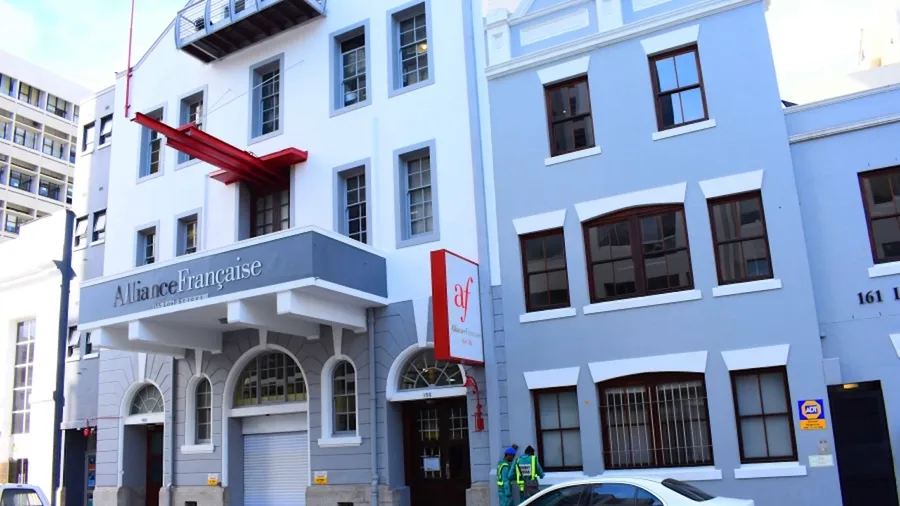
Based at 155 Loop Street in Cape Town’s Central City, the cultural centre has made cinema an important part of its programme, offering audiences opportunities to experience films together, explore unfamiliar perspectives and discuss the ideas that stay with them long after the credits roll.
More than just a movie night
Through its CinémAlliance+ programme, Alliance Française du Cap (AFCT) brings classic and contemporary films to local audiences, often pairing screenings with discussions that unpack their artistic, historical and social significance.
The approach offers an alternative to watching films alone on streaming platforms. Instead, audiences can experience a story collectively, hear different interpretations and discover how cinema reflects the societies and communities from which it emerges.
‘Film allows us to experience a language in a way that goes far beyond words.’
– Gaël Corrignan, director of Alliance Française du Cap.
Corrignan explains that cinema captures the voices, stories and character of a particular time and place, creating opportunities for people from different cultures and generations to engage with one another.
The programme forms part of the Alliance’s wider cultural offering, which includes concerts, exhibitions and performances. Its media library also gives visitors access to French-language books, magazines and films.
A Francophone film programme with a global reach
Throughout 2026, CinémAlliance+ has introduced Cape Town audiences to a diverse selection of films from the French-speaking world and beyond.
The programme has included Everybody Loves Touda, a Moroccan drama, and Samba Traoré, by acclaimed Burkinabè filmmaker Idrissa Ouédraogo. Other screenings have featured the documentary La Panthère des neiges, Mathieu Kassovitz’s celebrated film La Haine and De nos frères blessés.
Most recently, audiences gathered on 20 October for François Truffaut’s L’Histoire d’Adèle H. The screening was followed by a presentation and discussion led by Richard Lowder of the University of Cape Town.
These events help keep films in circulation and introduce them to viewers who might otherwise never encounter them. They also encourage audiences to consider how themes such as identity, memory, social inequality and belonging resonate across different countries and generations.
Picture: Supplied
Why audiovisual heritage still matters
World Day for Audiovisual Heritage serves as a reminder that preserving cultural history involves more than safeguarding old recordings and maintaining archives. Films must also remain accessible if their stories, ideas and artistic contributions are to reach new audiences.
Cape Town provides a fitting setting for this exchange. Recognised as a UNESCO Creative City of Design since 2017, the city has an established international creative identity, supported by its diverse communities, cultural institutions and growing creative industries.
A 2024 UNESCO monitoring report highlighted the role of arts and culture in Cape Town’s efforts to promote inclusion, cultural diversity and economic opportunity.
The City of Cape Town has also continued investing in the local film sector. In September 2026, it opened an additional round of its Film Fund, supporting projects intended to create jobs, develop emerging talent, encourage sustainability and inclusion, and tell authentic stories about Cape Town’s history and cultural heritage.
Against this backdrop, AFCT’s film programme offers another way for residents and visitors to engage with cinema as a shared cultural experience.
Its Loop Street location, close to the restaurants, galleries and entertainment venues around Long Street, Bree Street and Greenmarket Square, also makes screenings an opportunity to explore the Central City’s wider arts and cultural scene.
What to expect at the next CinémAlliance+ screening
The next screening takes place on Tuesday, 10 November 2026, at 18:00 at Alliance Française du Cap, 155 Loop Street.
The featured film is L’amour et les forêts (Just the Two of Us), Valérie Donzelli’s 2023 psychological drama, presented in French with English subtitles.
Adapted from Éric Reinhardt’s novel, the film follows Blanche as an intense romance gradually develops into a relationship marked by isolation and coercive control. Her struggle to regain her freedom raises difficult questions about intimacy, manipulation and the dynamics of abusive relationships.
After the screening, Professor Markus Arnold, director of UCT’s School of Languages and Literatures, will lead a presentation and discussion. His expertise in Francophone literature and cinema will provide audiences with an opportunity to explore the film’s themes and interpretations in greater depth.
Admission is free, and a cashless bar will be available.
Those interested in French cinema, international storytelling or Cape Town’s cultural events can follow Alliance Française du Cap’s cultural pages for details of upcoming screenings, discussions and other activities.
Details:
-
Date:
Tuesday, 10 November 2026
-
Time:
18:00
-
Venue:
Alliance Française du Cap, 155 Loop Street.
-
Tickets:
Free
Be the first to know – Join our WhatsApp Channel for content worth tapping into! Click here to join!
Also Read:
Adventure, adrenaline and inspiring stories hit South African cinemas with Banff film tour
**Picture: **Supplied
The post Alliance Française du Cap keeps French cinema alive in Cape Town appeared first on Cape Town ETC.
Follow the story
About this article
- Length
- 887 words · 4 min read
- Published
- October 27, 2026
- Byline
- Cameron Kelly
- Source
- Cape Town ETC