

Uganda’s Tunisia Test: What the Cranes showed
Uganda Cranes return to action at home on Tuesday with a point already in the bag, but the 1-1 draw against Tunisia has left plenty to dissect before the next AFCON qualifier against Libya at Hoima City Stadium. The match in Radès was Uganda’s first Group H qualifier and ended 1-1 after Tunisia took an early lead […] The post Uganda’s Tunisia Test: What the Cranes showed appeared first on Kawowo Sports .

AI summary
Rogers Mato, James Bogere and Aziz Kayondo
Uganda Cranes return to action at home on Tuesday with a point already in the bag, but the 1-1 draw against Tunisia has left plenty to dissect before the next AFCON qualifier against Libya at Hoima City Stadium.
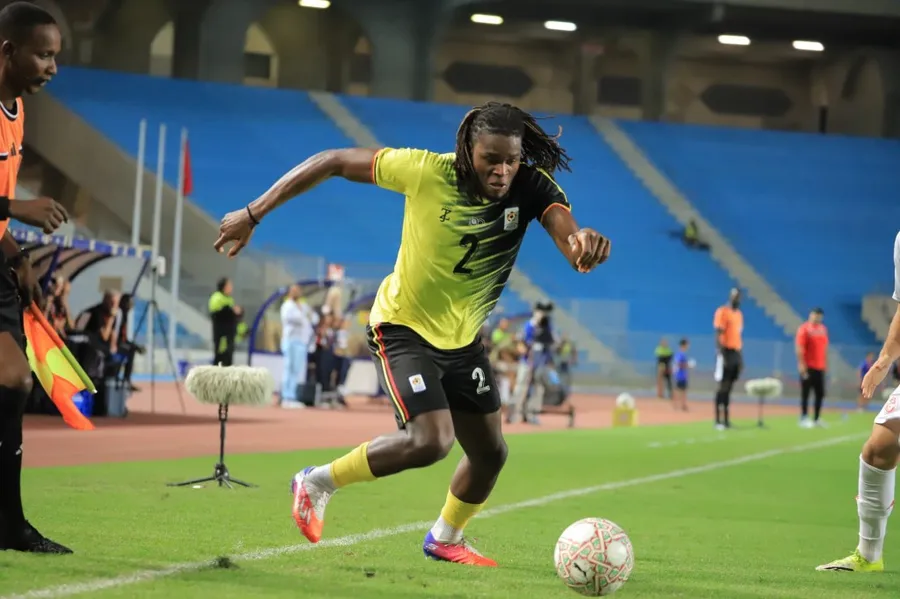
The match in Radès was Uganda’s first Group H qualifier and ended 1-1 after Tunisia took an early lead and Rogers Mato restored parity in the second half.
For Uganda, the result was built largely on defensive discipline, midfield work and the ability to remain in the contest despite Tunisia controlling significant portions of the game. The numbers, however, also point to an attacking area that needs considerable improvement ahead of Tuesday’s home encounter.
The broad statistics show a match in which Tunisia had the greater territorial and attacking influence.
Tunisia enjoyed 55 percent possession to Uganda’s 45 percent, had 13 shots against Uganda’s nine and recorded 23 touches in the opposition box compared with Uganda’s 15. Tunisia also had the game’s only big chance.
The expected-goals figures tell an even clearer story: Tunisia registered 1.06 expected goals against Uganda’s 0.30. Uganda therefore scored despite creating relatively little in terms of chance quality.
Uganda was not dominant, but they were difficult to break down completely. They stayed organised enough to survive Tunisia’s periods of pressure and found the important moment that brought them level.
Uganda’s defensive numbers were arguably the strongest part of the performance. The Cranes made 24 tackles, winning 15, compared with Tunisia’s 19 tackles and 12 won. Uganda also made 10 interceptions against Tunisia’s four and recorded 15 clearances.
That suggests a disciplined defensive display against a side that spent more time in possession and got more players into the attacking areas. Uganda also won 60 duels compared with Tunisia’s 57.
This physical competitiveness will be important against Libya. The challenge on Tuesday will be to retain that defensive discipline while taking greater control of the match.
Tunisia struck in the 12th minute through Arous, with Ayari providing the assist. Uganda consequently had to play from behind for more than 50 minutes before finding an equaliser.
That early setback is significant because Uganda did not allow the game to run away from them. Instead, the Cranes eventually found a response through Mato in the 68th minute, with Nathan Asiimwe involved in the move that produced the equaliser.
Mato’s equaliser was the defining individual contribution from the Ugandan side. The striker recorded three shots, the joint-highest attacking output among the players in the statistics, with one on target. He also recorded 31 touches and an expected goal of 0.12.
His goal was therefore valuable not only because it changed the scoreline, but because Uganda had struggled to generate clear opportunities. Mato’s performance gives Paul Put something to build around going to Hoima.
The question now is whether Uganda can create more situations in which Mato and the other attackers can operate closer to goal.
Nathan Asiimwe
Asiimwe was another player whose performance deserves attention. The wing-back was involved in the equalising goal and completed 19 of 23 passes, an 83 percent accuracy rate. He also recorded 42 touches and two successful dribbles.
His contribution demonstrates the importance of Uganda’s wide players in moving the team from defence into attack. Against Libya, that could become even more important.
A home fixture should offer Uganda greater opportunity to push their wing-backs forward, stretch the opposition and create additional avenues into the final third.
Kenneth Semakula produced one of Uganda’s strongest statistical performances. He completed 42 of 52 passes, an 81 percent success rate, and recorded 68 touches. He also registered 15 duels and received a 7.4 rating, the highest listed among Uganda’s players.
Against Libya, Semakula’s role could become even more significant because Uganda are likely to need greater control of the ball rather than simply absorbing pressure.
Alhassan also stood out for his passing efficiency. He completed 34 of 38 passes, 89 percent while recording 54 touches.
That efficiency is encouraging, but the overall team numbers show the next challenge. Uganda completed 324 of 403 passes, an 80 percent success rate. Tunisia completed 412 of 493 at 84 percent.
Uganda completed only 37 of 67 final-third passes, compared with Tunisia’s 65 of 103. That is an important lesson from the match: Uganda could retain the ball reasonably well, but their efficiency and threat decreased as they moved closer to the opposition goal.
Aziizi Kayondo completed 26 of 28 passes, giving him a 93 percent passing accuracy, while registering 55 touches. That is one of the cleaner individual passing performances in Uganda’s statistics. Again, though, the issue is what happens after the safe pass.
Against Libya, Uganda will need those efficient passes to help produce forward momentum rather than simply maintain possession.
Denis Onyango faced a Tunisia side that produced four shots on target and made three saves. The fact that Uganda conceded only once despite Tunisia having 13 shots and 23 touches in the box points to a combination of goalkeeping and defensive work protecting the team.
Uganda’s biggest weakness was chance creation. Nine shots sound respectable until the quality of those chances is considered. Only three were on target; Uganda had no big chances, and only three of their shots came from inside the box. Tunisia, by comparison, had nine shots from inside the box.
Uganda therefore needs to get more bodies into dangerous positions. The team also registered eight key passes against Tunisia’s seven, which suggests the problem was not necessarily an absence of attacking ideas. The bigger issue was turning those moments into high-quality scoring opportunities.
Put made his first change in the 63rd minute, bringing on Travis Mutyaba for James Bogere. Mato then made way for Steven Mukwala in the 82nd minute, while Allan Oyirwoth replaced Alex Okello. Baba Alhassan was eventually replaced by Hillary Mukundane in the 90th minute.
The changes gave Uganda fresh attacking legs during the second half and helped the Cranes maintain their competitiveness after drawing level.
On Tuesday, Uganda will play at home against Libya at Hoima City Stadium.
The most important question going into Hoima is whether Uganda can combine the defensive discipline they showed in Tunis with a more ambitious attacking game.
The Libya match will also carry significance because it will be Uganda’s first international game at Hoima City Stadium.
The National Council of Sports describes the facility as a 20,000-seat stadium, with four dressing rooms and facilities designed to meet international sporting requirements.
The stadium therefore provides a new setting for the national team as Uganda continues preparations towards AFCON 2027.
The post Uganda’s Tunisia Test: What the Cranes showed appeared first on Kawowo Sports.
Follow the story
About this article
- Length
- 1,115 words · 6 min read
- Published
- September 27, 2026
- Byline
- Grace Kemigisa
- Source
- Kawowo Sports