
How 14 fatal decisions bungled up Busega–Mpigi expressway

AI summary
In recent weeks, Ugandans have been shocked at the sheer negligence, corruption and mismanagement that bedeviled the Busega–Mpigi expressway.
What was initially a Shs 547bn project starting from Kibuye to Busega to Mpigi and was funded by a loan from the African Development Bank (AfDB). It could end up costing Shs 1.3tn.
DAVID LUMU has compiled several key documents right from inception in 2015 and in Part I of this detailed, chronological analysis, we bring you decision-by-decision, instrument by instrument, date by date and who was responsible. In all, there were 16 key decisions made but only two passed the test.
DECISION 1: **Complete the design before tendering the works **
Records show that between November, 2015 and January, 2016, the Unra top management team led by Allen Kagina, the executive director, held a series of meetings for a works contract for the Busega-Mpigi Expressway.
On November 2015, Isaac Wani, the director Network Planning and Engineering (DNPE) wrote a brief to the top management team recommending that the project be let as design-and-build, or alternatively that the supervision consultant be procured first to tie up the design before the tender is launched.
On December 7, 2015, Wani told top management that this is the financier’s own recommendation. In other words, the supervision consultant to be procured first, design tied up, then tender the contractor.
However, on January 5, 2016, Patrick Muleme, the Unra head of design, disagreed with the move and emailed the Procurement and Disposal Unit advising that procurement civil works should be launched only after completion of the design update.
However, Muleme was ignored and the works were tendered on the incomplete design. In defence of the move, Unra’s management response to the financier’s July, 2024 audit states that the designupdate consultancy was initiated on February 19, 2016, 15 months before the civil works procurement of May 24, 2017, with the object of completing the design first and that “due to the delay in procuring the consultant and stakeholder pressure to engage a contractor for works, the procurement was initiated with the understanding that the changes arising from the detailed design carried out by the consultant would be considered at design review stage.”
In many ways, that statement is the institution’s own admission that it knew the sequence was wrong and proceeded anyway, under pressure it does not name.
**Status: FAILED. **
Unra’s top management was warned three times, in writing, in six weeks, including by the financier.
**DECISION 2: Reconcile the financier’s scope change with the design **
Between July, 2015 and May, 2016, the AfDB had a number of correspondences with the Finance ministry as well as Keith Muhakanizi, the then permanent secretary and secretary to the treasury (PSST).
The key issue was that if the lender changes what is being built, the design must change before the project is tendered. On April 26, 2016, Unra’s letter to the Finance ministry stated that the loan amount is inadequate for the scope, which it identified as a 23.7km tolled expressway with four major interchanges.
As a result, government decided to exclude the route from Kibuye to Busega from AfDB financing. Then in May, 2016, AfDB revised the project appraisal report and technical annex and removed the Kibuye–Busega section.
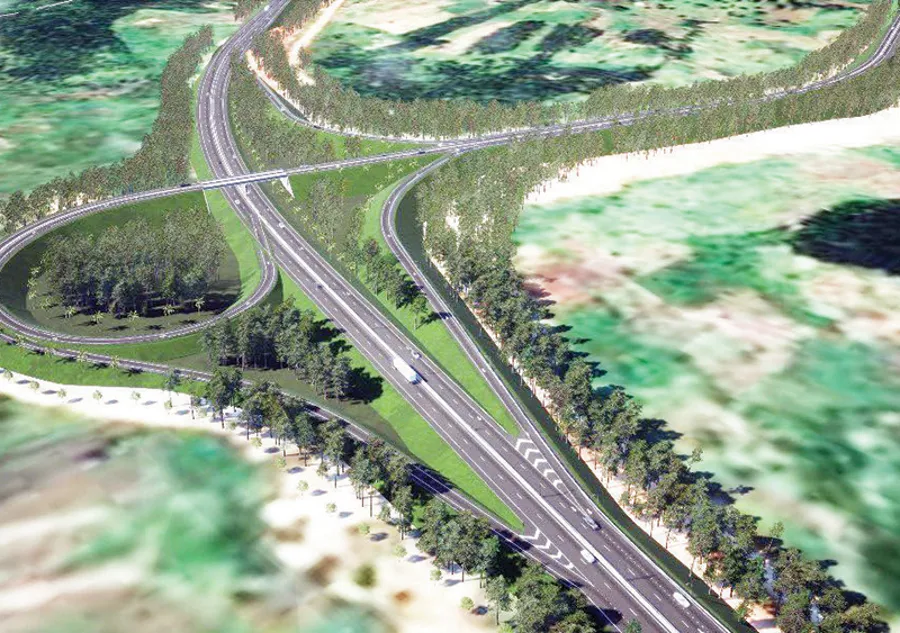
It introduced four interchanges on the Busega– Mpigi section based on the final traffic operations and modelling report, but not the detailed design report. As a result, four interchanges that did not exist in the design. entered the project’s financing document No corresponding design was commissioned before tender.
No variation framework was established. In fact, AfDB’s own auditors in July, 2024 noted that the traffic operations and modelling report of July, 2015 recommended four interchanges and link roads but the detailed design for them was never carried out, and that this “suggests that the technical scrutiny of the documents was inadequate and below the expected standard for this type of contract.”
They added: it “remains unclear why the bank granted ‘no objection’ for the civil works contract while being aware of these major design inadequacies.”
**Status: FAILED. **The scope change originated at the gate that was supposed to police scope changes.
**DECISION 3: Authorise initiation of the works procurement **
On October 12, 2016, the Unra top management team commenced the process of tendering by approving the initiation of procurement for civil works. It was signed by Joseph Otim, the director of Road Maintenance who at the time was the acting executive director.
Then on October 31, the top management team took the decision instructing that the bidding documents be officially submitted to the procurement and disposal unit and the procurement initiated.
So, procurement was authorised at Accounting Officer level and instructed at Top Management level, 11 months after the designcompletion warnings of Decision 1 and five months after the financier had added four undesigned interchanges at Decision 2.
**Status: FAILED. **
Here, two offices with the authority to sequence the project correctly instructed it to proceed incorrectly.
**DECISION 4: Contracts Committee approval of the works bidding document **
On September 30, 2016, Wani prepared and issued bidding documents for the works. Then between December 20, 2016 and May 5, 2017, the Unra contracts committee chaired by Wani approved the supervision of the Request for Proposal (RFP) and the AfDBamended RFP.
On May 29, 2017, the contracts committee approved the bidding document with a minute signed by Wani as chairperson. In all this, Wani chaired both the the directorate that authored the tender documents and the committee that approved them.
Status: FAILED.
Author and approver were the same office yet this is the specific conflict the contracts committee exists to prevent.
**DECISION 5: The financier’s no-objection to the tender documents **
On June 8, theAfDB approved the specific procurement notice and the bidding document for the works by clearing a tender built on a design that the bank’s own May, 2016 appraisal report had already superseded through adding four interchanges to it.
**Status: FAILED. **The bank’s own July, 2024 audit asks why it did so. To date the bank has not answered its own question.
**DECISION 6: The realignment decision **
A September 13, 2017 memo from Samuel Muhoozi, the Unra director for Roads and Bridges Development (DRBD) to Wani requested confirmation of a revised alignment, following “unconfirmed information about a new alignment which was entirely different from the one they were acquiring at that time derived from the original design.”
Then on September 22, 2017, Wani sent a handwritten instruction to Muleme directing him to handle Muhoozi’s request. In return, Muleme drafted and transmited the revised road alignment and right-ofway coordinates for acquisition to Muhoozi on October 13, 2017.
It was signed by Wani. Thereafter on October 18, 20017, Muhoozi sent another memo requesting the approved design for the realignment. In return, Wani instructed the Muleme on October 19, 2017 to submit the drawings.
The latter’s handwritten response on October 20, 2017 referred Wani back to the October 13, 2017 memo. In all this, the project was switched to a new corridor. Land acquisition was redirected onto it.
Incidentally, the tender for the old corridor continued. The question is, who decided? Records show that Muhoozi’s own November, 2022 report to Kagina notes that the design changes were instructed to Muhoozi by Wani beginning with the memo of October 13, 2017.
It states: “Wani is in a better position to explain the origin of the design change.” So, the instruction to prepare the memo was issued by Wani, who also signed it. Meanwhile, Muleme drafted it under written instruction and holds no signature on it.
**Status: FAILED. **
Not because the realignment was wrong; that is an engineering question this article does not reach, but because of Decision 7.
**DECISION 7: Disclosure to the bidders **
Period: 13 October 2017 – 8 May 2018
Held by: Procurement and Disposal Unit; Contracts Committee; Accounting Officer What the instrument says.
Unra’s own terms of reference governing the design work provide that where the design changes, the revised contract documents shall be issued to bidders and the bid period extended as necessary in accordance with PPDA rules.
What happened was that no addendum was issued and no bidder was informed. Meanwhile, the bid period was not extended and bidding continued on the superseded design.
**Status: FAILED. **This is the failure from which the price arises. Every bidder priced a road nobody intended to build. Only one of them would be in a position to price the road that would be built, and it would do so with no competitor.
**DECISION 8: Accounting Officer approval of the Resettlement Action Plan (RAP) update on the new alignment **
A May 2, 2018 memo from Wani to Kagina requested approval to engage external experts to update the Resettlement Action Plan for Busega–Mpigi in light of the realignment.
Then on May 5, 2018, Kagina approved expenditure whose sole justification was the new alignment. That was three days before the contracts committee approved the award of the works contract on the old one.
**Status: PERFORMED. **The decision functioned. The approval was given, properly and in writing. Part II in the next edition
The post How 14 fatal decisions bungled up Busega–Mpigi expressway appeared first on The Observer Media Ltd.
Follow the story
About this article
- Length
- 1,533 words · 8 min read
- Published
- September 17, 2026
- Byline
- David Lumu
- Source
- The Observer Uganda