

Rejected amendment puts MPs at centre of election livestreaming dispute
At the centre of the controversy is Section 39(1G) of the Elections Act, which requires the Independent Electoral and Boundaries Commission (IEBC) to establish a mechanism for livestreaming results announced at polling stations.

AI summary
- At the centre of the controversy is Section 39(1G) of the Elections Act, which requires the Independent Electoral and Boundaries Commission (IEBC) to establish a mechanism for livestreaming results announced at polling stations.
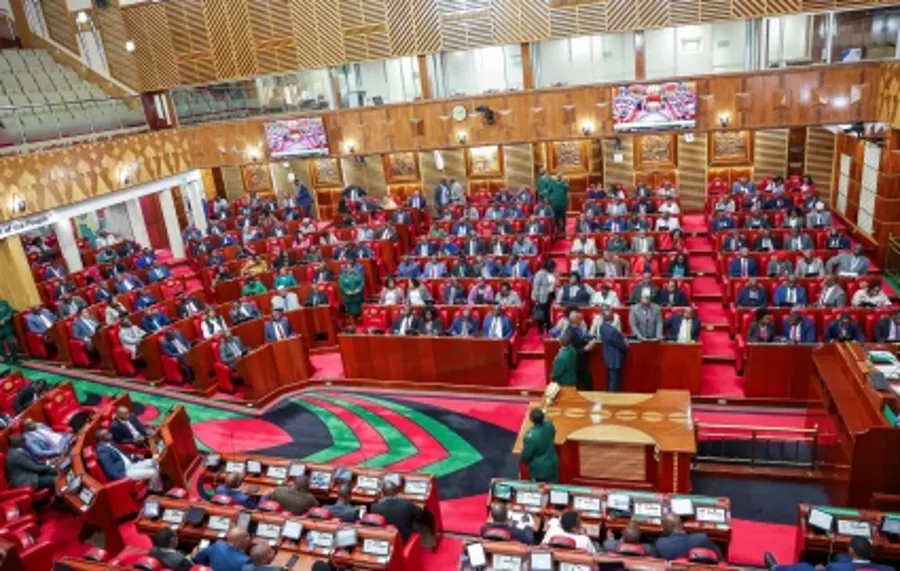
MPs in the National Assembly
Members of the National Assembly are under scrutiny over their failure to resolve a legal defect in the provision governing the livestreaming of election results, fuelling debate over how results will be relayed during the 2027 General Election.
At the centre of the controversy is Section 39(1G) of the Elections Act, which requires the Independent Electoral and Boundaries Commission (IEBC) to establish a mechanism for livestreaming results announced at polling stations.
However, the provision also states that the streamed results are for public information only and cannot form the basis of a declaration by the commission.
The High Court declared the provision unconstitutional in 2018, a finding upheld by the Court of Appeal in 2023. The appellate court questioned the distinction between results streamed from polling stations and those used to declare the final outcome.
During Thursday’s parliamentary session, MPs rejected an amendment by Suba South MP Caroli Omondi, who said his proposal sought to ensure livestreamed results counted in determining the election outcome.
“My proposal was to make the livestreamed results count, but it was voted against in the House,” Omondi said.
National Assembly Majority Leader Kimani Ichung’wah defended the decision, warning against changes to electoral laws close to an election.
He cited recommendations by the Kriegler Commission, which investigated the disputed 2007 elections, as the basis for caution over amendments affecting elections and the transmission of results.
Minority Leader Junet Mohammed also opposed making changes at this stage, arguing that last-minute amendments could undermine confidence in the electoral process.
However, Democratic Party leader Justin Muturi questioned why legislators had delayed considering the proposals.
“National Assembly has had this Bill since February this year. Why did they wait until October, one year down to the election, to consider it?” Muturi posed.
During the debate, MPs deleted Clause 22 of the Bill, which proposed replacing Section 39 of the Elections Act with a new provision.
The National Assembly has maintained that removing the clause retained the existing livestreaming provision. Ichung’wah has also dismissed claims that MPs scrapped the requirement.
That position, however, leaves unresolved the question raised by the court rulings: how Parliament intends to address the constitutional defects in the existing provision.
In its proposed amendments, the IEBC recommended deleting Section 39(1G), saying the changes were intended to align the law with the court’s decision and establish a constitutionally compliant framework.
President William Ruto has meanwhile dismissed claims of a scheme to interfere with the livestreaming of election results, describing the allegations as propaganda.
The dispute has brought renewed attention to the distinction between retaining wording in the Elections Act and addressing a court finding that the provision is unconstitutional.
While the debate does not, by itself, establish that the IEBC is prohibited from livestreaming results, legislators face questions over why the legal framework remains unresolved ahead of next year’s polls.
Follow the story
About this article
- Length
- 510 words · 3 min read
- Published
- October 26, 2026
- Byline
- Emmanuel Too
- Source
- Citizen Digital