

Uganda’s batting firepower and bowling wobbles: A Player-by-Player analysis of the Zambia opener

AI summary
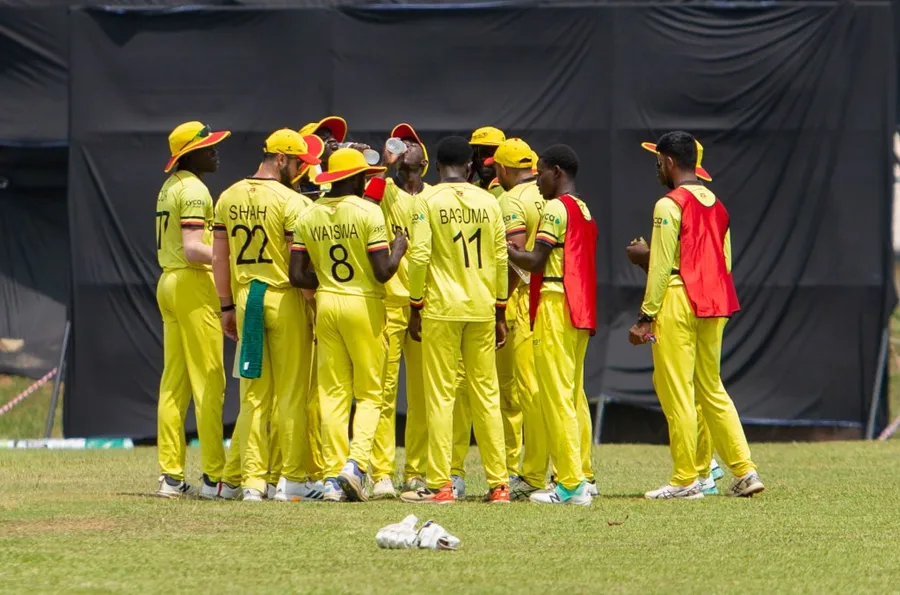
Uganda began their T20 World Cup qualifying campaign in the Nigerian capital Abuja on Tuesday, 20 October 2026, with a commanding 195/6 before dismissing Zambia for 108 in 17.3 overs. The 87-run victory gave Uganda a strong start, built on aggressive batting, timely wickets and some excellent bowling spells.
However, the scoreline did not tell the entire story. While Olipa and captain Riazat Ali Shah set the tone with the bat, Uganda also had a slow patch in the middle order and a mixed bowling performance, with Joseph Baguma taking four wickets but conceding runs at a costly rate.
The batting
Olipa**:**** 82 off 42 balls**
Gerald Olipa was the standout performer of the day, scoring 82 off 42 deliveries, including five fours and seven sixes, at a strike rate of 195.23. His innings combined power with consistency, allowing Uganda to maintain a scoring rate of 9.75 runs per over and finish with a formidable total. He also earned Player of the Match honours. His seven sixes demonstrated his ability to clear the boundary, while his 42-ball stay gave Uganda the platform to push towards 200.
The challenge for him in the matches ahead will be to maintain that level of aggression without sacrificing the ability to bat through the innings.
Riazat** Ali Shah — 38 off 20 balls**
The captain delivered an aggressive innings featuring five fours and a six, striking at 190. His contribution helped Uganda recover momentum after losing Robinson Obuya early. Riazatshowed good intent and will want to maintain that attacking approach while ensuring he bats deep enough to turn a promising start into a match-defining score.
Raghav Dhawan — 23 off 16 balls
Dhawan scored at a strike rate of 143.75, hitting two fours and a six. He provided Uganda with early momentum before falling to Joshep Zulu. His contribution was useful, but he could have pushed on for a bigger score. With Uganda losing an early wicket, a longer partnership would have strengthened the foundation.
Sumeet Verma — 21 off 20 balls
Verma helped steady the innings after Riazat’s dismissal, but his strike rate of 105 was considerably lower than those of the players around him. In a T20 innings progressing at nearly ten runs per over, his 20-ball stay for 21 runs slowed the scoring rate. His task is to rotate the strike more consistently and find boundary-scoring options when the innings needs acceleration.
Alpesh Ramjani — 10 off 14 balls
Ramjani struggled to find the boundary, scoring at a strike rate of 71.42 without hitting a four or six. At a stage when Uganda needed to maintain pressure, his innings offered little acceleration before he was dismissed leg before wicket by Ismail Kara. This was one of Uganda’s weaker batting contributions, and he will need to improve his scoring options against spin and avoid allowing the run rate to stagnate.
Robinson Obuya — 1 off 2 balls
Obuya’s innings ended almost as soon as it began, leaving Uganda at 4/1 in the first over. While a two-ball dismissal is not enough to judge a player’s overall ability, this was an unproductive start. He will need to make better use of the opening deliveries and avoid putting unnecessary pressure on the incoming batters.
Kenneth Waiswa — 3 not out off 4 balls
Waiswa remained unbeaten, but four deliveries were too few to establish any meaningful batting rhythm. His contribution was modest, and the next opportunity will be about converting even a short stay into quick runs when Uganda are looking to finish strongly.
Juma Miyagi — 11 not out off 3 balls
Miyagi struck a four and a six to finish at a remarkable strike rate of 366.66. His late cameo helped Uganda push their total to 195. Returning from Zimbabwe injured just days before the qualifiers, he also marked his 50th appearance for Uganda. His contribution was an encouraging sign, although managing his fitness and ensuring he is ready for the demands of the remaining matches will be important.
The bowling
Uganda’s bowlers eventually dismantled Zambia for 108, but the figures reveal a performance with two distinct sides. Alpesh Ramjani and Juma Miyaji offered control and penetration, while Joseph Baguma claimed four wickets but conceded 44 runs.
Alpesh Ramjani — 2/13 in 4 overs
Ramjani was Uganda’s most economical bowler, conceding just 13 runs in four overs at 3.25 per over while taking two wickets. He removed Jakir Patel and Joshep Zulu, helping prevent Zambia from building a late recovery. His combination of control and wicket-taking was precisely what Uganda needed, and repeating that discipline will be valuable throughout the qualifiers.
Juma Miyagi — 3/17 in 3 overs
Miyagi dismissed Shadreck Malama, Ayaz Dadabhai and Zahirbhai Patel, finishing with three wickets at an economy rate of 5.66. His breakthroughs helped keep Zambia from recovering after its early setbacks. Given his recent return from Zimbabwe while injured, the performance was particularly notable. His priority now is to remain fit and maintain this impact without being rushed back beyond his capacity.
Joseph Baguma — 4/44 in 4 overs
Baguma was Uganda’s leading wicket-taker, claiming four wickets, including Robert Lungu, Joyeb Chand, Ismail Kara and Zakir Husain Patel. However, he conceded 44 runs at 11 per over, making him Uganda’s most expensive bowler on the day. The wickets were valuable, but the economy rate is a concern. Against more dangerous batting line-ups, such an expensive spell could undo the gains made by the other bowlers. Better execution of lengths, variation and control at the death will be essential.
Enock Kasaija — 1/16 in 3.3 overs
Kasaija conceded just 16 runs and took the final wicket of Soyeb Pendi, completing the dismissal of Zambia for 108. His economy rate of 4.57 was strong, and he helped finish the innings efficiently. He could look to make an impact earlier in his spell as well, but his overall contribution was disciplined.
Riazat** Ali Shah — 0/9 in 2 overs**
Riazat conceded only nine runs in two overs at an economy rate of 4.50. Although he did not take a wicket, he kept the scoring under control and supported the more attacking options. The opportunity ahead is to turn that control into wicket-taking pressure when conditions allow.
Kenneth Waiswa — 0/9 in 1 over
Waiswa conceded nine runs in his only over. That is a relatively expensive rate, but one over is too small a sample to label his bowling performance poor. He will need a longer spell in subsequent matches before his control and effectiveness can be properly assessed.
Verdict
Overall, the key lesson is that Uganda should not confuse an 87-run victory with a flawless performance. Against stronger opponents, a middle order that loses momentum or a bowler who concedes 11 runs per over could change the outcome of a match.
Uganda have given themselves a positive start to the sub-regional qualifiers. If they can preserve the attacking intent shown by Gerald, maintain the discipline displayed by Ramjani and Miyaji, and address the areas exposed in the middle order and Baguma’s spell, they will be better equipped for the challenges ahead.
The post Uganda’s batting firepower and bowling wobbles: A Player-by-Player analysis of the Zambia opener appeared first on Kawowo Sports.
Follow the story
About this article
- Length
- 1,206 words · 6 min read
- Published
- October 21, 2026
- Byline
- Grace Kemigisa
- Source
- Kawowo Sports