

Govt must intervene in Ghana football despite FIFA fears – Kudjoe Fianoo
Former Ghana League Clubs Association (GHALCA) chairman Kudjoe Fianoo has challenged Ghana to reconsider its fear of FIFA sanctions, arguing that concerns over the world governing body’s regulations should not prevent efforts to address the country’s declining football fortunes. Mr Fianoo believes Ghana cannot continue to watch its football deteriorate because of fears that government […]

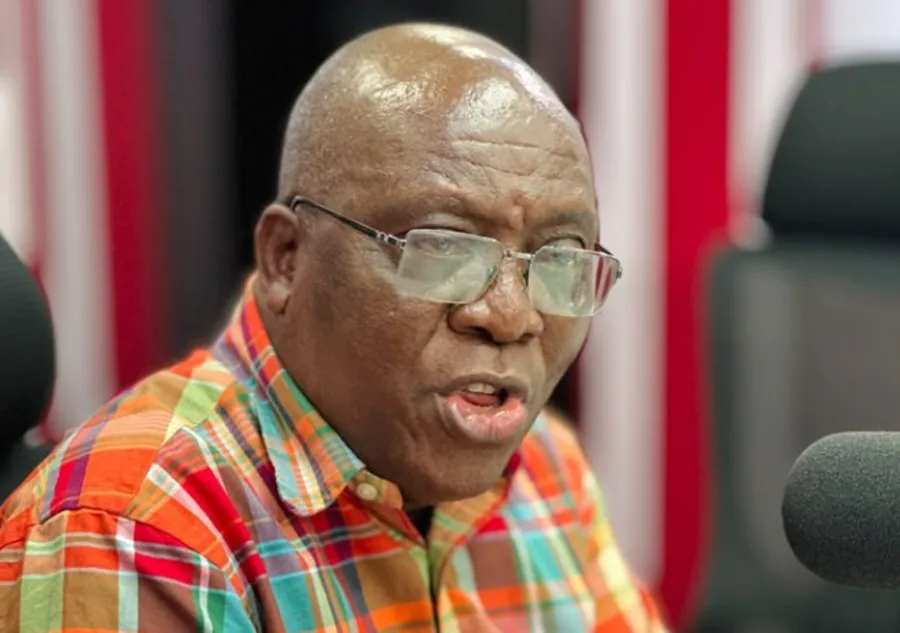
Former Ghana League Clubs Association (GHALCA) chairman Kudjoe Fianoo has challenged Ghana to reconsider its fear of FIFA sanctions, arguing that concerns over the world governing body’s regulations should not prevent efforts to address the country’s declining football fortunes.
Mr Fianoo believes Ghana cannot continue to watch its football deteriorate because of fears that government intervention in the administration of the sport could attract sanctions from FIFA.
“If it is because of FIFA, our football is collapsing, and because we fear FIFA, we cannot rescue our sinking ship, then we should stop this conversation,” he told Graphic Sports.
The veteran football administrator argued that Ghana, as a sovereign state, has a legitimate right to demand accountability, particularly when public funds are used to finance national teams and develop football infrastructure.
His comments have reignited debate over the relationship between the Ghana Football Association’s (GFA) independence and the government’s financial responsibilities to the sport.
FIFA regulations prohibit undue third-party interference in the affairs of member associations, with violations potentially attracting sanctions.
However, Mr Fianoo insists that the rules should not be used to shield football administrators from public scrutiny, especially when taxpayers’ money supports the game.
He has consequently called for a radical restructuring of football financing, challenging the GFA to become commercially sustainable if it wishes to operate independently of government involvement.
“Then we have to appeal to the government not to use our taxpayers’ money in football,” he said. “Let’s make the GFA a completely private, self-sustaining association.”
Mr Fianoo also suggested that football supporters and other concerned stakeholders could organise peaceful demonstrations and sustain public pressure to demand reforms.
Mr Fianoo’s intervention comes amid mounting scrutiny of GFA president Kurt Simeon-Okraku’s leadership, with the performances of Ghana’s national teams raising concerns despite notable achievements in women’s football.
Since Mr Okraku took office in October 2019, the Black Stars have endured successive group-stage eliminations at the 2021 and 2023 Africa Cup of Nations (AFCON), failed to progress beyond the group stage at the 2022 FIFA World Cup and missed qualification for the 2025 AFCON.
Ghana’s latest AFCON qualifying campaign has added to the pressure, with defeats by Côte d’Ivoire and The Gambia leaving the Black Stars without a point after two matches in the race for the 2027 tournament.
The difficulties extend beyond the senior men’s team.
The Black Starlets were eliminated in the group stage of the 2026 Under-17 AFCON, missing out on qualification for the FIFA Under-17 World Cup.
The Black Satellites also endured a disappointing WAFU B Under-20 campaign, finishing third in their group with two points from three matches.
At the 2026 FIFA Under-20 Women’s World Cup, the Black Princesses finished bottom of their group and failed to reach the knockout stage.
Their 3-1 victory over South Korea was not enough to salvage their campaign, following defeats by Ecuador and France.
Despite the setbacks, Ghana’s women’s teams have delivered some encouraging performances.
The Black Queens won the Pink Ladies Cup and claimed bronze at the 2025 Women’s Africa Cup of Nations before reaching the quarter-finals of the 2026 edition.
They subsequently defeated Côte d’Ivoire to secure a place in the inter-confederation play-offs for the 2027 FIFA Women’s World Cup.
The Black Maidens have also provided grounds for optimism after qualifying for the 2026 FIFA Under-17 Women’s World Cup in Morocco and recording several convincing victories in the WAFU B Girls’ Cup.
Nevertheless, the contrasting fortunes of the national teams have intensified questions about the direction of Ghanaian football and the effectiveness of its development structures.
Mr Fianoo’s proposal places the issue of accountability at the centre of the debate, challenging the GFA to demonstrate that it can deliver sustainable progress while maintaining its independence.
Follow the story
About this article
- Length
- 619 words · 3 min read
- Published
- October 14, 2026
- Byline
- Samuel Appiah
- Source
- Adomonline.com