

Anyako Queen Mother urges schoolgirls to report sexual harassment by teachers, other men

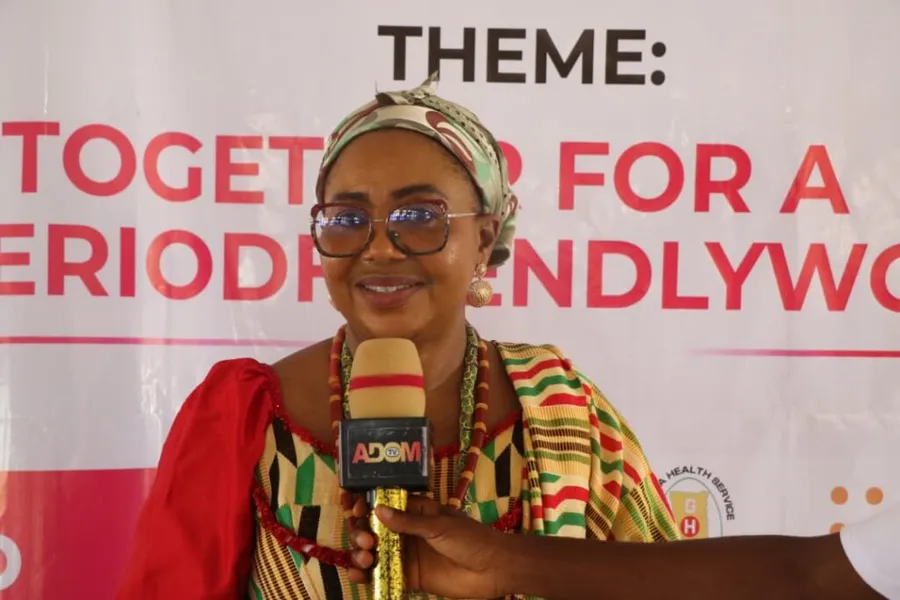
The Queen Mother of Anyako Lashibi Afekotuiame, Mama Awotsu Adzagba II, has urged schoolgirls to report incidents of sexual harassment and intimidation involving teachers and other men to the police and appropriate authorities.
She stressed that sexual harassment and gender-based violence against girls must not be tolerated, encouraging victims to speak out and seek assistance to prevent further abuse.
Mama Awotsu Adzagba II, known in private life as Richlove Amamoo, made the call during the 2026 Menstrual Hygiene Awareness Day celebration held at the Anyako Senior High School Hall in the Keta Municipality.
The programme was organised under the theme, “Together for a #PeriodFriendlyWorld.”
Speaking to Adom News on the sidelines of the event, the Queen Mother, who is also the Central Regional Head of the Department of Gender and Chief Executive Officer of the Mama Awotsu Adzagba II Foundation, expressed concern about the vulnerability of schoolgirls to sexual exploitation.
She cautioned teachers against inviting female students to their homes to perform domestic chores and other errands, warning that such practices could expose them to abuse.
According to her, girls must be equipped with the knowledge and confidence to recognise inappropriate conduct and report incidents that threaten their safety and dignity.
She also encouraged school authorities and parents to create an environment where students could report sexual harassment without fear.
Addressing participants in her capacity as chairperson of the programme, Mama Awotsu Adzagba II called for intensified efforts to eliminate menstrual stigma and improve access to sanitary products and appropriate sanitation facilities.
She noted that menstruation, although a natural biological process, continued to expose many girls and women to discrimination, embarrassment and social exclusion.
The Queen Mother explained that menstrual hygiene should not be treated solely as a health issue but also as a matter of human rights, dignity, gender equality and equal educational opportunities.
She expressed concern that some schoolgirls were forced to miss classes because they could not afford sanitary pads or lacked access to clean water and suitable toilet facilities.
Others, she said, stayed away from school during menstruation because of the fear of ridicule and embarrassment from their peers.
“No girl should have to choose between managing her period and pursuing her education,” she stressed.
Mama Awotsu Adzagba II maintained that addressing menstrual hygiene challenges required more than the occasional distribution of sanitary pads.
She called for sustained public education to correct misconceptions about menstruation, improved access to affordable menstrual hygiene products and the provision of safe and private sanitation facilities in schools and communities.
She also appealed to boys and men to support efforts to eliminate menstrual stigma by respecting girls and rejecting teasing, bullying and discriminatory attitudes associated with menstruation.
The Queen Mother urged parents to educate their children about menstrual health and provide the emotional support needed to help girls manage their periods confidently.
She further encouraged teachers to create supportive school environments while calling on health professionals to provide accurate information on menstrual hygiene and reproductive health.
Mama Awotsu Adzagba II appealed to government institutions, development partners, civil society organisations, traditional authorities, religious leaders and the private sector to collaborate in addressing menstrual health challenges.
She emphasised the need to prioritise girls with disabilities and those from vulnerable communities, noting that they often faced additional difficulties accessing menstrual hygiene products and sanitation facilities.
The gender expert urged stakeholders to move beyond awareness campaigns and implement practical interventions to ensure that menstruation did not prevent girls from participating fully in education and other activities.
She maintained that improving menstrual health would contribute to gender equality by enabling girls to pursue their education, develop leadership skills and participate actively in community development.
Mama Awotsu Adzagba II concluded by calling for collective efforts to break the silence surrounding menstruation and build communities where girls could manage their periods safely, confidently and without discrimination.
READ ALSO:
Ghanaians are not angry enough about galamsey – Awula Serwah
Titus Glover pours libation over La Pleasure Beach demolitions (Video)
Follow the story
About this article
- Length
- 660 words · 3 min read
- Published
- October 29, 2026
- Byline
- Faridatu Seidu
- Source
- Adomonline.com