

Ghanaian agri-tech platform SankofaFresh puts data to work against post-harvest losses
The start-up, co-founded by a Northeastern University PhD researcher, reports early results with an Accra food manufacturer Ghanaian food-systems platform SankofaFresh is using data and machine learning to tackle a persistent problem in agriculture: fresh produce that spoils before it reaches buyers. FAO data show that sub-Saharan Africa loses 23 percent of its food between […]

The start-up, co-founded by a Northeastern University PhD researcher, reports early results with an Accra food manufacturer Ghanaian food-systems platform SankofaFresh is using data and machine learning to tackle a persistent problem in agriculture: fresh produce that spoils before it reaches buyers.
FAO data show that sub-Saharan Africa loses 23 percent of its food between harvest and retail, the highest rate of any region.
Fruits and vegetables suffer the heaviest losses of any food group. In Ghana, researchers estimate that 30 to 50 percent of fruits and vegetables are lost along the value chain.
For smallholder farmers, those losses mean lower incomes. For consumers, they mean less food reaching markets.
SankofaFresh combines two tools.
The first is cold-chain monitoring, in which temperature and humidity sensors in storage rooms and delivery trucks send readings to a dashboard that flags produce at risk of spoiling.
The second is a matching system that schedules pickups and pairs each harvest with a buyer based on volume, location and quality.
The platform’s first commercial user is Leehouse and Chemical Ventures, a food manufacturer in Mallam Gbawe, Accra. Leehouse processes Ghanaian staples such as gari, plantain and cocoyam fufu, and palm oil, and its export markets include the United States and Canada.
Co-founder Joshua Kojo Aduampong Mantey worked at Leehouse as a part-time data-driven chemical engineer until 2024.
He left the company before it adopted SankofaFresh in March 2025.
Since then, Leehouse has used the platform on cassava and plantain deliveries from 40 supplier farms.
“Before we started using the platform, we were losing about one in five loads of plantain between the farm and our factory. Over the past 12 months, our intake records show that has dropped to about one in ten,” said Leehouse’s operations manager.
A plantain farmer from Nkawkaw who supplies Leehouse said: “Now I know ahead of time when the truck is coming and what price I’ll get, so less of my harvest sits and rots.”
SankofaFresh says it is in early discussions with two other food processors. No results from that work have been published.
Mantey, who serves as Head of Data and Artificial Intelligence, built the model that estimates spoilage risk from temperature and transit-time data, as well as the farmer-to-buyer matching algorithm.
“A lot of the food we lose in Ghana is lost in the days after harvest, when nobody can see what is happening to it. We wanted to make that visible,” he said.
Mantey is also a PhD researcher in chemical engineering at Northeastern University in Boston. His doctoral work uses large-scale computer simulations and machine learning to study how the gut’s mucus lining interacts with bile salts, nutrients and medicines.
SankofaFresh was co-founded by Rhoda Osei-Nkwantabisa (Co-Founder), Joshua Kojo Aduampong Mantey, George Arthur (Head of Operations) and Rosemary Aku Agbozo (Head of Partnerships).
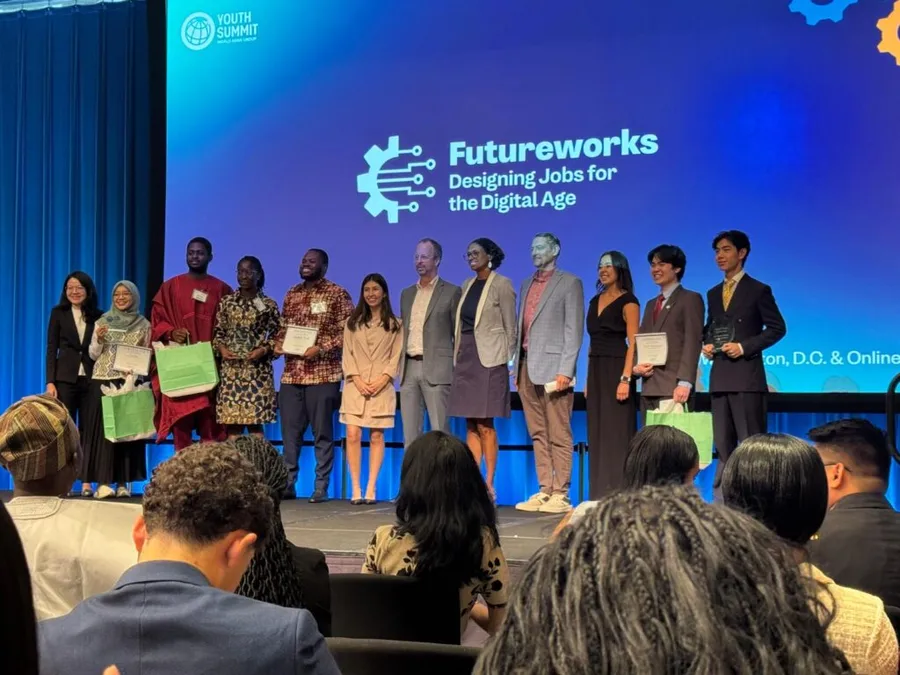
In 2026, the platform was selected as a finalist in the World Bank Group Summit Pitch Competition. It went on to win the People’s Choice Award, which was decided by audience vote.
The team plans to extend its monitoring to two more processors in 2027 and publish its loss-reduction data.
Follow the story
About this article
- Length
- 518 words · 3 min read
- Published
- October 6, 2026
- Byline
- Gertrude Okyere
- Source
- Adomonline.com