

Best to build, not borrow, our way out of decline

AI summary
South Africa’s economy is moving backwards and last week’s economic data has made the case for action even more urgent.
Statistics South Africa reported that GDP contracted by 0.2% in the second quarter of this year, after growth of just 0.4% in the first quarter. Mining declined by 3.0%, trade by 1.9% and manufacturing by 1.8%, while weak investment continued to weigh on growth.
After six-consecutive quarters of expansion, the economy has shifted into reverse. Waiting for a second contraction before acknowledging the seriousness of South Africa’s growth problem would be a mistake.
The South African Reserve Bank has reduced its 2026 growth forecast from 1.4% to 1.2% and warned that risks remain tilted to the downside. It has increased the repo rate to 7.25%. Growth matters because growth creates jobs, raises incomes and improves living standards.
Inflation has largely been driven by supply-side factors, including higher fuel and energy costs and geopolitical disruptions. Yet the primary monetary response has been higher interest rates. Higher interest rates make borrowing and investment more expensive.
The first-round effects are understood. Households with mortgages and other debt have less disposable income, while businesses face higher financing costs. Demand weakens.
The second-round effects are more concerning. Investment projects become less viable, construction activity slows and firms employ fewer people. As incomes weaken, tax revenues come under pressure and productive capacity remains constrained.
The Reserve Bank is acting within its mandate but South Africa must confront the growth consequences of sustained high interest rates. An economy that urgently needs investment is being asked to finance that investment at a higher cost.
That is why infrastructure investment must sit at the centre of the growth response. South Africa should move far more aggressively towards public-private partnerships, combining public resources with private capital. Building relationships with global investors and expanding the pipeline of financeable projects are the types of engagement the country needs.
Investment capital is available. Our task is to create an environment that attracts it.
That requires policy certainty, sound regulation, reliable electricity, efficient logistics, transparent procurement and strong project execution. Most importantly, it requires delivery that is on time, within budget and at the scale required to support economic expansion.
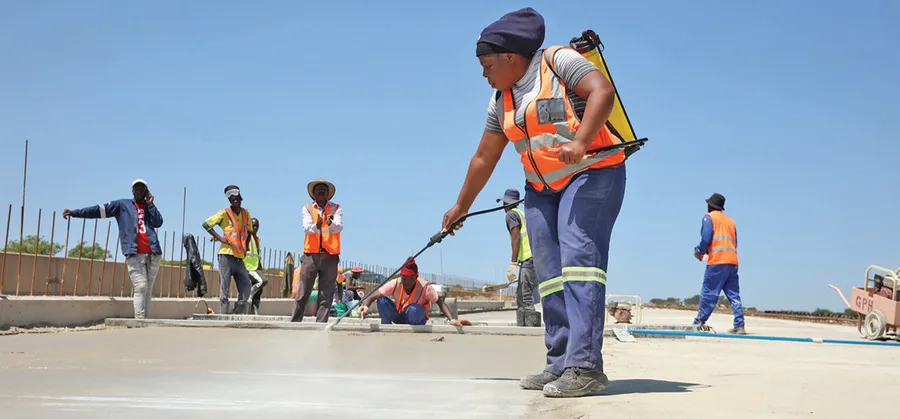
When South Africa invests in energy, rail or port infrastructure, workers earn incomes, suppliers receive orders and businesses expand activity. Reliable electricity enables businesses to produce more.
Efficient rail systems reduce transport costs. Better ports increase export capacity and competitiveness. The result is a larger and more productive economy capable of attracting further investment.
Government has taken steps to strengthen infrastructure financing and public-private partnerships. The challenge is execution at scale. The economy is in reverse. Our response should be to build our way forward.
•Maarten van Doesburgh is an economist, head of economics at CPUT, CEO of Economics Investment Group and a regular commentator and business consultant on South Africa’s economic landscape, focusing on financial markets, policy and business strategy. vandoesburghm@cput.ac.za
Follow the story
About this article
- Length
- 488 words · 2 min read
- Published
- September 27, 2026
- Byline
- Maarten Van Doesburgh
- Source
- Sunday World