
NPP alleges executive, administrative confusion over Arabic, Chinese language policy
The New Patriotic Party (NPP) has accused the government of creating what it describes as “executive and administrative confusion” over the implementation of Arabic and Chinese language policies in Ghana’s basic schools.

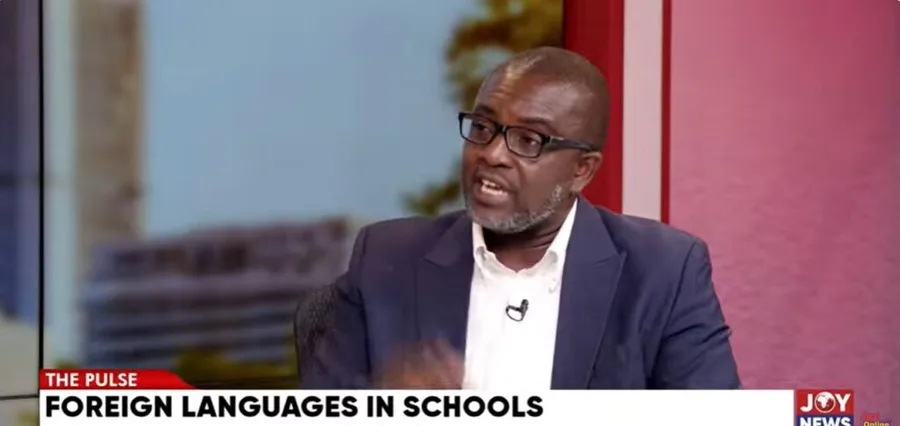
The New Patriotic Party (NPP) has accused the government of creating what it describes as “executive and administrative confusion” over the implementation of Arabic and Chinese language policies in Ghana’s basic schools.
The party’s Policy Committee on Education spokesperson and former Deputy Director-General of the Ghana Education Service (GES), Dr. Keabena Bempah Tandoh, says recent developments suggest a disconnect between the Presidency, the Ministry of Education, the Ghana Education Service and the National Council for Curriculum and Assessment (NaCCA).
Speaking on Joy FM’s Newsnight, Dr. Tandoh cited reports of teacher training on the Chinese language curriculum as evidence that steps towards implementation may already have begun.
He referred to a Daily Graphic report published on September 13, which indicated that NaCCA had organised a national training workshop to equip basic school teachers with knowledge and skills to implement the new Chinese language curriculum.
According to him, this contradicts the position attributed to President John Mahama that no such policy exists.
“There seems to be a total political confusion, and there seems to be incoherence in what is happening between the executive as well as the administrative part of the Ministry of Education and the Ghana Education Service,” he said.
Dr. Tandoh further questioned why state institutions would commit resources towards preparing teachers and curriculum experts for a policy that, according to the President’s position, had not been formally approved.
He said the situation raises broader concerns about governance and administrative coordination within the education sector.
“What is happening is not the flip-flopping at the highest levels of government. It’s not even just about the government credibility aspect, but we have education administrators. We have hardworking teachers. We have parents, and ultimately we have students who pay the price,” he stated.
Dr. Tandoh argued that education policy requires consistency and predictability, warning that conflicting directives could undermine confidence in the sector..
He added that the NPP believes the controversy goes beyond the Arabic and Chinese language policy itself and points to what he described as “serious executive governance issues,” “administrative discipline issues” and “institutional integrity issues.”
Follow the story
About this article
- Length
- 345 words · 2 min read
- Published
- September 16, 2026
- Byline
- Emma Ankrah
- Source
- Joy News