
ConCourt strikes down Public Procurement Act over flawed public participation process

AI summary
The Constitutional Court (ConCourt) has struck down the Public Procurement Act (PPA), finding that Parliament did not give the public a reasonable opportunity to participate in the law-making process.
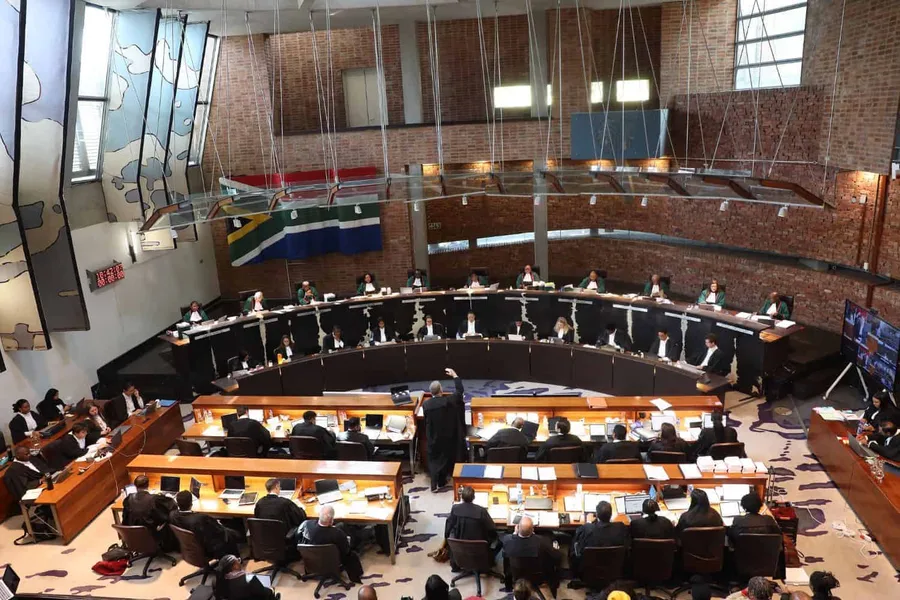
The unanimous judgment was handed down by Acting Judge Lister Gcinikhaya Nuku at Constitution Hill in Braamfontein on Thursday, 17 September 2026.
Public Procurement Act background
The PPA was intended to create a single framework governing procurement by organs of state, including municipalities.
Signed into law in June 2024, the legislation sought to regulate how government procures goods and services and manages expenditure.
One key provision proposed creating a Public Procurement Office within National Treasury.
However, the legislation came under legal scrutiny over the manner in which it was processed by Parliament.
The City of Cape Town, Western Cape government, trade union Solidariteit and the amaBhungane Centre for Investigative Journalism brought the legal challenge before the Constitutional Court, which heard the matter on 18 and 19 May 2026.
At the centre of the case was whether Parliament had provided sufficient opportunity for the public to scrutinise and comment on the Public Procurement Bill, particularly after significant changes were made during the legislative process.
Another concern was the extent to which parliament considered the submissions it received before proceeding with the legislation.
ConCourt examines public participation process
In his judgment, Nuku examined the process followed by parliament in dealing with the Bill.
The National Assembly’s Standing Committee on Finance had conducted briefings and public hearings and held deliberations through late 2023.
However, the ConCourt noted that more than 2 000 public comments had been received, while only 20% were considered.
The committee attributed the limited consideration of submissions to time constraints, despite new provisions having been introduced by National Treasury.
“After the meeting of the 17 November 2023, there was no further public participation process on the Bill in the National Assembly,” Nuku remarked.
The City of Cape Town also argued that the Select Committee on Finance in the National Council of Provinces (NCOP) did not to consider public submissions at all.
Consequently, the ConCourt found no justification for Parliament’s “truncated timeframe” regarding the public participation process given “the lack of a satisfactory explanation”.
“Together with the other deficiencies raised by the applicants, the court concludes that Parliament failed in its constitutional obligations to facilitate a reasonable public participation process,” Nuku said.
No suspension of invalidity
The finding resulted in the court declaring the entire Act invalid rather than striking down only particular provisions.
“It is declared that the Public Procurement Act was adopted in a manner inconsistent with the Constitution and is therefore invalid,” the judge remarked.
Nuku found that no declaration of invalidity should be suspended to give Parliament time to correct any defects due to the PPA not yet having been brought into operation, while existing legislation continued to regulate public procurement.
“So, there will be no lacuna if the declaration of invalidity is not suspended.
“The declaration of invalidity would also not disrupt the state’s procurement institutions. I am therefore satisfied that the declaration of invalidity need not be suspended.”
Parliament free to start process again
Furthermore, the court did not prescribe the precise steps that lawmakers or the executive must take to remedy the PPA.
“Should the respondents wish to proceed with enacting the Act or a similar Bill, they are, of course, free to do so, provided they comply with a constitutionally compliant public participation process.”
The respondents, including the Speaker of the National Assembly, the minister of finance and the president, were ordered to be jointly and severally liable for the applicants’ costs.
Western Cape Premier Alan Winde expressed his happiness with the ConCourt’s decision.
“The court found that major changes were made to the law without proper public participation, and confirmed that provinces need the power to design procurement systems that work for our own communities – not one-size-fits-all rules set elsewhere.
“I welcome this ruling,” Winde said on the social media platform X.
BREAKING NEWS: The Constitutional Court has ruled in favour of the Western Cape Government, declaring the Public Procurement Act, 2024 unconstitutional and invalid.
The Court found that major changes were made to the law without proper public participation, and confirmed that… pic.twitter.com/v8ZjAlWb35
— Premier Alan Winde (@alanwinde)
September 17, 2026
Follow the story
About this article
- Length
- 711 words · 4 min read
- Published
- September 17, 2026
- Byline
- Molefe Seeletsa
- Source
- The Citizen