

Cape Town engineer takes urine innovation to Africa final
A Cape Town-based engineering project is heading for one of Africa’s leading innovation prizes, after a urine-recovery system operating at the DHL Stadium was named among four finalists for the 2026 Africa Prize for Engineering Innovation. The Pee-Cycling system, which was co-founded by University of Cape Town (UCT) chemical engineer Professor Dyllon Randall, collects urine and processes it into liquid... Read more → The post Cape Town engineer takes urine innovation to Africa final appeared fir

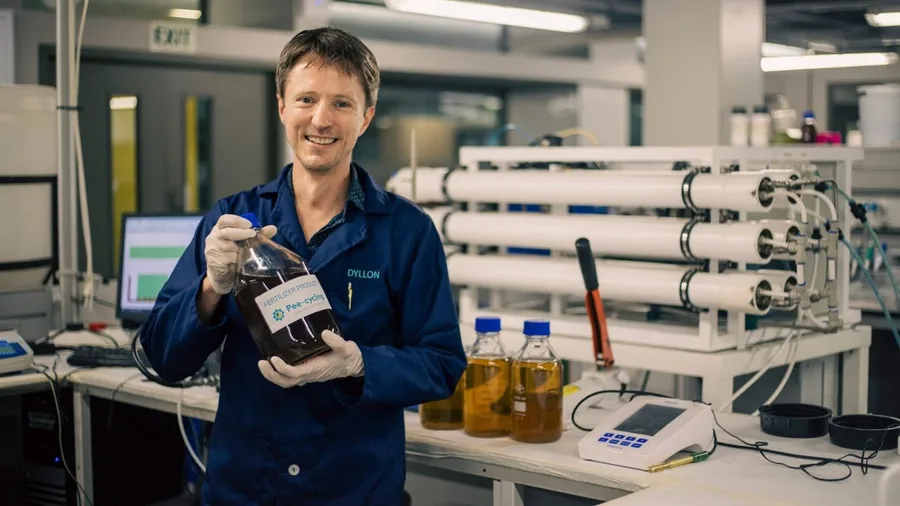
A Cape Town-based engineering project is heading for one of Africa’s leading innovation prizes, after a urine-recovery system operating at the DHL Stadium was named among four finalists for the 2026 Africa Prize for Engineering Innovation.
The Pee-Cycling system, which was co-founded by University of Cape Town (UCT) chemical engineer Professor Dyllon Randall, collects urine and processes it into liquid fertiliser and reusable water.
Its selection places a locally developed water and sanitation innovation alongside three other engineering solutions from across the continent.
The Royal Academy of Engineering announced the four finalists on 28 September, with the entrepreneurs selected from a shortlist of 16. The winner will receive £50 000, while the three remaining finalists will each receive £10 000.
From a Cape Town stadium to an African final, and research that left campus for the stadium
Picture: Supplied
The Pee-Cycling system has already moved beyond the research phase and into practical use at the DHL Stadium.
During the recent **Springboks versus New Zealand **rugby match, the installation collected 3 600 litres of urine.
The project was delivered in partnership with Bidvest Prestige and the City of Cape Town, with Pee-Cycling subsequently included in the City’s stadium tender for three years.
The technology separates urine from conventional wastewater streams and processes it to recover nutrients while producing reusable water.
A full-scale unit occupying approximately 12 to 15 square metres can process up to 3 000 litres of urine a day. For every 1 000 litres processed, the system can save about 2 000 litres of potable water, according to the Africa Prize information.
The technology’s presence at the stadium follows years of research at UCT, as a September UCT News report detailed how PeeCycling collected 2 700 litres during a rugby match at the stadium and 3 600 litres during another.
The system can recover about 70% of the water contained in urine, which can potentially be used for applications including toilet flushing, irrigation and cleaning.
The process uses reverse osmosis to separate the urine into a concentrated fertiliser stream and recovered water. Before that stage, the urine is stabilised and treated to control its chemistry and prevent the loss of nitrogen.
That development has its roots in research that began in 2017. UCT reported earlier this year that PeeCycling had developed into a fully fledged spin-out company, taking research around urine treatment and nutrient recovery into a commercial setting.
Professor Dyllon Randall, chemical engineer at the University of Cape Town (UCT). Picture: Supplied
The system stabilises collected urine before using pretreatment and reverse osmosis to produce concentrated, nursery-grade liquid fertiliser and clean reusable water.
Unlike evaporation-based systems, the process does not remove water by converting it into steam, reducing the energy requirements associated with that stage of treatment.
UCT’s recent reporting also highlighted the potential for the recovered water to be used on site, while the fertiliser stream can be supplied to fertiliser manufacturers.
Pee-Cycling is competing against three technologies aimed at healthcare challenges.
Kenyan finalist Naom Monari founded Renal Roads, a mobile dialysis clinic housed in a repurposed 40-foot shipping container. The unit visits rural communities and can provide up to 400 dialysis sessions each month.
Another Kenyan finalist, doctor and entrepreneur Alice Muhuhu, developed MoyoECG, which is a portable cardiac monitoring platform that combines a wireless multi-lead ECG with artificial intelligence.
The system can identify patterns associated with more than 50 cardiac conditions and abnormalities.
The fourth finalist is Nigerien engineer Mamane Kabirou Ousseini, whose Likita Care platform combines locally manufactured medical hardware with clinical software and an embedded AI system for monitoring patients.
It has already been deployed in five medical centres in Niger.
The finalists therefore represent markedly different applications of engineering, ranging from sanitation and agriculture to cardiac care, dialysis and medical monitoring.
The four finalists will present their innovations to judges at the 2026 Africa Prize final in Johannesburg on 28 October.
The judging panel is chaired by Rebecca Enonchong FREng, founder and CEO of AppsTech and I/O Spaces. The final will be hosted by former professional rugby player Bryan Habana.
Enonchong said the finalists demonstrate the breadth of engineering talent across the continent.
‘Every entrepreneur has brought something different to the Africa Prize, with innovations spanning different sectors, countries and societal challenges.’
The remaining shortlisted innovators will also showcase their work and compete for the £5 000 One-to-Watch Award, which will be decided through an audience vote.
The Africa Prize programme has supported more than 180 businesses from 24 countries since its launch in 2014. Its alumni have collectively secured more than $34 million in third-party grants and equity funding, while 85% are generating revenue, according to the Royal Academy of Engineering.
Be the first to know – Join our WhatsApp Channel for content worth tapping into! Click here to join!
Also read:
Cape Town rail vision gets boost as Foreshore plans take shape
Picture: Supplied
The post Cape Town engineer takes urine innovation to Africa final appeared first on Cape Town ETC.
Follow the story
About this article
- Length
- 833 words · 4 min read
- Published
- October 5, 2026
- Byline
- Lulama Klassen
- Source
- Cape Town ETC