

Why Man Utd sacked Ron Atkinson and appointed Alex Ferguson, 40 years on
Today marks the 40th anniversary of Alex Ferguson’s arrival at Manchester United. That means it’s been four decades since Manchester United last made the right ...

AI summary
Today marks the 40th anniversary of Alex Ferguson’s arrival at Manchester United.
That means it’s been four decades since Manchester United last made the right decision on a managerial appointment. The current head coach, Michael Carrick, is under pressure to keep his job after a poor start to the 2026/27 campaign.
Sir Alex Ferguson became the third United manager to win the league title (top-flight), doing so 13 times, with his final triumph coming in 2013. None of his predecessors achieved Premier League success.
United have hired seven permanent managers since Ferguson retired. It’s easy to forget, but it took the Scot over three and a half years to win his first trophy at the club. The first league title came three years later. And there were times when many United fans wanted him sacked before the glory years.
Ron Atkinson’s sacking led to Alex Ferguson’s Man Utd appointment in 1986
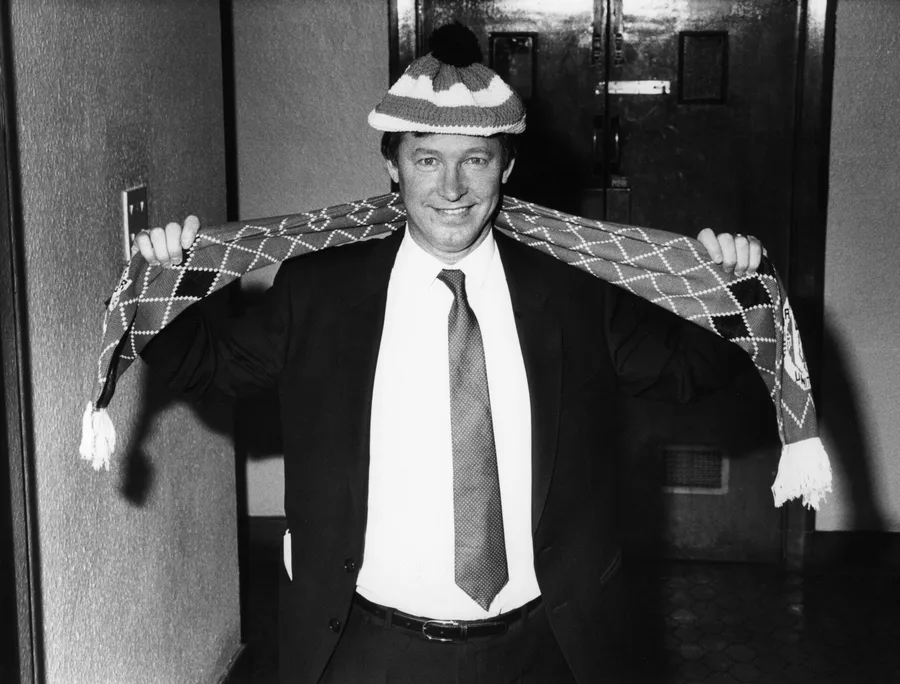
November 6th is one of the most important dates in United’s history. It marks the day Ferguson was appointed manager in 1986, just hours after Atkinson was relieved of his duties, despite winning two FA Cups and leading the team to one League Cup final.
Atkinson’s tenure at Old Trafford lasted five years after he replaced Dave Sexton. In his autobiography, The Manager, Atkinson explains that it was the dream job, but one that required a lot of work.
“It was the job you dreamed of, manager of Manchester United. The start, however, was not the stuff of dreams,” Atkinson said.
“My predecessor, Dave Sexton, had been fired after winning his last seven games. I managed to win none of my first four. We finally beat Swansea in mid-September, which marked Garry Birtles’ first goal for the club nearly a year after he joined Manchester United. Then the team began to find its rhythm; we won five of the next six and finished third, behind Liverpool and Ipswich.
“I had arrived at Old Trafford slap in the middle of Liverpool’s long dominance of the English game. The rise of Everton as their strongest challengers meant that from 1976 to 1989 – thirteen long years – the league championship only twice left Merseyside.”
This helps paint a picture of United at the time. Everyone was obsessed with becoming First Division champions again, for the first time since 1967, but Atkinson – like Tommy Docherty, Frank O’Farrell, Wilf McGuinness and Sexton – failed to achieve that.
‘Big Ron’ was renowned for playing attractive football as well as his charisma. He liked parties, so one can only imagine the scenes had he won the First Division before getting sacked in 1986. United did come close a few times. In 1985/86, United won their first 10 matches in the league – unbeaten in 15 – but finished fourth after winning just nine of their remaining 27 fixtures. Liverpool were crowned champions and finished the campaign with 12 more points than United.
The sale of Mark Hughes to Barcelona the following summer put more pressure on Atkinson, and things got worse as United recorded their worst start to a season in 14 years. There was no revival after Bryan Robson returned from a long-term injury, sustained while playing for England, ruling him out for a large portion of the previous campaign. The poor results continued with defeats to Watford and Chelsea, along with draws against Nottingham Forest, Man City and Coventry City.
Sadly for Big Ron, the draw that broke the camel’s back was a 4-1 defeat to Southampton in a League Cup replay on November 5. He was sacked the following day.
“Our boots had not been laid out for training and there was a message for Mick Brown and me to report to Martin Edwards’ office,” Atkinson wrote.
“I turned to him and said, ‘I wouldn’t be asking for a rise today, Mick.’ I didn’t, however, think we’d be sacked.
“It was November 1986 and United had endured a dreadful start to the season. We had just been knocked out of the League Cup, 4-1 at Southampton, ripped apart by a young Matt Le Tissier. But I thought the situation was manageable.
“I have never in my managerial career had a vote of confidence, not even from Doug Ellis when I was at Aston Villa, although he did give an interview to Football Focus on Saturday afternoon naming me as one of the three best managers in the country. He fired me on the Thursday.
“The execution was swift. Martin used the words that have ended so many managerial careers: ‘We need to make a change.’ He told me to see his secretary. She would sort out the details of my contract.”
Atkinson was satisfied with the job he’d done at United and felt hard done by when sacked, especially after winning two trophies.
“I felt I had done the job Martin had brought me in to do. He asked me to re-establish Manchester United as a force in the English game. From 1968 to 1981, they had finished in the top four twice – which was scandalous for a club of its stature. The top four had no real meaning then, and anyway English clubs were banned from Europe. But Manchester United had finished no lower than fourth in my time at Old Trafford and won the FA Cup twice.”
He added: “It was my first sacking but I wasn’t crushed by it, as I think it crushed David Moyes, whom I felt was hard done by. He had been given a six-year contract and told to rebuild Manchester United, and he ought to have had confidence in that contract.
“What undermined him was he and the club continually stressing they were ‘in transition’. They were league champions. How you go from being league champions to being ‘in transition’ in the space of a couple of months is something United have never satisfactorily explained. Manchester United are one of the four biggest clubs in the world. You never hear Barcelona or Bayern Munich announcing they are in transition. They cannot afford to be. They have to keep winning.”
- Ron Atkinson facts at Manchester United
- Atkinson signed Bryan Robson from West Brom in 1981 for a British record £1.5m
- United finished third in Atkinson’s first full season
- After arriving from West Brom, Atkinson brought assistant Mick Brown and youth coach Eric Harrison with him
Photo by Mark Leech/Offside via Getty Images
Pete Molyneux, author of Ta Ra Fergie, has been following United at home and abroad since 1963, and he has spoken to United In Focus about the decision to not only sack Atkinson, but to appoint Ferguson.
“I wasn’t surprised,” Molyneux said.
“I was very saddened because Ron Atkinson’s five-year tenure was regularly entertaining. United played with wingers and got forward with power and pace. The Manchester United brand, as I’d call it, for want of a better word, something that’s been lacking in the last couple of years. We won the cup twice in those five years.
“So, two FA Cups and a League Cup final that we lost. But the problem was Liverpool and Everton were winning titles, and by 1986, it had been 19 years since we won the league in ’67. United came close on two or three occasions in those five years, but Liverpool usually ran away with it. I used to say, the Championship’s gone west, literally, 32 miles down the road or whatever. And when Liverpool didn’t win it, Everton was winning it.
“It was tough for the managers. They knew they had to win the league, but they would have got four or five years in those days. He tried everything, but he had an awful start to the 1986/87 season.
“I can remember some of them: losing at home to Charlton, a 1-0 defeat and a dreadful game when they’d just come up. It was poor by any standards. A couple of home defeats and draws. So, I felt it was a bit inevitable.
“I’m not sure I was ready for his sacking then, but it didn’t surprise me. It did disappoint me because it was another one that we tried and failed, and that list was growing after Wilf McGuinness, Frank O’Farrell and Tommy Doherty, Dave Sexton, and then Big Ron. We can’t go through six managers and still not be close to winning the league.”
Alex Ferguson arrived at Man Utd with a good pedigree
Shortly after 9pm on November 6, Ferguson agreed to leave Aberdeen to head south to become Atkinson’s successor at United. He arrived at Old Trafford having won the Scottish First Division with St Mirren, three Scottish League titles at Aberdeen, which broke the Old Firm’s dominance of Celtic and Rangers, and the European Cup Winners’ Cup after beating Real Madrid in the 1983 final.
On top of that, Ferguson managed Scotland at the 1986 World Cup finals after Jock Stein had suffered a heart attack and died.
Molyneux recalls his initial reaction to Ferguson’s appointment, saying: “He had a good track record. Some might say, ‘well, that’s just in the Scottish league’, even though it was fairly strong in those days. But he had won the Cup Winners’ Cup in 83 by beating Madrid. He had a good pedigree, so we rallied behind him. That was just like we’ve done with any manager, you know?”
Describing the differences between Ferguson and Atkinson, Molyneux added: “Big Ron was less cavalier. A Champagne Charlie, in a way. Not a Charlie because that’s disrespectful. He’s a very smart fella. But he was more, you know, if we’re winning, we’ll party, and we’ll carry on the party and carry on winning. Fergie was much more of a disciplinarian.”
Little did Pete – or anyone – know at the time that Ferguson would go on to become United’s most successful manager.
Follow the story
About this article
- Length
- 1,644 words · 8 min read
- Published
- November 6, 2026
- Byline
- Dale O'Donnell
- Source
- United In Focus