
Why Tesla's driverless Cybercab is already under federal investigation?
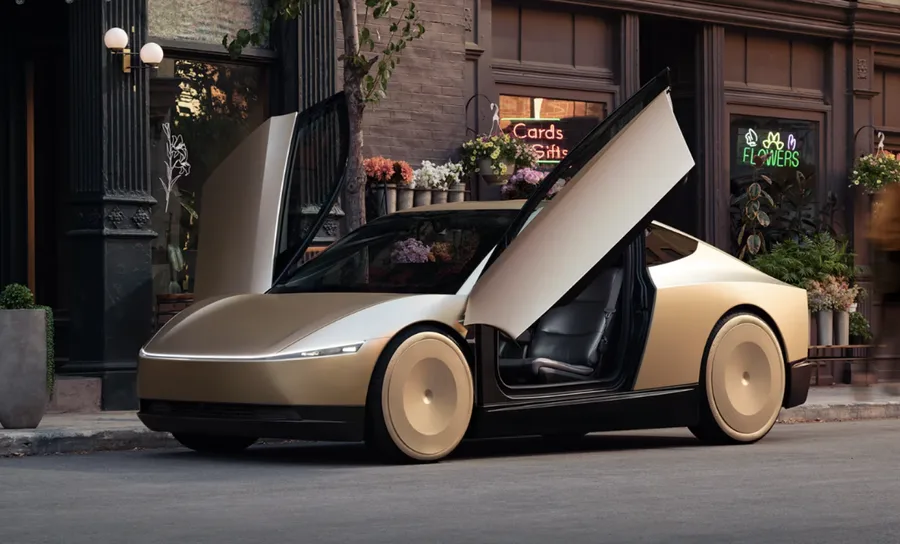
Just hours after Tesla commercially deployed its purpose-built Cybercab robotaxis on public roads in Austin, federal regulators launched a formal safety probe, investigating how the automaker legally self-certified a vehicle lacking steering wheels, pedals, and mirrors under existing Federal Motor Vehicle Safety Standards.

AI summary
Tesla's ambition to dominate autonomous ride-hailing has hit immediate regulatory friction following its commercial debut in Texas. Just one day after paying passengers began hailing the two-seat Cybercab through the company's Robotaxi application in Austin, the National Highway Traffic Safety Administration initiated an official audit query into the deployment. The federal investigation centers on Tesla's decision to self-certify the futuristic vehicle as fully compliant with federal standards despite omitting conventional manual controls, including physical steering wheels, pedals, and rearview mirrors. The inquiry raises pivotal questions regarding autonomous vehicle legality before federal automotive rulemakings are formally rewritten.
Tesla's self-certification dispute
Under current United States automotive regulations, carmakers traditionally self-certify that their vehicles adhere to Federal Motor Vehicle Safety Standards (FMVSS). However, established guidelines explicitly mandate mechanical controls, including brake pedals, physical steering columns, and mirrors.
NHTSA confirmed that Tesla notified officials it had self-certified the Cybercab as fully road-legal. Through Audit Query AQ26002, regulators are demanding the technical datasets and legal interpretations Tesla utilized to declare compliance, scrutinizing whether the company unilaterally bypassed safety mandates ahead of formalized autonomous vehicle legislation.
$TSLA's Cybercabs are under federal investigation right after the commercial debut. 🚖
— Yahoo Finance (@YahooFinance) September 4, 2026
The National Highway Traffic Safety Administration is reviewing whether the robotaxis comply with car safety standards. pic.twitter.com/2iiw08a7GM
Commercial rollout and autonomous stakes
The sudden probe follows an Austin rollout where Tesla began carrying fare-paying riders via its Robotaxi smartphone network. Unlike competitors like Waymo that integrate multi-sensor LiDAR arrays, Tesla powers the Cybercab exclusively using optical camera vision and Full Self-Driving neural networks. Tesla eventually intends to sell the two-passenger vehicle to commercial fleet operators and consumers with target purchase pricing under USD 30,000 (approx. AED 110,190), framing it as an affordable transportation alternative.
The swift federal intervention illustrates the precarious friction between aggressive technological deployment and rigid safety oversight. By putting custom cab hardware on public roads without formal exemptions, Tesla opted to push regulatory limits rather than wait for federal bureaucracy to modernize. If NHTSA rules that self-certification cannot supersede statutory mechanical requirements, Tesla could face operational pauses or fleet restrictions. The Austin inquiry will establish vital national precedents determining how quickly driverless vehicles can operate without human fallback mechanisms.
(Feature image credits to Tesla.)
**Read More: **Apple's $ 2,000 foldable iPhone was ten years in development: Report reveals inside story
Follow the story
About this article
- Length
- 392 words · 2 min read
- Published
- September 9, 2026
- Byline
- Keval Shukla
- Source
- Mashable Me