

MKO Documentary Premiere in Lagos: Inside the October 1 Event attended by Tinubu, Akpabio, Sanwo Olu and Others

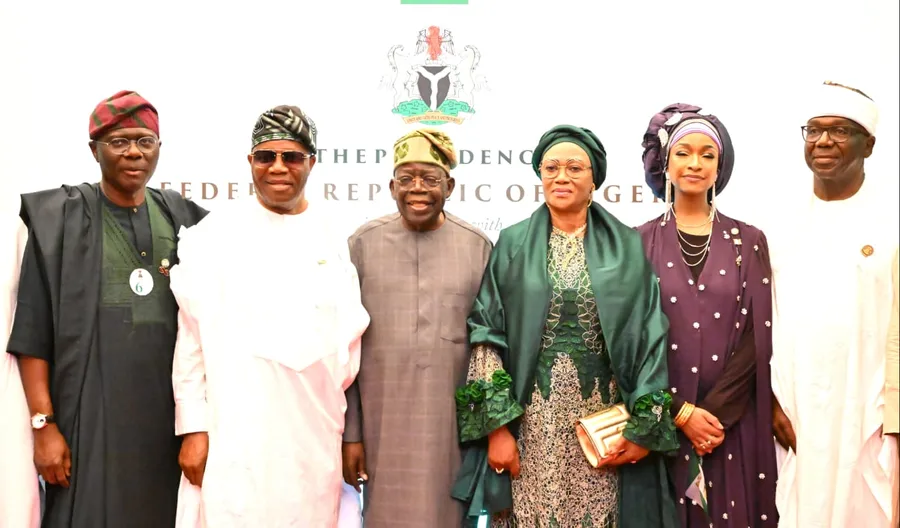
The story of Moshood Kashimawo Olawale Abiola returned to the centre of public attention in Lagos on October 1, 2026, when political leaders, government officials, members of the National Assembly, filmmakers and personalities connected to Nigeria’s democratic history gathered for the national premiere of MKO. The setting, the timing and the people present gave the evening a significance that went beyond a regular cinema premiere, especially as the documentary revisits one of the most defining political episodes in Nigeria’s recent history.
President Bola Tinubu arrived at the venue with First Lady Oluremi Tinubu, while several senior political figures also took their places for a screening that brought the June 12 story back into public conversation. The gathering at the Wole Soyinka Centre for Culture and Creative Arts in Iganmu became one of the notable events marking Nigeria’s 66th Independence Anniversary, with the film providing the central focus of the evening.
The October 1 Lagos Premiere
Thursday, October 1, 2026, provided the setting for the Nigerian national premiere of MKO, a 108 minute documentary directed and produced by Nigerian American filmmaker Ose Oyamendan. The event took place at the Wole Soyinka Centre for Culture and Creative Arts in Iganmu, Lagos, a venue formerly known as the National Theatre, bringing the story of Abiola into a location strongly associated with Nigeria’s cultural history. President Bola Tinubu served as Chief Host and attended the event alongside First Lady Oluremi Tinubu, with their arrival becoming one of the prominent moments captured during the programme. A band played the national anthem as guests stood to receive the President and the First Lady, setting the tone for an evening built around history, memory and Nigeria’s democratic journey.
The timing of the premiere added another layer to the occasion because October 1 is Nigeria’s Independence Day, a date that carries its own place in the country’s political history. Nigeria gained independence from Britain on October 1, 1960, while the documentary centres on events surrounding the June 12, 1993 presidential election and the struggle that followed its annulment. Bringing the film before a Nigerian audience on October 1, 2026 therefore placed Abiola’s story within a much wider national timeline, connecting the country’s independence story with another period when Nigerians were demanding political change and recognition of an electoral mandate. The premiere consequently became a meeting point between Nigeria’s independence history, the June 12 experience and the country’s present democratic era.
Tinubu Arrives With Senior Political Figures
President Bola Tinubu’s presence immediately placed the premiere among the major Independence Day events in Lagos, particularly because the President himself appears in the documentary as one of the people connected to the pro democracy struggle of the military era. His appearance also carried a personal historical connection to the subject being examined, since Tinubu was active in political opposition during the period covered by the documentary. His arrival with First Lady Oluremi Tinubu was followed by the national anthem, with guests standing as the presidential couple entered the venue.
MKO DOCUMENTARY premiere: Sanwo-Olu, Akpabio, President Tinubu, Remi Tinubu, others
Several senior government and political figures were also reported at the event, creating a gathering that brought together people from different parts of Nigeria’s political establishment. Senate President Godswill Akpabio, Speaker of the House of Representatives Tajudeen Abbas, Lagos Governor Babajide Sanwo Olu, Ogun Governor Dapo Abiodun and Kwara Governor AbdulRahman AbdulRazaq were among those present. Plateau Governor Caleb Mutfwang, Deputy Senate President Jibrin Barau, Deputy Speaker Benjamin Kalu and Chief of Staff Femi Gbajabiamila were also listed among the prominent attendees, while members of the National Assembly joined other guests at the screening.
The government representation continued with the presence of Minister of Art, Culture, Tourism and the Creative Economy Hannatu Musawa, Minister of Industry, Trade and Investment Jumoke Oduwole and Minister of Water Resources and Sanitation Joseph Utsev. Former Ogun Governor Olusegun Osoba was also present, adding another direct connection to the political history surrounding the June 12 period. The range of people at the venue reflected the broad subject of the documentary itself, with current political leaders sitting alongside people whose careers and experiences are connected to earlier chapters of Nigeria’s democratic development.
The Moment Of Silence At The Venue
The programme carried a solemn moment before the screening as Presidential Adviser on Information and Strategy Bayo Onanuga led the gathering in a minute of silence. The tribute was directed at Nigerians who died or suffered persecution, detention, exile and other forms of repression during the pro democracy struggle. That moment placed the human cost of the period at the centre of the event before attention returned to the documentary itself, reminding those gathered that the June 12 story involved more than electoral figures and political institutions.
Onanuga used the occasion to connect the experiences presented in the film with the freedoms associated with Nigeria’s current democratic system. His remarks focused on the sacrifices made by people who resisted authoritarian rule and the price paid by individuals who stood against the military government of the period. The reference to those experiences gave the premiere a reflective tone, particularly because the event was taking place on Independence Day, a date already associated with Nigeria’s struggle for self determination and national identity.
Minister Hannatu Musawa also addressed the significance of documenting the June 12 experience. Her remarks placed attention on the men and women who gave their lives in connection with the June 12 mandate and the democratic system Nigerians enjoy today. The comments helped establish the documentary as a record of a major chapter in Nigeria’s political history, while also giving the audience a reminder that the events being revisited involved real people whose lives were affected by the decisions made during that period.
What MKO Covers
The documentary takes viewers through the life and political journey of Moshood Kashimawo Olawale Abiola, beginning with his rise as a businessman and publisher before moving into the political events that made his name inseparable from the June 12 story. Abiola became one of Nigeria’s most prominent businessmen and media owners, while his political activities eventually placed him at the centre of the country’s biggest constitutional and democratic crisis of the early 1990s. His campaign for the presidency and the election held on June 12, 1993 form the central historical background of the film.
The story then moves into the annulment of the election by the military government, an event that triggered a prolonged political crisis and a major pro democracy movement. Abiola’s demand for recognition of the mandate became one of the defining issues of the period, while his subsequent arrest and detention intensified the confrontation between those demanding the restoration of democratic rule and the military authorities. The documentary follows the events surrounding that struggle, including the international dimension of the crisis and the people whose decisions shaped the course of events.
Abiola eventually died in detention in July 1998, shortly before Nigeria entered another important stage in its political history. His death became one of the most significant moments associated with the June 12 crisis, while the events that followed contributed to the transition that eventually brought the country back to elected civilian government. MKO therefore does not simply present Abiola as a businessman who entered politics, but examines the chain of political developments surrounding his election, its annulment, his detention and the wider struggle that followed.
The People Featured In The Documentary
One of the major features of MKO is the range of people whose memories and experiences contribute to the documentary. Former military Head of State Ibrahim Babangida is featured, bringing the voice of the leader whose administration annulled the June 12 election into the film. Former Head of State Abdulsalami Abubakar also appears, providing another perspective from the military era and the period that eventually led Nigeria toward a return to civilian rule.
Former President Olusegun Obasanjo is among the other major figures featured, alongside Nobel laureate Wole Soyinka and Baba Gana Kingibe, who was Abiola’s running mate in the 1993 presidential election. The inclusion of Kingibe gives the documentary a direct connection to the political campaign that produced the June 12 result, while Soyinka brings the perspective of one of Nigeria’s most prominent voices during the country’s pro democracy struggle.
The international side of the crisis is also represented through figures such as former United States Ambassador Walter Carrington, former United States Deputy Secretary of State Thomas Pickering and former Canadian High Commissioner Gerald Ohlsen. Their involvement reflects the international attention that surrounded Nigeria after the annulment of the election, the subsequent political repression and the wider debate about democratic rule in the country.
Former electoral chief Humphrey Nwosu is also featured, providing an important connection to the conduct and announcement of the 1993 election. Members of Abiola’s family, foreign journalists and Theodore Zadok, who served as Abiola’s security guard during his detention, also contribute to the documentary. Their different positions provide personal, institutional and historical perspectives on a period that has continued to generate public interest decades after the election itself.
Tinubu’s Connection To The Film
President Bola Tinubu occupies a particularly notable position in the documentary because his own political history intersects with the period being examined. His participation in the pro democracy struggle during the military era forms part of the historical context surrounding the film, while his appearance at the Lagos premiere brought that connection into the present day. The President’s role as Chief Host also gave the event an official dimension as Nigeria marked its 66th Independence Anniversary.
Oyamendan used the premiere to acknowledge Tinubu’s connection to the period and his support for the documentary project. The filmmaker recalled interviewing Tinubu when he was a senator in 1992, placing their professional connection before the June 12 crisis reached its most intense stage. That recollection gave the premiere another personal detail because the filmmaker had encountered one of the political figures associated with the era decades before completing a documentary about it.
Oyamendan also described Tinubu as someone who risked his life, livelihood and his family’s safety in connection with the demand for recognition of the June 12 mandate. That description was presented as part of the filmmaker’s own account of the historical period and his appreciation of Tinubu’s role. The State House account separately reported Oyamendan’s appreciation of the President for supporting the project, bringing together the filmmaker’s personal recollections and the official setting of the premiere.
Oyamendan’s Personal Connection
The filmmaker’s relationship with the June 12 period is another important part of the story behind MKO. Oyamendan was a young journalist working with Weekend Concord during the crisis, one of the publications founded by Abiola. His experience as a journalist during that period meant that the project was not simply an attempt to reconstruct an unfamiliar chapter from old records, but an effort to revisit events he had encountered professionally more than 3 decades earlier.
That background became important as the filmmaker worked on a project designed to introduce the history to Nigerians who were too young to remember the events or were born after June 12, 1993. The distance between the original events and the completion of the documentary spans more than 3 decades, creating a generational gap that the filmmaker has identified as one of the reasons for bringing the story to a wider audience.
His experience at Weekend Concord also gave him a direct connection to Abiola’s media empire. The newspaper was part of the media organisation established by Abiola, whose influence extended beyond politics into business, publishing and other areas of Nigerian public life. That connection forms part of the personal history Oyamendan brought into the making of the film.
The 13 Year Journey
Behind the October 1 premiere was a production process that lasted almost 13 years. Oyamendan disclosed that the documentary cost more than $1 million to produce, with some of the money still owed. The financial demands of producing a historical documentary of this scale became one of the major challenges faced by the filmmakers, particularly as they worked to secure archival materials, interviews and the resources needed to complete the project.
The filmmaker also disclosed that the documentary had to be mortgaged to raise additional financing. At one stage, the project faced the possibility of collapsing after promised financial support failed to materialise. Keeping the production alive therefore required additional financial decisions and personal commitment, eventually allowing the filmmakers to complete a project that had taken years to move from concept to finished documentary.
One of the most personal moments in Oyamendan’s account involved a conversation with his 9 year old son. The child, who was born outside Nigeria, was working on a school project about Nigerian leaders when he questioned why his father was telling the stories of other people rather than telling the story of his own country. Oyamendan has explained that the conversation helped push him toward completing the project, giving the long production journey a personal dimension beyond financing and filmmaking.
From Sheffield To Lagos
The Lagos premiere on October 1, 2026 was not the first public screening of MKO. The documentary had already received its international premiere at the Sheffield International Documentary Festival in the United Kingdom on June 12, 2026, exactly 33 years after the presidential election at the centre of the film’s story.
That date created a direct connection between the documentary and the historical event it examines. June 12, 1993 remains associated with the presidential election won by Abiola according to the results announced at the time, while June 12, 2026 marked the international unveiling of the documentary decades later. The film subsequently became part of international conversations about Nigeria’s democratic history, including an event at American University in Washington, D.C. focused on the annulled election and its implications for electoral institutions.
MKO Documentary premiere
The Lagos event therefore represented a new stage in the film’s journey because it brought the documentary home to a Nigerian audience. The national premiere placed the story before people in the country where the events occurred, while the presence of senior political figures added another historical layer to the screening.
Why October 1 Became The Date
October 1, 2026 provided a deliberate historical backdrop for the Nigerian premiere because the date itself is tied to one of the most important moments in Nigeria’s national story. Nigeria became independent on October 1, 1960, and the country has continued to mark the date as its Independence Day. Holding the national premiere of a documentary about Abiola and the June 12 struggle on the same date created a connection between independence and the later struggle for democratic rule.
June 12, 1993 represents another major date in that timeline because it was the day Nigerians went to the polls in the presidential election that became the centre of the crisis examined in MKO. October 1, 2026 therefore placed the documentary between two significant dates in Nigeria’s history, with independence in 1960 and the June 12 election in 1993 forming important parts of the historical background.
The choice of October 1 also meant that the documentary was presented during a day already filled with national reflection, celebration and public discussion about Nigeria’s journey. The premiere gave the June 12 story a place within that larger national conversation, while the presence of the President, governors, National Assembly leaders and other officials brought political representation into the event.
The October 2 Cinema Release
The journey did not end at the October 1 premiere because MKO moved into its Nigerian commercial cinema release on Friday, October 2, 2026. Nile Entertainment is handling the theatrical distribution of the documentary, taking the film beyond the special Independence Day screening and into cinemas for members of the public who want to see it.
Nile Entertainment Managing Director Moses Babatope also has a personal connection to Abiola’s media legacy because his father worked at Concord Newspapers, one of the media organisations founded by Abiola. That connection adds another historical thread to the commercial release because the person involved in taking the documentary to cinemas has a family link to the media organisation associated with the central figure in the film.
Babatope has explained that the theatrical release is intended to make the history accessible to a younger generation that did not experience the June 12 crisis firsthand. That focus becomes particularly relevant more than 33 years after the 1993 election, as a growing number of Nigerians who will watch the documentary were either children at the time or had not yet been born.
A Night Built Around History
The October 1 premiere brought several generations of Nigeria’s political history into one venue. President Bola Tinubu and First Lady Oluremi Tinubu were present, while Senate President Godswill Akpabio, Speaker Tajudeen Abbas, Lagos Governor Babajide Sanwo Olu, Ogun Governor Dapo Abiodun and other senior officials joined the audience. Former Ogun Governor Olusegun Osoba also attended, while the documentary itself featured figures including Ibrahim Babangida, Abdulsalami Abubakar, Olusegun Obasanjo, Wole Soyinka and Baba Gana Kingibe.
That combination gave the evening a distinctive historical setting because some of the people connected to Nigeria’s current political leadership were physically present at a premiere centred on an earlier period of political struggle. The documentary then brought voices from that earlier period into the same conversation through archival footage and first hand interviews, allowing the audience to revisit events that shaped Nigeria’s political development.
The minute of silence led by Bayo Onanuga added a solemn part to the evening, while Hannatu Musawa’s remarks placed emphasis on remembering the people who suffered during the struggle. Oyamendan’s reflections added the perspective of a journalist who was present during the period and later spent 13 years working to preserve the story through film.
The Story Moving Into Cinemas
With the October 2 commercial release, the focus now moves from the premiere audience to Nigerians who will encounter MKO through cinemas across the country. The theatrical stage gives the documentary an opportunity to reach viewers who may know Abiola mainly through references to June 12 but have limited knowledge of the wider events surrounding his political career, detention and death.
The documentary arrives at a time when June 12 has become an established part of Nigeria’s democratic history, yet the generation that experienced the crisis directly is becoming older. Younger Nigerians are increasingly encountering the period through documentaries, archives, books, interviews and accounts from people who lived through it. MKO adds another visual record to that growing body of historical material.
The Lagos premiere on October 1 was therefore both a public event and the beginning of the film’s wider Nigerian journey. From the arrival of President Bola Tinubu and First Lady Oluremi Tinubu to the gathering of senior political figures, the minute of silence, the filmmaker’s reflections and the screening itself, the evening placed Abiola’s story at the centre of Nigeria’s Independence Day calendar.
More than 30 years after the June 12 election, the documentary has now moved from an idea that occupied Oyamendan for almost 13 years into Nigerian cinemas. Its path has taken it from Sheffield on June 12, 2026 to Lagos on October 1, 2026, followed by the national theatrical release on October 2, 2026. The people gathered at the Lagos premiere, the historical figures featured in the film and the long journey behind its production all form part of the story surrounding MKO, giving the documentary a place within a much wider record of Nigeria’s political history.
The post MKO Documentary Premiere in Lagos: Inside the October 1 Event attended by Tinubu, Akpabio, Sanwo Olu and Others appeared first on WITHIN NIGERIA.
Follow the story
About this article
- Length
- 3,267 words · 16 min read
- Published
- October 3, 2026
- Byline
- Samuel David
- Source
- Within Nigeria