

Why Makerere’s $10,000-scientist drive aims to shield Africa from pandemics
When COVID-19 swept across Africa, public health officials faced a humiliating reality. As local health centres filled, African epidemiologists and governments were forced to rely almost entirely on clinical trials, drug protocols, and vaccine guidance generated in Western laboratories, data that often failed to account for the continent’s distinct demographic and health profile. “During that […] The post Why Makerere’s $10,000-scientist drive aims to shield Africa from pandemics appeared first

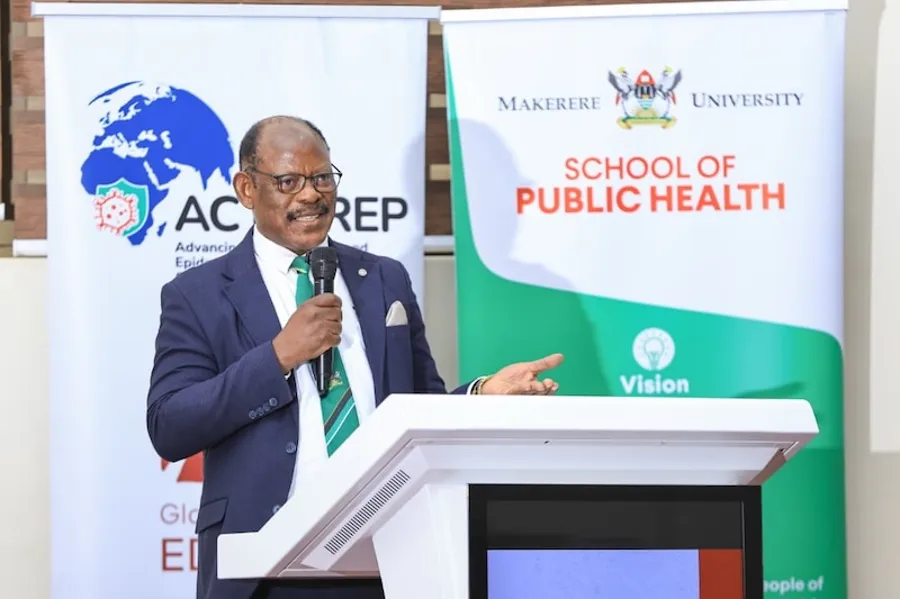
When COVID-19 swept across Africa, public health officials faced a humiliating reality.
As local health centres filled, African epidemiologists and governments were forced to rely almost entirely on clinical trials, drug protocols, and vaccine guidance generated in Western laboratories, data that often failed to account for the continent’s distinct demographic and health profile.
“During that time, we noted that all of the evidence was coming from elsewhere and that this evidence did not apply to Africa exactly the way we would have wanted to,” recalls Prof. Rhoda Wanyenze, Dean of the Makerere University School of Public Health.
“We needed to do more within Africa. We needed to do it immediately, quickly, and release results to inform policy.”
On Monday, September 28, Makerere University launched a five-year initiative designed to end that scientific dependency.
The Advancing Clinical Trials and Epidemic Preparedness Research Capacity in Africa (ACT-PREP) project brings together universities, research institutes, and ministries of health across Uganda, Rwanda, Tanzania, the DRC, Somalia, South Sudan, Senegal, and Europe.
Rather than scrambling to build laboratories and hire experts after a virus emerges, the network aims to build a permanent, continent-wide defence before the next outbreak strikes.
Over the next five years, the initiative plans to upgrade regional laboratories and train more than 10,000 African scientists, health workers, clinical trial associates, and postgraduate researchers, including 15 PhD candidates and 10 postdoctoral fellows.
“When the next outbreak comes, we should not have to start looking for the expertise, the systems, the laboratories, or the people we need to respond,” said Makerere University Vice-Chancellor Prof. Barnabas Nawangwe.
“That capacity should already be here.”
The project arrives at a critical moment for Eastern and Central Africa, where Ebola, Marburg, and mpox regularly cross borders. Beyond clinical research, the project integrates a “One Health” approach, analyzing how viruses jump from animals and environmental shifts into human populations.
Yet, building laboratories is only half the battle. Speaking on behalf of the Ministry of Health, Dr Daniel Kyabayinze pointed out two systemic vulnerabilities that routinely derail African health responses: money and misinformation.
Governments cannot keep money sitting idle waiting for an epidemic, Kyabayinze noted, meaning national health budgets must create emergency mechanisms that instantly release research funding when an outbreak begins. Furthermore, without community trust, even world-class science falls apart.
“If you, the researcher, in this capacity building, are you going to give me somebody who works with me to prepare the community that when science is due to come, this is how we’ll prepare?” Kyabayinze asked, citing how social media rumours undermined COVID-19 vaccination efforts.
Ultimately, the initiative challenges African governments to fund their own research rather than relying permanently on foreign donors.
For ordinary Ugandans who have lived through lockdowns, border closures, and delayed vaccine rollouts, the success of Makerere’s new alliance will not be measured by published papers, but by whether local doctors can test and deploy life-saving treatments the moment the next virus arrives.
The post Why Makerere’s $10,000-scientist drive aims to shield Africa from pandemics appeared first on The Observer Media Ltd.
Follow the story
About this article
- Length
- 509 words · 3 min read
- Published
- September 30, 2026
- Byline
- Muhammad Jjumba
- Source
- The Observer Uganda