

Ghana’s road deaths demand urgent action, researchers warn

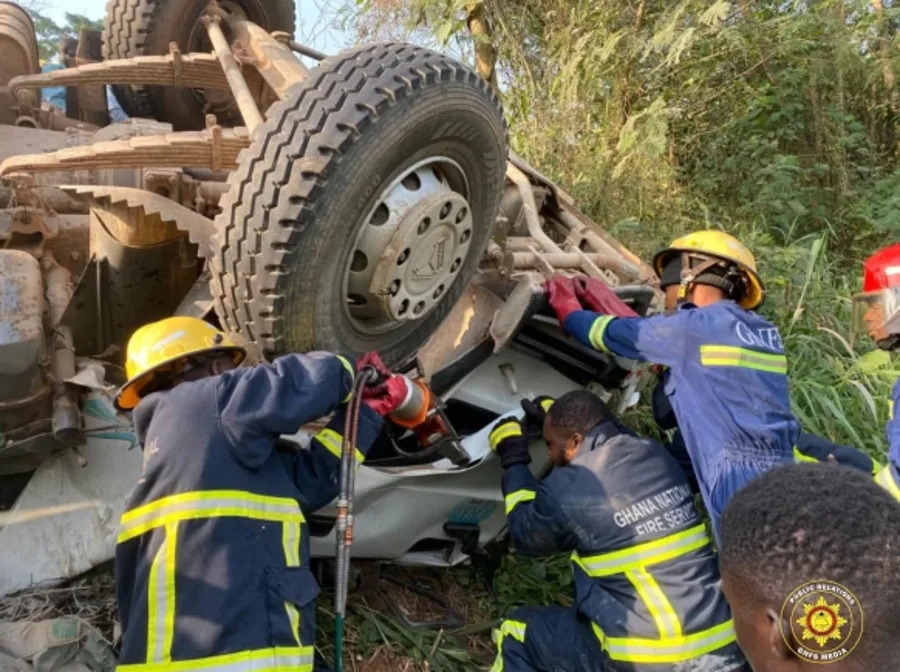
Researchers Enock Aninakwah and Isaac Aninakwah are calling for coordinated action to reduce road deaths in Ghana, citing unsafe road conditions, dangerous driving, and weaknesses in enforcement.
In a paper titled A Nation in Motion, A People in Mourning: A Lamentation on Ghana’s Road Carnage, the authors argue that the country needs sustained improvements in road infrastructure, vehicle safety and emergency response.
The paper examines road traffic fatalities between 1991 and 2024 using existing records and published research.
It cites more than 46,000 deaths between 1991 and 2018, alongside reported figures of 2,494 deaths and 15,607 injuries in 2024.
The authors say the consequences extend beyond those killed or injured. Families also face lost income, the cost of caring for survivors and emotional distress.
“The findings of this study show that Ghana’s road safety crisis is driven by a chain of interconnected systemic failures rather than isolated factors,” they write.
Enock Aninakwah is affiliated with the University of Ghana’s Department of Geography and Resource Development, while Isaac Aninakwah is affiliated with the Department of Social Sciences at St. Monica’s College of Education in Mampong.
Their analysis draws on sources including the National Road Safety Authority, the Ghana Highway Authority, the World Health Organisation and earlier studies.
The paper identifies poor road design and maintenance, inadequate lighting and signage, risky overtaking and unsafe vehicles among the concerns requiring attention.
It argues that these problems are compounded by weak enforcement and gaps in emergency response, making a coordinated approach necessary.
The researchers recommend safer road design, appropriate separation of opposing traffic, improved road maintenance and stronger vehicle roadworthiness checks.
They also call for sustained public education, enforcement against dangerous driving and better coordination among institutions responsible for transport and public safety.
Drawing on earlier research, the authors describe fear and anxiety surrounding everyday travel, warning that repeated fatal crashes can weaken public confidence in the transport system.
They urge authorities to treat road safety as a public health and development priority and use reliable data to monitor whether interventions are reducing deaths and injuries.
The analysis relies mainly on reported fatality counts. The authors acknowledge that consistent long-term information on vehicle use and distances travelled was unavailable, limiting their ability to assess changes in risk relative to road use.
Read the full paper attached below.
A NATION IN MOTION, A PEOPLE IN MOUNING
Download
Follow the story
About this article
- Length
- 392 words · 2 min read
- Published
- October 26, 2026
- Byline
- Caleb Ahinakwah
- Source
- Joy News