

Democratic Republic of the Congo: In Bunia and Beni, Police and Justice consult to improve access to justice for victims of sexual violence

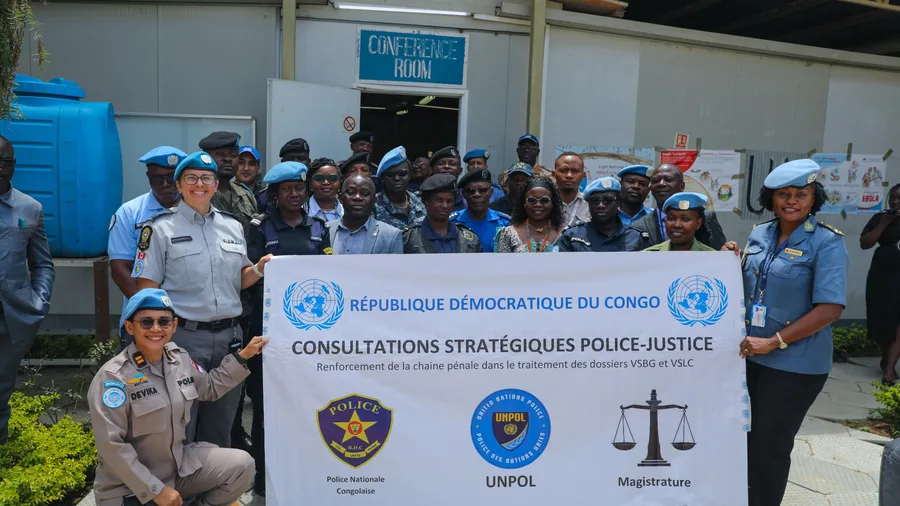
Delays in processing cases, a lack of resources to conduct investigations and apprehend suspects, insufficient numbers of trained personnel, and challenges related to the protection of victims and witnesses. Several obstacles continue to hinder the judicial process for survivors of sexual violence.
To identify solutions, consultations between the police and the justice system were held on 5 and 6 October in Bunia and Beni, bringing together representatives of the Congolese National Police (PNC), civilian and military judicial authorities, as well as other stakeholders involved in the criminal justice chain.
The initiative, organized with the support of the United Nations Police (UNPOL/MONUSCO), aims to highlight the challenges encountered in the field and develop recommendations that could be taken forward at the national level.
The discussions focused in particular on the institutional, operational, legal and procedural obstacles encountered in handling cases of gender-based sexual violence (GBSV) and conflict-related sexual violence (CRSV). They also helped identify good practices and ways to strengthen coordination among the various actors involved in providing judicial support to victims.
Persistent obstacles…
In Bunia, the discussions highlighted difficulties affecting both victims and the actors responsible for handling their cases. Mapendo Lenganaiso, head of the Bunia office of the NGO Solidarité féminine pour la paix et le développement intégral (SOFEPADI), which provides support to survivors of sexual violence, pointed to delays in processing cases, fees sometimes being charged despite existing exemptions, a lack of trained personnel, and the risk of reprisals.
“Some victims are afraid to seek justice because they fear reprisals. The actors involved must be given the means to do their work, but above all, collaboration between organizations, the police, magistrates and the [military] prosecutor’s office must be strengthened so that the response is coordinated and justice can be served,” explains Mr. Mapendo Lenganaiso.
These constraints also affect investigators. For Grace Balume, Deputy Police Commissioner and head of the Child Protection and Sexual Violence Prevention Unit in Bunia, a lack of material and financial resources can make it particularly difficult to travel to conduct investigations.
“The 48-hour deadline for processing a case is short for a judicial police officer, especially when travel is required to reach the alleged perpetrator. Resources are needed at the police level, but also to enable the victim to travel and appear in court so that cases can move forward.”
Towards better access to justice
Beyond resources, the consultations also emphasized the need for better coordination among the various actors involved in the judicial process. The police, prosecutors’ offices, civilian and military courts, health facilities and organizations supporting victims are called upon to better coordinate their interventions in order to prevent disruptions in the processing of cases.
The issue of out-of-court settlements in sexual violence cases was also discussed, particularly in light of the applicable legal procedures. Support for survivors was another important focus of the discussions, particularly with regard to reception, listening, confidentiality, security and protection, in order to prevent victims from experiencing further trauma during judicial proceedings.
At the conclusion of the Bunia consultation, participants put forward several recommendations to improve the handling of sexual violence cases. These include strengthening the capacities of criminal justice actors, improving the protection of victims and witnesses, and establishing specialized chambers.
They also recommended strengthening collaboration among prosecutors’ offices, judicial police officers, health facilities and specialized gender-related services, as well as providing judicial institutions with sufficient material and financial resources to conduct investigations and reach remote areas. Finally, they called for bringing judicial services closer to communities in order to facilitate victims’ access to justice.
Distributed by APO Group on behalf of Mission de l'Organisation des Nations unies en République démocratique du Congo (MONUSCO).
About this article
- Length
- 612 words · 3 min read
- Published
- October 6, 2026
- Source
- Africa Newsroom