

UG Communication HOD warns insults in student politics could shape future leaders
The Head of the Department of Communication at the University of Ghana, Professor Abena Animwaa Yeboah-Banin, has warned that the normalisation of insults in student politics could influence the conduct of future political leaders and reinforce abusive practices in national politics.

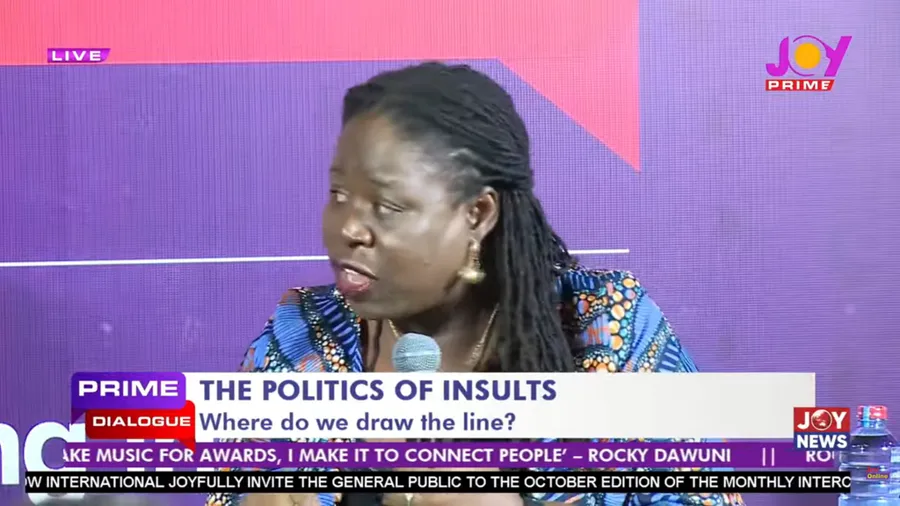
The Head of the Department of Communication at the University of Ghana, Professor Abena Animwaa Yeboah-Banin, has warned that the normalisation of insults in student politics could influence the conduct of future political leaders and reinforce abusive practices in national politics.
She said young people who witness individuals gaining recognition and political appointments through verbal attacks could come to regard such behaviour as a legitimate pathway to success.
Speaking during a **Joy Prime **dialogue on the topic ‘The Politics of Insults: Where Do We Draw the Line?’ at Labadi Beach on Friday, October 16, Prof. Yeboah-Banin said political behaviours often began on university campuses, where student leaders could gain visibility and build connections with the country’s major political parties.
Drawing on her experience as a former vice-president of Akuafo Hall at the University of Ghana, she said she had later realised that some of the student leaders she worked with were already aligned with the National Democratic Congress (NDC) or the New Patriotic Party (NPP).
She argued that when individuals were noticed and elevated despite engaging in abusive conduct, it sent a signal to other young people that similar behaviour could help them secure political influence and appointments.
“Because for as long as it seems rewarding, young people would emulate that behaviour,” she said.
Prof. Yeboah-Banin cautioned that the trend could spread beyond a few individuals, creating a political culture in which young people believed they had to use insults to become successful.
She said the responsibility for changing this pattern extended beyond politicians to the wider public, which she argued had become too tolerant of abusive political discourse.
The communication scholar urged Ghanaians to reconsider the behaviour they reward with attention, particularly on social media and through media platforms that repeatedly feature individuals who use invectives.
She said citizens could influence political parties by refusing to listen to or engage with such content, arguing that politicians depended on public support and votes.
“They will play the music as we want to dance,” she said, stressing that voters had the collective power to compel political leaders to change their approach if they clearly rejected insults.
Prof. Yeboah-Banin also called for greater scrutiny of ministerial nominees during parliamentary vetting, urging lawmakers to question candidates about conduct that could set a poor example for young people.
She argued that Parliament’s assessment of nominees should take account of the standards expected of people appointed to positions of public responsibility.
According to her, public resistance to appointments involving individuals known for abusive conduct could discourage future nominations of people whose behaviour did not reflect those standards.
She maintained that changing the political culture required a collective effort from citizens, the media, Parliament and political parties to ensure that insults were not treated as a route to recognition, success or public office.
Follow the story
About this article
- Length
- 467 words · 2 min read
- Published
- October 16, 2026
- Byline
- Emmanuel Tetteh
- Source
- Joy News