

Tanzania vs Kenya in 2026: Economy, Army and Population Compared
Kenya's economy is 57% bigger than Tanzania's, but Tanzania has 24% more people and 63% more land. Across nine scored measures, Kenya edges it 5-4. Ranked on IMF, UN and Global Firepower 2026 figures.

AI summary
Published: November 8, 2026
Kenya and Tanzania share a border, a language, a regional bloc and a rivalry that never quite ends. They are the two anchors of the East African Community, and each one leads where the other trails. Kenya has the bigger economy and the stronger military on paper. Tanzania has more people, more land and faster growth. This comparison scores the two countries on 10 measures across economy, army and population, using IMF, United Nations and Global Firepower figures for 2026.
Key Facts
- Kenya's economy is 57.2 percent bigger: $151.15 billion against Tanzania's $96.18 billion, on IMF World Economic Outlook figures for October 2026.
- Tanzania has 23.8 percent more people: 72.6 million against Kenya's 58.6 million, and its population grows faster, 2.86 percent a year against 1.92 percent.
- Tanzania is 63.2 percent bigger in land: 947,300 square kilometres against Kenya's 580,367. Yet Kenya is more crowded, with 101 people per square kilometre against Tanzania's 77.
- Kenya fields exactly twice as many active soldiers, 50,000 against 25,000, and spends 11.9 percent more on defence. It ranks 84th in the world on the Global Firepower Index, five places ahead of Tanzania.
- The final score is Kenya 5, Tanzania 4, across nine scored measures. Tanzania wins on growth, people, land and cities. Kenya wins on money and the military. Median age is reported as a profile fact, not scored.
Tanzania vs Kenya: The 10 Measures, Compared
Each row names a winner. The score counts nine rows. Median age is listed for context and is not scored, because a younger population is neither a win nor a loss on its own.
MeasureKenyaTanzaniaLeader Nominal GDP, 2026$151.15bn$96.18bnKenya GDP per person, 2026$2,785$1,325Kenya Real GDP growth, 20264.5%6.0%Tanzania Population, mid-202658.6 million72.6 millionTanzania Land area580,367 km2947,300 km2Tanzania Median age, 202620.3 years17.6 yearsNot scored Urban population share, 202532.2%36.9%Tanzania Active military personnel, 202650,00025,000Kenya Defence budget, 2026$1.65bn$1.48bnKenya Global Firepower rank, 202684th of 14589th of 145Kenya
Put the two together and they are a serious bloc. Combined GDP is $247.33 billion, just over half of South Africa's $489.1 billion, the continent's largest economy. Combined population is 131.2 million, 54.1 percent of Nigeria's 242.4 million. The rivalry is real, but so is the weight of the pair.
1. Economy: Kenya is 57 percent bigger
Kenya's economy is worth $151.15 billion in 2026, against Tanzania's $96.18 billion. The gap is $54.97 billion. Kenya is 57.2 percent bigger, and it is the largest economy in the East African Community, ahead of Ethiopia at $127.15 billion. The IMF's October 2026 outlook puts Kenya seventh in Africa by nominal GDP and Tanzania ninth. Tanzania would need to grow far faster than Kenya for years to close a gap of this size, and it is growing faster, just not fast enough yet.
2. GDP per person: about twice as much in Kenya
The average Kenyan produces about twice as much as the average Tanzanian. IMF figures put GDP per person at $2,785 in Kenya and $1,325 in Tanzania, a gap of $1,460. The ratio is 2.10 on the IMF's own figures. On United Nations population counts the Kenyan figure is lower, about $2,578, which makes the ratio 1.94, still about twice. Either way, the average Kenyan is roughly twice as well off in output terms, because Kenya's economy is far bigger while its population is far smaller.
3. Growth: Tanzania is pulling away in percentage terms
Tanzania's economy is forecast to grow 6.0 percent in 2026, against 4.5 percent for Kenya. The gap is 1.5 percentage points, which means Tanzania grows a third faster in percentage terms. But percentages hide the base. Six percent of $96.18 billion is about $5.8 billion of new output, while 4.5 percent of $151.15 billion is about $6.8 billion. Kenya still adds more dollars each year, even while growing more slowly. Tanzania's lead on growth is real, but it has not yet turned into a lead on size.
4. Population: Tanzania leads by nearly 14 million
Tanzania has 72,563,780 people at mid-2026, against Kenya's 58,636,412. The gap is 13,927,368 people, or 23.8 percent more. Tanzania is the fifth most populous country in Africa, Kenya the seventh. Tanzania also grows faster, at 2.86 percent a year against Kenya's 1.92 percent, so the gap widens by roughly 950,000 people a year. On current trends Tanzania will pass 100 million people years before Kenya does.
5. Land: Tanzania is nearly two-thirds bigger
Tanzania covers 947,300 square kilometres, against Kenya's 580,367. The gap is 366,933 square kilometres, an area larger than Germany. Tanzania is 63.2 percent bigger, the 13th largest country in Africa by land, while Kenya ranks 22nd. But Kenya packs its people tighter. Kenya has 101 people per square kilometre, Tanzania has 77, so Kenya is 31.9 percent more densely settled. Tanzania has room to grow into. Kenya has already grown into its room.
6. Median age: Kenya is older, Tanzania is younger
The median Kenyan is 20.3 years old. The median Tanzanian is 17.6. The gap is 2.7 years, and it tells the same story as the population figures. Tanzania's population is younger and faster growing, which means a bigger youth cohort entering school and work each year. Kenya's population is further along the same path, with a slightly older profile and slower growth. Neither age is better on its own. A younger population is a workforce of the future and a jobs challenge of the present, at the same time.
7. Cities: Tanzania is more urban than Kenya
More of Tanzania lives in towns and cities than Kenya does. The urban share is 36.9 percent in Tanzania and 32.2 percent in Kenya, a gap of 4.7 percentage points. That surprises people who picture Nairobi as the region's great city, and Nairobi is. But Tanzania's urban population is spread across Dar es Salaam, Mwanza, Arusha and Dodoma, while Kenya's is concentrated in Nairobi, Mombasa and Kisumu. The gap is small, but it runs against the usual story that Kenya is the more urban country.
8. Active soldiers: Kenya fields exactly twice as many
Kenya lists 50,000 active military personnel, Tanzania 25,000. The ratio is exactly 2.00 on Global Firepower's 2026 figures. Kenya also has 25,000 paramilitary personnel, against Tanzania's 6,500. One warning belongs here. Other trackers count differently: IISS-style estimates put Kenya at about 24,100 active and Tanzania at about 27,000, which would flip this row to Tanzania. Global Firepower's Kenya figure appears to fold in paramilitary elements. This article follows the same Global Firepower definition used in our ranking of Africa's armies by active soldiers, and the alternative count is disclosed here and in the Methodology.
9. Defence budget: Kenya spends more, but not by much
Kenya's defence budget is $1.65 billion on Global Firepower's 2026 figures, against Tanzania's $1.48 billion. The gap is $175.7 million, or 11.9 percent. It is the closest money gap in this comparison. SIPRI, which measures actual military spending rather than budgets, puts the gap wider: Kenya spent about $1.47 billion in 2025, Tanzania about $0.9 to $1.0 billion. Both sources agree Kenya spends more. Older round figures that show Tanzania ahead, $1.4 billion against $1.3 billion, come from an earlier Global Firepower snapshot and are superseded by the current exact figures.
10. Firepower rank: Kenya leads by five places
Kenya ranks 84th of 145 countries on the Global Firepower Index 2026, with a PowerIndex score of 1.8588. Tanzania ranks 89th, at 1.9111. Lower is stronger on this index. Kenya is 12th in Africa, Tanzania 14th. The gap is five places and 0.0523 index points, which is small. Kenya's edge comes from the air: 154 aircraft against Tanzania's 38, including 17 fighters against 11 and 84 helicopters against 15. Tanzania's edge is on the ground: 200 tanks against Kenya's 188, and 205 towed artillery pieces against 53. Neither side has a decisive lead. That is why the overall index gap is so narrow.
Beyond the score: where the table flips
Three facts do not fit neatly into the score, and each one cuts against it. First, Tanzania owns the ground war on paper: more tanks, far more artillery, and 70 mobile rocket projectors against Kenya's zero. Second, Kenya owns the air and the sea: four times the aircraft, more than twice the fleet, and 18 patrol vessels against 10. Third, Tanzania owns the resources: it produces natural gas and coal, Kenya produces neither, and Tanzania's coastline is 1,424 kilometres against Kenya's 536. On money, Kenya's lead is real but narrow. Kenya's foreign reserves were $12.1 billion at the end of 2025, and its external debt is $31.45 billion, nearly twice Tanzania's $17.51 billion. For more on the money side, see our ranking of the largest economies in Africa in 2026 and African countries by foreign exchange reserves. For the people side, see the population of every African country in 2026 and the most urbanized countries in Africa.
Frequently Asked Questions
Which country is bigger, Kenya or Tanzania?
It depends on the measure. Tanzania is bigger in people, 72.6 million against 58.6 million, and in land, 947,300 square kilometres against 580,367. Kenya is bigger in money, with a $151.15 billion economy against $96.18 billion, and in GDP per person, $2,785 against $1,325.
Is Kenya richer than Tanzania?
Yes, on both measures that matter. Kenya's economy is 57.2 percent larger, and its GDP per person is about twice Tanzania's, $2,785 against $1,325 on IMF figures. Tanzania grows faster, 6.0 percent against 4.5 percent in 2026, but from a smaller base, so Kenya still adds more output in dollars each year.
Which country has the stronger military?
Kenya, on the Global Firepower Index 2026, ranks 84th in the world against Tanzania's 89th. Kenya has twice the active personnel on Global Firepower's count, 50,000 against 25,000, and four times the aircraft. But the lead is narrow, and Tanzania leads on tanks, artillery and rocket projectors. Other trackers count active personnel differently and would flip that one row to Tanzania.
Which country has more people?
Tanzania, by 13.9 million people. Tanzania has 72.6 million people at mid-2026, Kenya has 58.6 million. Tanzania also grows faster, 2.86 percent a year against 1.92 percent, so the gap is widening.
Are Kenya and Tanzania in the same regional bloc?
Yes. Both are founding members of the East African Community, alongside Uganda, Rwanda, Burundi, DR Congo, Somalia and South Sudan. Kenya is the bloc's largest economy in 2026 at $151.15 billion, ahead of DR Congo at $122.28 billion and Tanzania at $96.18 billion. For the wider contest, see East Africa combined vs Nigeria and Dar es Salaam vs Nairobi on cost of living.
Data Sources
-
International Monetary Fund, World Economic Outlook, October 2026 (DataMapper API: nominal GDP, GDP per capita, real GDP growth):
imf.org DataMapper, NGDPD for Kenya and Tanzania
-
United Nations, World Population Prospects, 2026 estimates (population, growth, median age), via Worldometer and PopulationPyramid.net:
worldometers.info Kenya demographics
and
populationpyramid.net Kenya
-
World Bank, World Development Indicators (urban population share, surface area):
api.worldbank.org urban population share
-
Global Firepower Index 2026, Kenya vs Tanzania comparison (PowerIndex, active personnel, defence budget, aircraft, tanks, land area, coastline):
globalfirepower.com Kenya vs Tanzania 2026
-
Stockholm International Peace Research Institute, Trends in World Military Expenditure 2025, April 2026:
SIPRI Military Expenditure 2025 fact sheet
Methodology
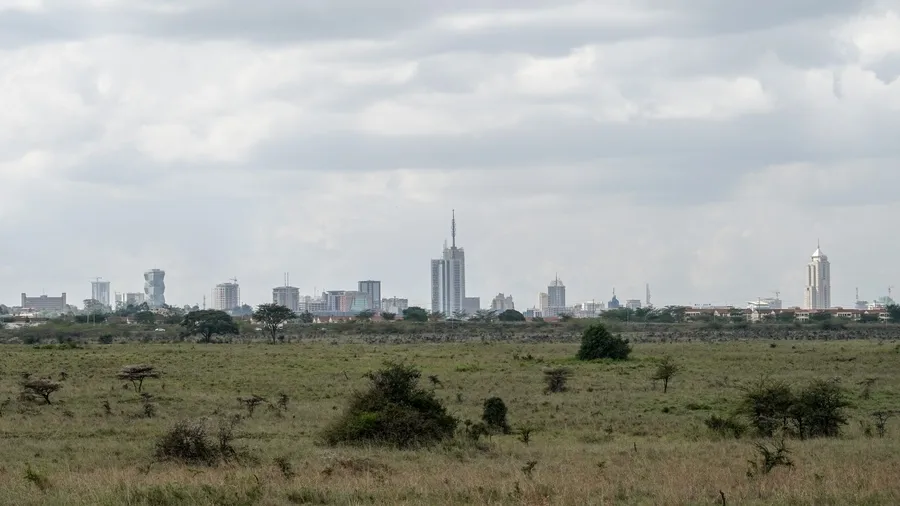
All figures are for 2026 unless stated otherwise. Nominal GDP, GDP per person and real GDP growth come from the IMF World Economic Outlook, October 2026 edition, read directly from the IMF DataMapper API on November 8, 2026. Population, population growth and median age are United Nations World Population Prospects estimates for July 1, 2026. Urban shares are World Bank World Development Indicators values for 2025, the latest available. Military figures are Global Firepower 2026, the same definition used in our November 6, 2026 ranking of African armies by active soldiers. Three discrepancies are disclosed. First, the IMF's GDP per person for Kenya, $2,785, uses the IMF's own population estimate of about 54.3 million, below the UN's 58.6 million; dividing the table's GDP by the table's population gives about $2,578 for Kenya, and the ratio to Tanzania is about twice under either denominator. Second, Global Firepower counts 50,000 active Kenyan soldiers and 25,000 Tanzanian, while IISS-style trackers count about 24,100 and 27,000; the winner on that row flips under the second definition, and the table follows Global Firepower for consistency. Third, older round defence budget figures of $1.3 billion for Kenya and $1.4 billion for Tanzania come from an earlier Global Firepower snapshot; the table uses the current exact figures, $1.65 billion and $1.48 billion, which SIPRI's 2025 spending data corroborates in direction. Land area uses Global Firepower's figures, 580,367 and 947,300 square kilometres; the World Bank revised its surface area series in the 2020 vintage to 591,970 and 945,500, and the gap between the countries is nearly identical either way. Median age uses the UN World Population Prospects 2024 vintage; newer trackers put both countries about one year higher without changing the order. The score counts nine rows. Median age is not scored. Feature image: Nairobi skyline from Nairobi National Park, TAGonsalves, Wikimedia Commons (CC BY-SA 4.0).
Follow the story
About this article
- Length
- 2,207 words · 11 min read
- Published
- November 8, 2026
- Byline
- Betrand Adeye
- Source
- The African Exponent