

The Big Reset: Will Nigerians Feel It?
The Monetary Policy Committee reset Nigeria's benchmark interest rate from 26.5 per cent to 23 per cent; a dramatic 350-basis-point adjustment, while recalibrating the corridor around the Monetary Policy Rate. The post The Big Reset: Will Nigerians Feel It? appeared first on Channels Television .

THE BIG RESET: WILL NIGERIANS FEEL IT?
Something important happened in Abuja last week.
It did not involve a defection, a campaign rally or another declaration about 2027. It happened at the Central Bank.
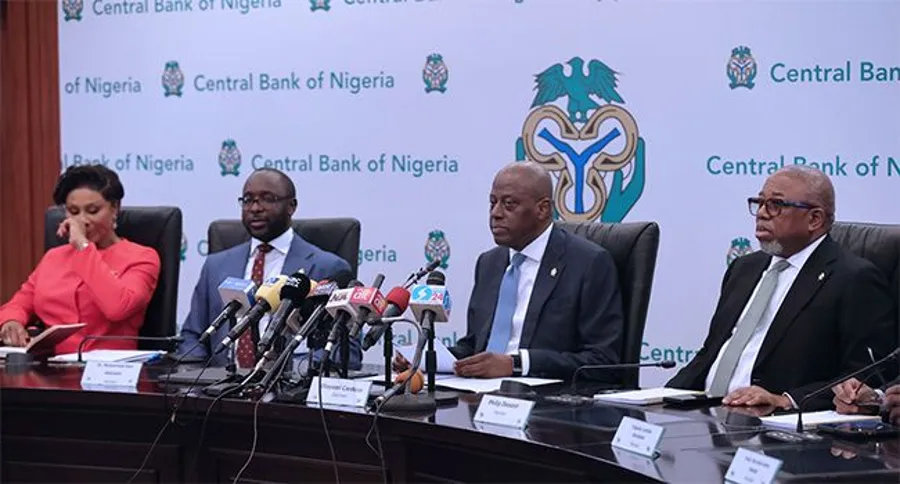
The Monetary Policy Committee reset Nigeria’s benchmark interest rate from 26.5 per cent to 23 per cent; a dramatic 350-basis-point adjustment, while recalibrating the corridor around the Monetary Policy Rate. The CBN insists that this is not simply a return to easy money. It describes it as an operational reset intended to reconnect the official policy rate with the rates actually operating in the financial system.
Technically, that distinction matters. Politically, something else matters even more: Will Nigerians feel it? That may be one of the defining economic questions on the road to 2027.
THE NUMBERS ARE BEGINNING TO CHANGE
For much of the Tinubu presidency, the political argument over the economy has been relatively straightforward. Government asked Nigerians to endure difficult reforms today for a more stable economy tomorrow. The opposition pointed to food prices, fuel costs, the naira and falling purchasing power and asked how long “tomorrow” was supposed to take.
Now the argument is becoming more complicated.
The CBN says inflation has moderated to 15.39 per cent. It cited real GDP growth of 4.43 per cent in the second quarter and strengthening economic activity as part of the evidence that the macroeconomic adjustment is becoming more balanced. Those are significant indicators. They provide the government with something it badly needs as the election approaches: evidence with which to argue that the pain of its reforms is beginning to produce macroeconomic stability. But elections are not conducted inside spreadsheets. They are conducted in homes, markets, farms, factories and polling units. And that is where the next economic battle will be fought.
FROM MACROECONOMICS TO THE MARKET
Consider what has happened since the CBN announcement. Commercial-bank lending rates have not immediately fallen substantially. Manufacturers say that if businesses continue borrowing at rates approaching 30 per cent, the benefits of the CBN reset will be limited.
That is hardly surprising. Monetary-policy transmission takes time. But politically, time is precisely the problem.
Nigeria’s presidential election is scheduled for January 16, 2027. The economic argument therefore has a deadline. Between now and then, Nigerians will be asking questions considerably simpler than the language of monetary policy: Are prices becoming more manageable? Can businesses borrow more cheaply?
Is the naira becoming more predictable? Are jobs becoming easier to find? Does my income buy more than it did a year ago? That is the distance between macroeconomic stabilisation and political benefit. And it is a distance the government will want to close quickly.
THEN CAME THE DEBT NUMBERS
There is another economic number competing for attention. On Friday, the Debt Management Office published Nigeria’s public-debt position as of June 30. Total public debt stood at about ₦166.79 trillion, up from roughly ₦159 trillion at the end of March.
The opposition quickly seized on it. Atiku Abubakar has demanded a fuller accounting of the borrowing and is attempting to connect rising debt with the hardship Nigerians have experienced during the administration’s reform programme. That criticism is part of the emerging campaign argument; it does not by itself establish whether the borrowing is sustainable or how effectively it has been deployed. But politically, place the two developments side by side.
Inflation: 15.39 per cent.
MPR: down to 23 per cent.
GDP: growing at 4.43 per cent in Q2.
And yet:
Public debt: ₦166.79 trillion.
There, in four numbers, is much of the economic argument that may accompany Nigerians into the polling booth. The government can point to stabilisation. The opposition can ask about debt and living standards. The voter will ultimately decide which argument corresponds more closely with lived experience.
THE PRESIDENT RETURNS TO A DIFFERENT ARGUMENT
President Bola Tinubu’s return from his working vacation in Europe closes another political controversy.
His extended stay abroad had become an opposition talking point. Atiku, Peter Obi and other critics questioned the length of the absence and the President’s non-attendance at the United Nations General Assembly; the Presidency responded that Tinubu remained in charge and continued directing government business while abroad. That argument will probably not disappear immediately. But there is a more consequential question waiting for the President at home. Can he now convert improving macroeconomic indicators into a persuasive political story? That is a different challenge. Economic reform is usually politically expensive at the beginning. Its political reward comes only when people believe that the sacrifice has produced something tangible. The CBN can reset the MPR. It cannot reset public sentiment.
THE 2027 ECONOMIC BATTLE
This is where Tuesday’s Political Signal becomes particularly interesting. The economic debate heading into 2027 may be moving into a new phase. For the opposition, simply saying that Nigerians are suffering may gradually become insufficient if inflation continues falling, the naira remains more stable and economic growth strengthens. The opposition will have to argue why improving macroeconomic indicators have not translated sufficiently into household welfare — and what it would do differently.
For the government, quoting GDP, reserves and inflation figures will also be insufficient if families and businesses cannot identify corresponding improvements in their own finances. Both sides therefore face a credibility test.
The government must demonstrate transmission.
The opposition must demonstrate a credible alternative.
That could make economics—not coalition arithmetic or political defections—the more consequential campaign battleground over the next several weeks.
WATCH THE CLOCK
There is one final dimension to the CBN reset. It has come with an election approaching. CBN Governor Olayemi Cardoso has stressed that the reset does not amount to abandoning monetary discipline, and the MPC retained substantial liquidity restraints, including a 45 per cent Cash Reserve Requirement for deposit money banks. That matters.
As campaign spending intensifies, the CBN will face the delicate task of supporting economic activity without allowing election-related liquidity to reignite inflationary pressure.
A significant resurgence in inflation would weaken the stabilisation narrative. Continued disinflation accompanied by lower borrowing costs and stronger growth would strengthen the government’s factual case that macroeconomic conditions have improved, while leaving voters to judge how much those gains matter in their own circumstances.
So watch not merely the MPR.
Watch food inflation.
Watch bank lending rates.
Watch the naira.
Watch fuel prices.
And above all, watch household sentiment. Because somewhere between the CBN’s policy committee room in Abuja and the Nigerian marketplace lies one of the biggest unanswered questions of the 2027 election.
THE SIGNAL
The CBN has pressed the reset button.
But monetary policy and politics operate on very different clocks. The Central Bank can change an interest rate overnight. It takes considerably longer for cheaper money to reach a manufacturer, for investment to produce a job, for lower inflation to restore purchasing power, and for economic statistics to become something a family can actually feel. That is why the next phase matters.
The Tinubu administration no longer needs only to demonstrate that the economy is stabilising.
It increasingly needs Nigerians to believe that their own economic circumstances are improving.
And the opposition cannot rely indefinitely on yesterday’s economic numbers. It will have to make its case against the economy as Nigerians experience it closer to election day. So perhaps the most important political indicator between now and January will not come from another defection, endorsement or rally.
It may come from the market woman, the manufacturer, the salary earner and the young Nigerian looking for work.
The CBN has made its Big Reset.
The political question is whether Nigerians will feel a reset of their own.
The post The Big Reset: Will Nigerians Feel It? appeared first on Channels Television.
Follow the story
About this article
- Length
- 1,280 words · 6 min read
- Published
- September 30, 2026
- Byline
- OpeOluwani Akintayo
- Source
- Channels TV