
Hohoe MCE says residents long believed stadium was state-owned over Corruption Watch probe
Hohoe Municipal Chief Executive (MCE), Prosper Kumi, says he is not surprised by findings from Corruption Watch’s investigation into the use of public funds for the construction of astroturf facilities, insisting that residents of Hohoe have long believed the town’s stadium is a state asset.

AI summary
Hohoe Municipal Chief Executive (MCE), Prosper Kumi, says he is not surprised by findings from Corruption Watch’s investigation into the use of public funds for the construction of astroturf facilities, insisting that residents of Hohoe have long believed the town’s stadium is a state asset.
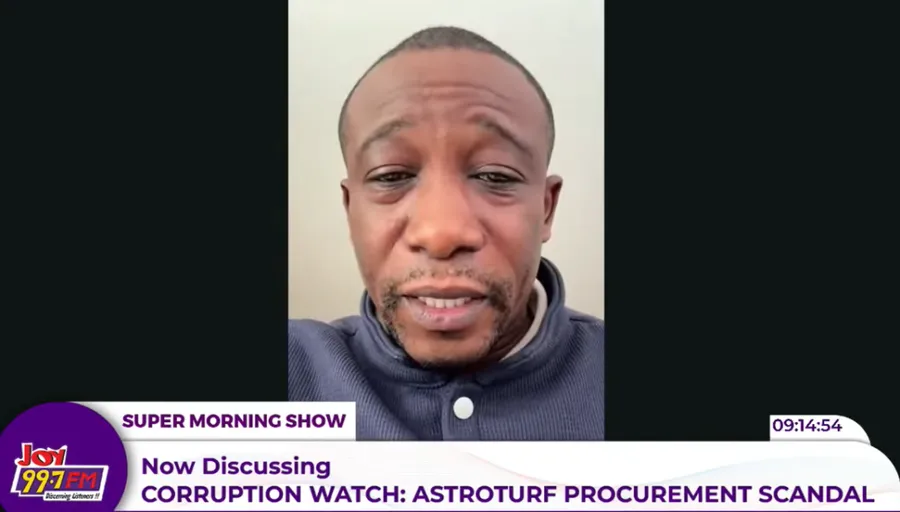
Speaking on **Joy FM’s **Super Morning Show, Mr Kumi said questions over the ownership and financing of the facility had existed for some time, particularly because residents were aware of activities and decisions involving the municipal assembly.
“I am not too surprised that these findings are out. The people of Hohoe have had that conviction for some time now, knowing very well that this facility, a stadium, belongs to the state,” he said.
The comments come amid renewed scrutiny of the One Constituency, One Astroturf programme introduced under former President Nana Addo Dankwa Akufo-Addo’s administration.
The initiative, which involved the construction of football pitches using artificial grass, became one of the most prominent and celebrated sports infrastructure programmes of the former government.
Mr Kumi said the Hohoe facility also became the subject of political activity during the electioneering period, describing some of the developments surrounding it as “political gimmicks”.
He explained that after the change in government and his appointment as MCE, he considered it important to establish the facts surrounding the concerns raised by residents.
-
READ ALSO:
1 Constituency, 1 Astroturf Project: Corruption Watch uncovers alleged procurement breaches
According to him, one of the documents he found upon assuming office was a Right to Information (RTI) request from Corruption Watch seeking information on the facility.
The request, he said, prompted the assembly to gather its available records and constitute an ad hoc committee to examine the documentation.
“When I entered the office, one of the documents I found was an RTI request from Corruption Watch, and quickly that gave us the opportunity to pull our documents together,” Mr Kumi said.
He added that the committee reviewed the available documents and prepared a report, which subsequently formed the basis of the assembly’s response to Corruption Watch.
“There has always been concern of who owns the stadium because assembly processes are in the public domain, so definitely people are aware of what goes on within the assembly,” he said.
Mr Kumi further explained that there had been a longstanding perception among residents that the facility was state-funded. He noted that, even before his tenure as MCE, people believed the municipal assembly had made some form of commitment towards the project.
“There is always that information that it is state-funded, and people believe strongly that, even the assembly—as at the time I wasn’t in office—people believed strongly that as an assembly there was even commitment from the assembly to that effect,” he said.
Follow the story
About this article
- Length
- 457 words · 2 min read
- Published
- September 17, 2026
- Byline
- Emmanuel Tetteh
- Source
- Joy News