

Exhibition explores the soul of the Kwacha
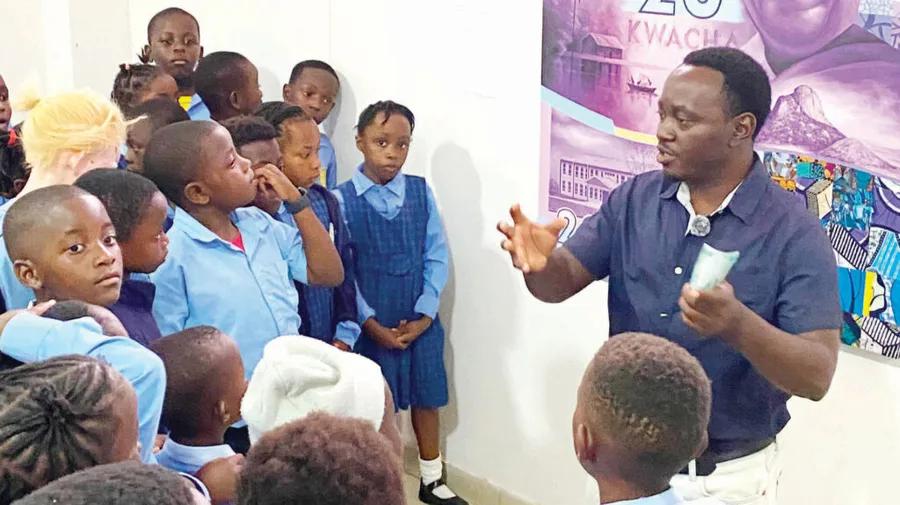
Mzuzu-based artist Myck Mtika soared with his exhibition titled The Last Note that for close to a week engaged people into a deep conversation of money, memory and the vanishing value of the Kwacha. Held at Mzuzu Museum, the free- of- charge exhibition started on September 11 and ended on Sunday. The solo exhibition brought together a body of creations developed through what Myck described as artistic research, observation, public memory, and reflection on the country’s changing economic reality

AI summary
Mzuzu-based artist Myck Mtika soared with his exhibition titled *The Last Note *that for close to a week engaged people into a deep conversation of money, memory and the vanishing value of the Kwacha.
Held at Mzuzu Museum, the free- of- charge exhibition started on September 11 and ended on Sunday.
The solo exhibition brought together a body of creations developed through what Myck described as artistic research, observation, public memory, and reflection on the country’s changing economic reality.
Myck said he fashioned the exhibition in response to the phasing out of the K20 banknote and its replacement with the K20 coin, alongside the introduction of the K50 coin.
“At first glance, the replacement of a banknote with a coin may appear to be a small technical change in the currency system. However, this exhibition treats that change as a powerful cultural, historical, and economic moment,” he said.
The visual artist said the disappearance of the K20 note invites people to look again at money: not only as something we spend, save, borrow, or lose, but also as something that carries memory, identity, dignity, national history, and public trust.
The artworks combined visual art with social commentary, using the K20 and K50 notes as the central symbol and it included large-scale paintings, portrait-based works, mixed-media compositions, currency-inspired visual textures and installations using symbolic materials.
In his exhibition, Myck looked at themes such as ‘Money and Memory’, exploring how money carries personal and national memory as well as ‘Currency and Identity’ which reflects on the symbols, leaders, histories and values represented on Malawian currency.
The visual artist whose previous exhibitions include ‘Kabaza- Story of a Malawian’, which he did at Kaliso Art Gallery in Lilongwe, said yesterday he was happy to create a conversation through the canvas.
“It was eye opening to a majority of people whom I have discovered have little knowledge about the history carried on our banknotes,” he said.
Myck added: “People have little knowledge about the economy and Reserve Bank of Malawi and other government institutions dealing with finance have a huge task to engage and educate the public in ways that are easier to understand citing art”.
The artist said that the potential for art to change people’s lives is immense, but observes that there is a challenge with too much resistance from bodies and institutions.
Artistic Director for Mzuzu-based Ma Africans Theatre James Mhango described the exhibition as extraordinary.
“An exhibition full of history and lessons, asking questions why we have money and its values,” Mhango said.
Follow the story
About this article
- Length
- 422 words · 2 min read
- Published
- September 22, 2026
- Byline
- Sam Banda
- Source
- The Times Group