

FG plans 360 km/h rail link from Lagos to Maiduguri

AI summary
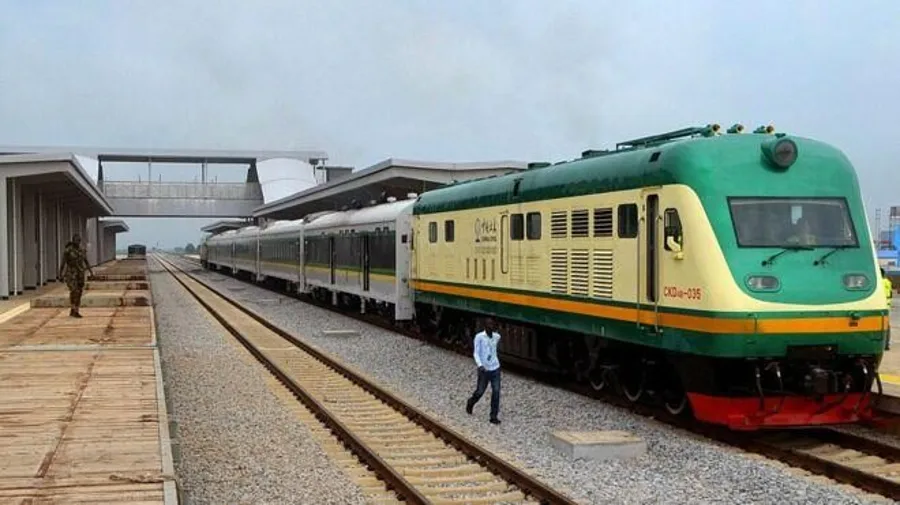
The federal government plans to develop a high-speed rail line linking Lekki in Lagos with Maiduguri in Borno State, with trains expected to operate at speeds of about 360 kilometres per hour.
Funsho Adebiyi, permanent secretary at the ministry of transportation, announced the proposed project in Abuja at the 19th National Council on Transportation, as the government outlined a broader push to expand rail infrastructure and reduce the country’s dependence on road travel.
“Plans are in place to develop a fast rail system from Lekki to as far as Maiduguri,” Adebiyi said, adding that sections of the line could be elevated on piles to allow trains to operate at high speeds.
The proposed connection will form part of the government’s effort to provide faster alternatives to road transportation and improve links between Nigeria’s major economic centres and northern states.
Adebiyi said the government wants commuters and long-distance travellers to have greater choice in how they move around the country.
He cited the potential for significantly shorter journeys between Lagos and Abuja as an example of how faster rail services could shift passengers away from roads.
The government is also seeking to expand urban rail systems, with light rail projects approved for Lagos, Kano and Kaduna and plans to extend similar infrastructure to other state capitals.
Beyond rail development, the ministry is preparing a series of measures aimed at improving the regulation and management of road transportation.
Adebiyi said the Federal Executive Council (FEC) has approved a Smart National Transport Data Bank that will consolidate information on vehicles, drivers, road users and transport workers.
The database will be developed under a design, build, finance, operate and transfer model, according to the permanent secretary.
The government expects it to improve policymaking and coordination between institutions responsible for transportation and road safety.
“In Nigeria today, we need to know how many Nigerians actually have our driver’s licence in their hands,” Adebiyi said, pointing to the need for more comprehensive data on vehicles, licences and road users.
The proposed system is also expected to support changes to motor parks and passenger safety. The government plans to standardise motor parks and require passenger manifests containing information such as travellers’ contact details, destinations and next-of-kin information.
Adebiyi said the system will help authorities quickly identify passengers involved in accidents and contact their families.
The government is also considering computerised vehicle number plates that could be linked to motorists’ records and used to identify drivers who breach traffic regulations. Driver’s licences will be subject to renewal and could face sanctions for repeated violations, he said.
Six standardised bus terminals are also planned as the first phase of a nationwide programme.
The facilities are expected to include waiting areas, police posts, vehicle inspection and mechanical facilities, restaurants and restrooms.
The government will also tighten licensing requirements for commercial road transport operators. Companies will be required to obtain approval from the Federal Road Safety Corps before beginning operations, with licences subject to renewal and potential sanctions for operators that fail to meet regulatory standards.
Adebiyi said the government’s transport strategy is intended to create a more integrated network spanning road, rail and waterways.
“Nigerians deserve the right to choose at any time their preferred transport mode when planning to take a trip from point A to point B,” he said.
The ministry also plans to unveil the National Land Transport Policy, which was approved at the previous National Council on Transportation meeting. Adebiyi said the policy will provide a framework for implementing reforms across the sector.
The government is simultaneously developing transport-sector skills through the Federal University in Daura, which said was established to train personnel for the industry. The institution is expected to produce its first graduates next year, with a focus on transport-related manpower.
The high-speed rail proposal comes as Nigeria seeks to modernise its transport infrastructure, improve connectivity between regions and ease pressure on increasingly congested roads.
Adebiyi said the long-term objective is to create a system in which road, rail and water transport operate as interconnected parts of a national network.
Join BusinessDay whatsapp Channel, to stay up to date
Open In Whatsapp
Follow the story
About this article
- Length
- 688 words · 3 min read
- Published
- September 2, 2026
- Byline
- Onyinye Nwachukwu
- Source
- BusinessDay