

Nissan looks beyond Rosslyn as new SA chapter unfolds

AI summary
Nissan is seeking to reassure South Africans that selling its Rosslyn manufacturing operations does not mean the end of a relationship with the country spanning more than six decades.
That was the central theme at the recent Nissan Festival, which was part product launch, part celebration of Nissan’s South African history and, perhaps more importantly, an opportunity for the Japanese manufacturer to explain what comes next.
Nissan displayed a collection of vehicles that have helped shape its 65-year presence in the country.
Familiar Datsun, Skyline, Sentra and GT-R models were among the classics providing a nostalgic backdrop alongside the company’s latest offerings.
The celebration comes during a significant transition for Nissan South Africa. In January, Nissan and Chery South Africa reached an agreement for the Chinese manufacturer to acquire Nissan’s manufacturing assets in Rosslyn, Pretoria.
Chery opened the facility in July, ending Nissan’s role as a vehicle manufacturer in the country while maintaining automotive production at the plant under new ownership.
Jordi Vila, the president of Nissan Africa and Europe, said that ending local manufacturing was a consequence of the company’s broader global restructuring programme.
“Unfortunately, we had to stop the activity of manufacturing in South Africa. We are maximising the capacity in other plants and that makes us more competitive,” Vila said.
Nissan is reducing costs, improving capacity utilisation across its manufacturing network and attempting to accelerate the introduction of new products.
Vila said the restructuring had started delivering financial improvements, with Nissan returning to a positive operating profit in its 2025 fiscal year.
He said that should allow the company to direct more investment towards new models, technologies and manufacturing.
Its future product strategy is being organised around four pillars: established core vehicles, new growth models, partnerships and products intended to maintain a stronger connection between customers and the brand.
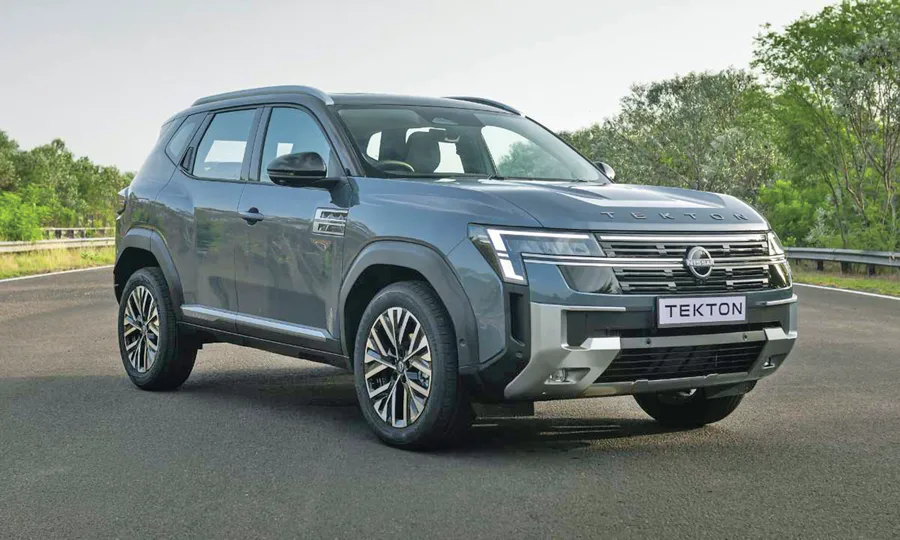
For Africa, familiar models, such as the Navara, Magnite and X-Trail, remain part of the core offering, while the Tekton — launched at the festival — represents Nissan’s push into new growth segments.
Partnerships are becoming increasingly important too.
Nissan continues to work with Renault on selected platforms and models while using its joint venture with Dongfeng in China to develop vehicles.
Vila stressed that the products emerging from the arrangements would have to comply with Nissan’s design, engineering, durability and quality standards.
The fourth pillar could prove particularly significant in a market such as South Africa, where Nissan and Datsun have a long history.
Models including the Patrol and sports cars, such as the Z and GT-R, represent the more emotional side of the brand — something reinforced by the heritage vehicles displayed at the festival.
Africa also remains a strategic market for Nissan because of its growing population and comparatively low vehicle ownership.
Vila put the continent’s motorisation rate at about 45 vehicles per 1 000 inhabitants, compared with approximately 200 globally, although individual African markets differ considerably.
South Africa remains an important part of those plans despite Nissan no longer manufacturing vehicles here.
The country became the first African market to receive the new Tekton after its global introduction in India and is among the first markets worldwide to get the SUV.
“It is designed to compete, it is designed to stay relevant and most of all, it is designed to let South Africans fall in love again with the brand that has been part of our lives for more than 65 years,” Vila said.
The Tekton will not be Nissan’s final new arrival this year.
The company says another two products are scheduled for introduction in South Africa before the end of this year, followed by the brand’s flagship, the Nissan Patrol, next year.
Follow the story
About this article
- Length
- 610 words · 3 min read
- Published
- September 27, 2026
- Byline
- Edward Moleke Makwana
- Source
- Sunday World