
SA Tourism says lack of direct flights an obstacle in attracting Indian tourists

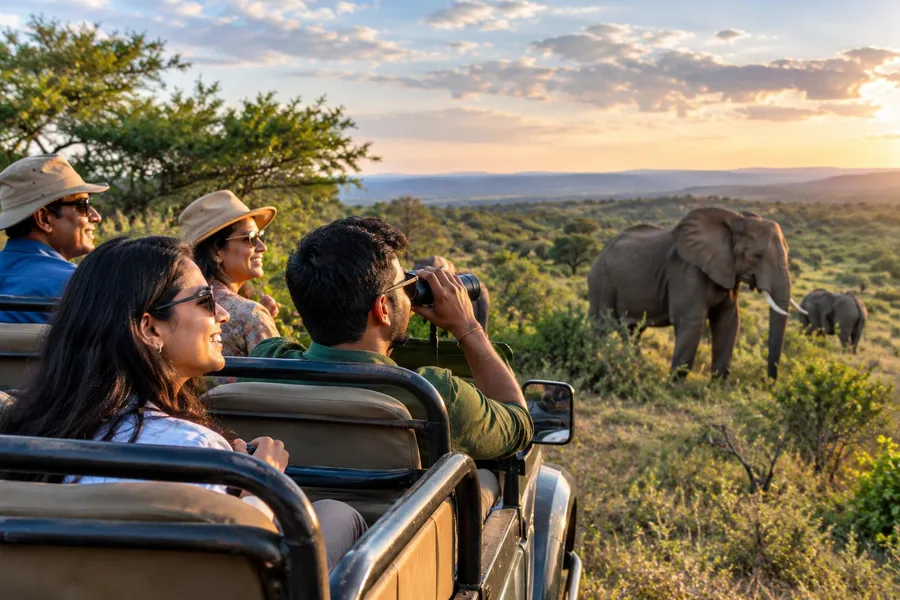
The lack of a direct flight between India and South Africa remains the biggest obstacle to attracting more Indian tourists, according to South African Tourism.
The tourism authority’s chief strategy officer, Siyabonga Mthethwa, says Indian travellers face longer journey times, more complicated connections and higher costs when travelling to South Africa because there is currently no direct air link between the two countries.
The admission comes as Indian arrivals to South Africa continue to lag behind last year’s figures, despite India remaining one of the world’s fastest-growing outbound travel markets.
Between January and July this year, 29 525 Indian travellers arrived in South Africa, while the country recorded 6.6-million international arrivals overall during the same period, a 12.4% increase compared with the corresponding period in 2025.
Mthethwa says the decline cannot be attributed to one factor alone.
“Several factors such as Middle East disruptions, rising energy costs and India’s economic slowdown are weighing on South Africa and other destinations,” he said.
He said India’s outbound travel market had initially been expected to grow in 2026, but forecasts were revised downwards following the conflict in the Middle East.
For Indian travellers, the impact is particularly significant because South Africa is a long-haul destination.
“South Africa is a long-haul destination for Indian travellers, as these cost pressures could have a greater impact on demand, particularly through higher airfares and overall trip costs,” said Mthethwa.
Connectivity remains the biggest hurdle
Asked what single factor is currently preventing more Indian travellers from choosing South Africa, Mthethwa was unequivocal.
“The single biggest barrier is the lack of a direct flight between India and South Africa.”
He said connecting through other hubs increases travel time, complexity and cost, with those pressures compounded by rising airfares and tighter household spending.
However, SA Tourism does not have a figure showing exactly how much of the decline is attributable to the absence of direct flights.
Mthethwa said the organisation could not quantify how much of the decline was caused by air connectivity compared with visas, costs, safety perceptions or marketing.
The issue has gained renewed attention after President Cyril Ramaphosa called for direct flights between South Africa and India to be restored.
According to the Presidency’s newsletter published on September 14, South Africa wants to restore direct air connectivity as part of efforts to strengthen tourism, trade, investment and people-to-people ties between the two countries.
South African Airways has welcomed the call and is assessing market opportunities, but no direct route has been confirmed. There is also no projected timeline for the restoration of the route.
Changing expectations of Indian travellers
While connectivity remains a major concern, SA Tourism’s research shows that travellers’ expectations are also changing.
The organisation has identified five priority Indian traveller segments for South Africa: Seasoned Explorers, Family Adventures, Aspirational Explorers, Scenic Adventurers and Jetsetters.
Together, these middle- to high-income, long-haul travellers account for 35% of the Indian travel market. According to Mthethwa, Indian travellers are looking for better value for money, fresh content and new itineraries.
They are also increasingly travelling according to the occasion and who they are travelling with. That means tourism businesses need to offer more options for family holidays, bleisure travel, birthdays, weddings, honeymoons and other special occasions.
The country’s Indian heritage and sizeable Indian-South African community could also help strengthen its appeal. Mthethwa said the diaspora gives South Africa an advantage when catering for Indian travellers, particularly through food options that suit the Indian palate.
But he said travellers are looking beyond food and heritage, with adventure, wildlife safaris and natural attractions also featuring strongly in their interests.
Also Read: Cyril Ramaphosa arrives in New Delhi as India hosts 18th Brics Summit
The AI traveller
Technology is also changing how Indian travellers plan their holidays. According to Mthethwa, Indian consumers are increasingly using artificial intelligence to simplify travel planning.
This means tourism businesses need to make information easier to find and understand, while structuring their online content in a way that allows AI-powered travel tools to surface relevant South African experiences.
“Indian travellers increasingly rely on AI to simplify planning, our information must be simpler, easier to find and structured to enable AI recommendations,” he said.
The shift means the country’s tourism offering needs to be visible not only to traditional travel agents and consumers but also to the digital tools increasingly being used to research destinations and build itineraries.
Leveraging cricket and targeted marketing
SA Tourism is also looking to cricket to help drive interest in South Africa among Indian travellers. The upcoming Cricket World Cup is expected to be a major opportunity for the country to market itself in India and other cricket-loving markets in the region.
Mthethwa said the organisation’s plans and partnerships are geared towards using the tournament to expose South Africa to the Indian market. The strategy will combine the sporting event with the tourism research already conducted on Indian travellers.
SA Tourism wants more tourism businesses to target the identified consumer segments through their own campaigns and offerings. The five segments have been identified as particularly attractive because they are more inclined to travel, relatively high-spending and positively disposed towards South Africa.
Alongside air connectivity, SA Tourism has identified easier visa processing as another important intervention. The Electronic Travel Authorisation (ETA) is being positioned as part of efforts to make travelling to South Africa easier and faster for Indian visitors.
Mthethwa said value for money, direct flights and the ETA were central to the organisation’s message to the Indian market. The tourism authority is also encouraging businesses to use the segmentation research to develop products and campaigns that speak directly to Indian travellers.
The research has already been shared with tourism trade stakeholders, products and provinces at Africa’s Travel Indaba. However, Mthethwa acknowledged that it would take time for the information to translate into measurable changes across the industry.
No target yet for post-flight arrivals
SA Tourism has not disclosed a specific target for Indian arrivals once direct connectivity is restored.
Mthethwa said historical experience showed that introducing an airline or route contributed to increased arrivals, meaning connectivity would form part of the organisation’s target-setting methodology.
For now, however, the return of direct flights remains uncertain.
South Africa is hoping that a combination of improved air access, easier travel authorisation, more targeted tourism products and the global attention generated by the Cricket World Cup can help it compete more effectively for Indian travellers.
Also Read: Patricia de Lille denies protecting SA Tourism CEO as suspension stands
Follow the story
About this article
- Length
- 1,087 words · 5 min read
- Published
- September 16, 2026
- Byline
- Mbalenhle Zuma
- Source
- Sunday World