

He loved working in concrete. Now, he’s dying from the chemical exposure.
“I was working for a company that dealt with a very strong epoxy resin… And with the company, it's easier for them just to pay you off than it is to change their safety protocols.”

https://www.spreaker.com/show/2952221/episodes/feed
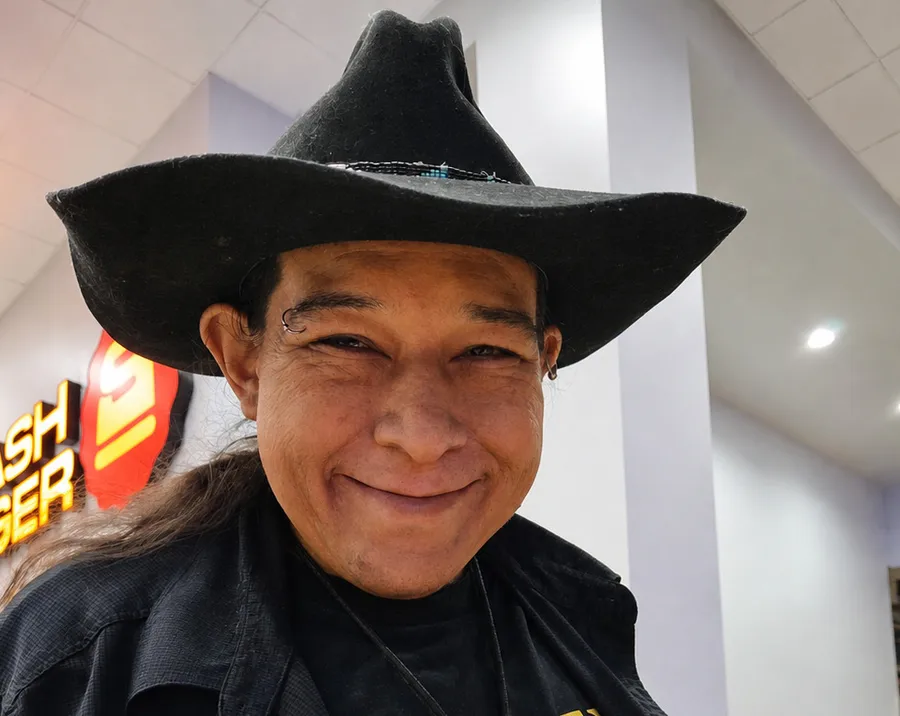
Because he was bullied in elementary school for being Native American, James Gardner’s friends lovingly call him “NDN.” His friends and family know NDN to be a fiercely loyal, loving person, and a fiercely hard worker. But as a third-generation concrete specialist, NDN was exposed to chemicals that have left him disabled, terminal, and facing foreclosure on his home. In this episode of Working People, we speak with James “NDN” Gardner and his best friend James Quigg.
Additional links/info:
-
GoFundMe: James Gardner:
Terminal Liver Failure—Home at Risk
-
Maven Navarro,
Forth Worth Star-Telegram
, “
Terminally ill, this proud man is fighting to keep the Fort Worth home he built
”
Featured Music:
-
Jules Taylor,
Working People
Theme Song
Credits:
- Audio Post-Production: Jules Taylor
Transcript
The following is a rushed transcript and may contain errors. It will be updated.
Maximillian Alvarez:
Alright. Welcome everyone to Working People, a podcast about the lives, jobs, dreams, and struggles of the working class today. My name is Maximillian Alvarez, and today we are in Fort Worth, Texas, and we’re talking about a fellow worker named James. As Maven Navarro recently reported in the Fort Worth Star Telegram, “After leaving Oklahoma, James Gardner built a life for himself in Fort Worth. Now he could lose it all. When Gardner walks into doctor’s offices to receive treatment for his terminal liver failure, he has to ask staff to remove all the air fresheners for his skin condition. Gardner has multiple chemical sensitivity, which he says was caused by his time as a concrete specialist working with two-part epoxy resin. The illness causes him to break out anytime he gets around chemicals, air fresheners, perfumes, cleaning supplies, and paint spark allergy flare-ups that can last for 10 days.
Concrete work is known to cause health problems. Cement plants can also cause respiratory or cardiovascular issues according to the Environmental Protection Agency. James Quigg first met Gardner in high school in Oklahoma where he was given the nickname NDN after enduring bullying for being Native American and kids calling him Indian. A few of Gardner’s friends started calling him NDN or Indian, and it stuck. Now, Quig started a GoFundMe to help prevent Gardner from losing his house. As he is unable to work and has faced challenges receiving disability, Gardner was denied disability the first two times he applied for it. It wasn’t until his third application that he was approved because of his internal organs shutting down.” So to talk about all of this, I am truly grateful to have James Indian Gardner himself and James Quigg, who they have given me permission to call them “NDN” and “Quigg,” friends since high school, both here on the show with us today.
Thank you guys so much for being here. It is really, really great to be connecting with y’all. And my God, I wish we were connecting under less horrifying circumstances and I’m so sorry that you’re going through all of this. And NDN, as much as you’re comfortable, I want us to make sure that we focus a good chunk of time today talking about what you’re going through now, where things stand now and what people listening can do to help. But we’ve got 50 minutes here and I really want listeners to get to know you and your lives more, your friendship and all the things that make you, you, not just these horrible people and jobs and systems that have done all this unforgivable damage to you. So NDN, start us off. Tell us the story of you and what brought you to Fort Worth. And then Quigq, hop in and tell us your story and how it intertwines with Indians.
James “NDN” Gardner:
I’ll start with a nickname “NDN” and then I’ll go from there. So as you were saying, back in school, kids were making fun of me and bullying me, and my principal called us into the office in my freshman year, said, “You guys can’t call him an Indian anymore. You’re being racist.” And one of my friends stood and said, “We’re not calling him Indian. We’re calling him letter N, letter D, letter N.” And he says, “Well, I can’t do anything about that.” And it just stuck and I’ve always enjoyed it. A lot of people are like, “He’s not just a Indian, he’s the Indian. There’s only one of them running around.” As far as career goes, I am third generation doing precast concrete with the passion. I’ve always enjoyed doing concrete. I’ve loved it. Being able to take the raw elements of earth and forging it into something that’s going to last and help the world is phenomenal to me.
I relocated down here to Fort Worth to actually do the McKinley Stadium, which is my third stadium to be a part of. Years ago, I was working for a company that dealt with a very strong epoxy resin and only 4% of the people that are exposed directly to it will develop an allergy to it. And with the company, it’s easier for them just to pay you off than it is to change their safety protocols, which shouldn’t be the way, but it’s cheaper for them that way. And over time, my symptoms and my condition got worse and worse and worse because it just doesn’t stop once you’re out of the environment of that specific thing. I remember one time they laid a new asphalt in front of my house here on the road and I broke out for a week because of the adhesive and the tar and the asphalt and I couldn’t avoid it because I was in my own home.
Maximillian Alvarez:
So I have so many questions about that specifically because I don’t know if you guys know about it, but on this show specifically, I’ve been doing a lot of interviews with working people who have been exposed to toxic chemicals from work, from industrial disasters near their homes, all this kind of stuff that poor and working people are being exposed to daily. I mean, I was just filming in South Baltimore last night where residents just like you guys, but here in Baltimore are fighting trash incinerators that are blasting toxic chemicals into the lungs of their children. So this is definitely something that we’ve talked a lot about on the show, but I do want to talk about what that looked like for you, Indian, on a day-to-day working level. But before we get there, I want to go deeper into some of the lore here. Take me back to where you guys were in high school where you first met.
Quigg, who was this guy in high school when you met? And NDN, same question about Quigg.
James Quigg:
So Indian is a grade above me. So I came in as a freshman. He was already an established sophomore. He had a cool car. It was painted. He had some lady. Did it have a female on the hood and it had the universe? I mean, you couldn’t miss this car.
Maximillian Alvarez:
You had a low rider?
James “NDN” Gardner:
No, actually, it was a 91 Chevy Cavalier and anytime I’d get bored, we would just re-spray paint it. It was all animal print once. Once it was all hippied out, make love, not war. Even at one point I gave all the kids an art paint pens and we just wrote quotes over the entire car. People would stand there and read it for hours. It was just something to do. So
James Quigg:
You’d see this car. I’d see the car around before I was even in high school. So then you see, oh, this is the cool guy with the cool car. And then he’s always hanging out in the courtyard and he’s always got this group of girls because he’s just very didn’t try very hard, I guess. And honestly, I don’t think we liked each other necessarily in the beginning. It was just he had this girls that I was trying to hang out with, talk to, and he just didn’t really like the new guy, the new skinny white dude that was hanging around.
Maximillian Alvarez:
You got to earn your keep, baby.
James Quigg:
It took a couple years.
James “NDN” Gardner:
He really had to. And most of these girls I’ve been friends with for years, so I was very protective of them because they were my friends. And here’s this scrawny kid coming in trying to ask them all different kinds of things and get involved. I’m like, “Hey, hey, you don’t need to be around here right now.” But eventually he warmed over to me and I warmed over to him.
James Quigg:
Yeah, I was saying hope I was best friends with his cousin for a couple years. Then probably what, sophomore, not sophomore, junior, senior year, we started maybe hanging out a little bit more. You invited me to your house.
James “NDN” Gardner:
I had a house that most people weren’t allowed to. I was very young and I lived on my own, so it was just me and this trailer house at 16 years old. So a lot of parents didn’t even allow their kids over to my place. And they spray painted up too in the walls.
Maximillian Alvarez:
Yeah. I mean, to be honest, I don’t think my parents wouldn’t allow that either, but that would be exactly the house we’d all want to go to. Exactly. Exactly. I mean, can I ask how you ended up having your own kind of place when you were 16?
James “NDN” Gardner:
My parents separated and it was a choice of either do I go live with my dad or do I go live with my mom? And I was already working full-time at the time, and I bought a trailer house on state auction and moved into it. And it was just simpler that way. My mother ended up moving back in with me a few years later, but it was just more convenient. So like I said, I already had the income coming in.
Maximillian Alvarez:
What were you doing back then for work?
James “NDN” Gardner:
Back then? Well, my first job was working for the Department of Wildlife through a program called ATEC, which was American Indian Education Training Association. They took Native Americans and put them at federal buildings and gave them summer jobs. So that got me experience. Pretty much I was doing property management, mowing the yard, stuff like that, but I got to do a lot of really cool stuff with them because I was, “Hey, let’s grab him and take him with us to go do this fish survey or let’s go explore the bat caves and do a survey out there.” And so it was very fun as a youth to have that. And then I went straight from that to Home Depot, working at Home Depot as a pro associate.
Maximillian Alvarez:
So paint a picture for me. When you guys were back there in Oklahoma, are we talking kind of small town Oklahoma, medium town, city? Yeah, paint a picture for me.
James “NDN” Gardner:
So Bethany, Oklahoma at that point was the very edge of Oklahoma City. So it’s pretty much small town. I knew all the police officers, they all knew me, not because I was in trouble, just because there wasn’t a lot of us running around. And of course it was the late ’90s, early 2000s, so we were always getting into some sort of trouble as we all did back in that time.
James Quigg:
Oklahoma is a pretty small, big town. I think less than a million people in the whole city, probably less than that now, but I mean it takes what, 10 minutes or less to get down into the heart of Bricktown, downtown Oklahoma City. I mean, it still is small town, but it’s trying to be bigger than it really is.
Maximillian Alvarez:
I mean, I come from Southern California, the land of endless lights and sprawl from the beach to the mountains. So everything feels small town to me to some extent. But to be honest, I kind of got a lot of love for the small and medium-sized towns in the country. I don’t think I gave them enough credit when I was younger, but the older I get and go visit more, the more fascinating they are. But I wanted to ask in that vein, we’re talking about Oklahoma. I guess we’re talking in the colonial project of the United States of America, so everything is ironic, but living in a state named Oklahoma and going to a school where you make fun of Native American kids feels so ironic and ridiculous that I don’t even know what to do with myself. But was that normal Indian? I mean, what was the kind of ratio?
Were there a lot of indigenous kids going to school there?
James “NDN” Gardner:
No. No, there wasn’t. In high school, there was maybe five of us altogether. I mean, there’s not a lot of us left. It’s sad to say. I was fortunate enough to run into… I mean, we just kind of all clicked together because, oh yeah, you’re native too. Cool. What tribe? What’s your family line? But the whole reason why we were in Oklahoma City is that my father was one of the Native Americans you hear about in the past being adopted off the res for a very low amount of money. And then he was adopted with four other siblings, all native from different tribes raised by a white man in the city. So yeah, there just wasn’t a lot that made it to the inner city area at that time. They all stayed out near the reservations, near the small towns like Carnegie and Adarko. So being inside the city, yeah, there wasn’t a lot of us.
Maximillian Alvarez:
And I take it from the origin story of your nickname that it wasn’t a very kind place to Native kids like you?
James “NDN” Gardner:
Oh, no, no, no. I remember once I was 14 walking down the street and the cops pulled me over because they had an APP put out on a Native American with long hair. I just happened to be a Native American with long hair. And they picked me up and took me down to the police station, which was just three blocks from my house. I wasn’t the person they were looking for. The person they were looking for had robbed a gas station and he was in his late 20s and I was 14. We stood out, so you either knew who we were or it’s just the way it was.
James Quigg:
It’s true. And what they only taught us in school about Native American culture is just an annual field trip we take to the Cowboy Hall of Fame and they’d show us the statues and talk about the Trail of Tears.
Speaker 4:
Yeah.
Maximillian Alvarez:
But there’s a lot to this story that I identify with in certain ways. I don’t know what that’s like Indian, but I know what it’s like to be a bald, scary looking Mexican dude in America. I’ll take looking like Quigg over looking like us on a normal day if I don’t want to get stopped by the cops. But that’s all the more reason why it just fills my heart when I hear stories of comradery and lifesaving solidarity, even among kids who are standing up for a friend. Tell me more about that, both of you, the stepping in to sort of reclaim the name and to say this is not how we’re going to do things. This guy’s our friend, not our enemy.
James “NDN” Gardner:
Oh yeah. I mean, Quig is my white guy. I always joke with people like, “I got my white guy. He’s right here. I’m safe. I don’t need a card. I got a whole person.” And I mean, he’s always had my back. Once we really connected and I realized that this is somebody that I needed to be part of my life and everything he’s done for me over the years, I can’t live up to. I try.
James Quigg:
I seriously doubt that, brother. I have computer smarts and I can do techie stuff, but this guy is the dude if you need any help. I mean, I’ll go back to last year, we had a leak in my daughter’s bathroom and it was coming down in the guest bathroom and I was like, “I don’t know what the hell to do, man. It’s just coming down.” And he just hopped in his car and he brought all his tools because he’s just that guy. And so he came and he helped me change the drywall. And as he’s doing this and helping me with all the stepping outside because I got to spray some kills on the wood, I mean, he’s getting hives, he’s getting blisters. I’m feeling incredibly guilty and he’s like, “Don’t worry about it. Don’t worry about it. Let’s just get it done.” But he’s just that kind of guy and it’s been like that anytime I’ve needed him.
He’s just always there. And it’s not just me, it’s everybody. He’s helped damn near everybody that we know, either with a place to stay, help fixing their car, mowing a yard. It doesn’t matter. He’s a helper, he’s a doer, and that’s just something I’ve always admired from him.
Maximillian Alvarez:
Well, and it’s genuinely beautiful to hear you guys say that, right? Because first and foremost, I’m thinking just as three men in the country today, we don’t say this enough to each other and we don’t allow ourselves to be that for each other. And so I just wanted to kind of honor the beautiful friendship that you guys have, having each other’s backs for this long is a marvelous thing. And I’ll be honest with all of you listening, Quig reached out to me about Indian’s story and told me about it, and that’s how it got on my radar. So these guys have been together for years and they’re still looking out for each other, and I think the world will be a better place if we all do a little more of that for each other. And Quig, even you telling that story reminds me that we’ve still got so much to talk about here, Indian, about your working life and the conditions and chemicals that you were exposed to that are now collapsing your health and your quality of life.
So that’s normally what we talk about on this show is I talk to workers and I say, “Tell me about your working life.What does it look like on the job?
For people who’ve never worked in this line of work, what does it entail?” Can you kind of take us a little bit on that journey and then tell us about the kind of work hazards that you were exposed to?
James “NDN” Gardner:
Yeah. The company where I was working for made burial vaults and the poncho that they used went on the liners of the burial vaults to seal it to the concrete so it maintain a watertight sealness for 50 to 100 years. That’s what they were concerned about. The people working in there that were alive being exposed to a hazardous chemical to keep somebody that’s going to go in the ground from being exposed to the elements of the ground was more important to them than the people actually doing the job because there was other things that could have been used that was more efficient but cost more money.
And after my initial exposure with this company, I was still passionate about concrete. I still wanted to do concrete, but I had to relearn what companies I could work for, where I could work at, and how I could do it because now I got to change everything. I can’t be around anything that has sold chemicals. I’ve got to be in open environments. And one of the things, I was also a journeyman iron worker because every now and then you get tired of staring at gray when you do concrete long enough. And back to the whole having lung and breathing respiratory issues, as a journeyman iron worker, I was working on the Devon Tower, which is the tallest building in Oklahoma City, and I was going from the ground up a thousand feet every day, and I had developed acute altitude sickness from just working on the outside of the building every day.
But a lot of that was contributed because they did a long biopsy on me to test me for silicosis, which is from concrete dust. And I did have some concrete dust built up in my lungs at the time. And that’s just because not wearing enough protection when you should wear protection because old school concrete guys just get the job done, which I got no problem getting a job done, but it should be done safely, effectively, and efficiently, not the other direction around, efficiently and safety being one of the last concerns. So after no longer working for the company that caused my initial, and I didn’t realize how bad I was going to get over the years, because initially it was just adhesives in general. Then it got where I couldn’t even put a bandaid on without breaking out from the adhesives as I am now.
I actually have to order special medical stuff when I do get a cut so I can seal myself and not have a reaction to it for a long period of time.
James Quigg:
He has to take his own adhesives to the ER when he’s got to go to the ER because of his terminal liver failure, otherwise he’ll break out from that.
James “NDN” Gardner:
Yeah. Even going in for a procedure, they put an EKG machine on me. I’m going to break out from every point where the EKG machine is.
Maximillian Alvarez:
Jesus, man.
James “NDN” Gardner:
Even the tape on my fingers or to monitor my heart rate and my breathing will make me break out. So I travel with my own medical stuff now. It
Maximillian Alvarez:
Sounds like hell.
James “NDN” Gardner:
It is. It made me a shut in for quite a while because going to Walmart, going to the grocery store, luckily there’s DoorDash and things like that now where I don’t have to get out and get exposed. But again, like I said, it made me change how I worked in concrete. I went to places that had super structures that worked outside, still making beautiful things with concrete, but eventually the skin allergy, the multiple chemical sensitivity just overtook everything. I did work for a trailer company for a little while working three days a week because they knew my skin issue, they knew my thing. So I would go there whenever they needed something welded or something wired that they couldn’t figure out. But again, now I’m going to this place to work on a trailer and that trailer might’ve had paint in it. It might’ve had construction debris.
I can’t even walk into a Home Depot or a Walmart or Lowe’s. Fast food restaurants get me pretty good too. And as much as I love old people, they’re a little heavy with that perfume.That’s
Maximillian Alvarez:
Putting it mildly, man. And yeah, I’m sure so many of us don’t even realize all the spaces that we walk into where those irritants are, but if you start breaking out in hives the second that you’re exposed to it, you start realizing that actually there are a lot of places you can’t go. And that is just something that I think so many of us don’t have to think about. But when you’re in your position and you have to think about it, it must be just genuinely overwhelming at times.
James “NDN” Gardner:
T-Mobile has their own scent of air freshener. So when you open a T-Mobile store door, it puts a little spray into the air for a sensory thing. I understand how that can be with marketing. Oh, this is what T-Mobile smells like. I’m getting a new phone. And I didn’t know that till they rolled out with that and I went into a T-Mobile and next thing I know I’m being sprayed and now I’m breaking out in hives and I’ve got a leak.
Maximillian Alvarez:
Jesus, man. So as we sort of get to the situation that you’re dealing with now, I’ve heard from you a number of things already. We’re talking silicosis, we’re talking exposure to epoxy resin generating a chronic skin sensitivity, right? I mean the altitude sickness that you developed on the job. I guess if you had to sort of sum it up, if you could, what conditions do you have now that came from working in this country, from being exposed to things or repetitive actions to things? I guess I wanted to try to collect all that for listeners and ask what is the kind of sum total of all the crap that you’re dealing with from all the jobs that you’ve worked?
James “NDN” Gardner:
If the MSDS is laid out and has its certain rules and regulations, if the company will abide by the MSDS correctly, I would’ve never been overexposed.
James Quigg:
What’s the MSDS?
James “NDN” Gardner:
Material safety data sheets. It tells you about the hazardous of the chemicals, what you’re supposed to be wearing and be doing to you’re not hurt by it and it doesn’t affect you. And most companies, yeah, we’ve got an MSDS. It’s in a book on the wall over there. You can go look at it if you want to. And then they tell you to go to work. And I was guilty of doing that to people too. I’m like, “Well, yeah, the MSDS is over there, but just put this little mask on.” In reality, they needed a respirator instead of just a dust mask and went on with the day to get the day done. Things have changed a lot now than how bad it used to be when me starting off in the industry of concrete and everything else, because again, it was you’d stand in a cloud of dust grinding and just put on some safety glasses and hold your breath.
Maximillian Alvarez:
Well, and let’s talk about when these health conditions started piling up and to the point that you needed disability checks and then had to navigate this Kafka-esque system that doesn’t work to try to get the aid that you need to live. Tell us more about the kind of crisis that you’re in now and all the people who are supposed to be helping you right now but aren’t.
James “NDN” Gardner:
Yeah. I mean, even going to the social security office to file for disability, I would sit there breaking out because I’m waiting for long periods of time in the line in a room full of people with chemicals on. So it became I have no choice. I have to go do this. I’ve got to go file this paperwork and I filed the paperwork and I wait and I wait and I wait. And then, “Well, we want to send you to this doctor.” Well, I call the doctor’s office. I’m like, “Listen, I can’t just go in there and they don’t abide by those rules.” They’re like, “No, you’ve got to come in, you’ve got to wait, you’ve got to go through this.” Even now, I’ve got some doctors that really help me with my situation and make sure the days that I’m scheduled, that nobody’s wearing perfume and that it’s going to be a nice, clean environment for me.
And then I have other doctors that could care less, but I’ve got to go through them because the social security’s telling me, “Well, you need to go to this guy and get tested for this.” I mean, they just did an allergy test on me, and part of the allergy test, the bonding agent in the allergy test is an adhesive. So I tested positive for everything, even though I told them I’m an adhesive and yeah, it just has to be on my skin for a few minutes to test me for allergies. Well, that’s still an adhesive on my skin for a few minutes. And I ended up having to get an epishot in the middle of the test, which now became an inclisive test.
James Quigg:
And I do want to clarify that Fort Worth Star Telegram’s article, I don’t believe he’s been approved for disability yet.
James “NDN” Gardner:
No. No, I haven’t been approved yet, but since we’ve gotten the articles, they’ve started reaching out to me more instead of me having to wait and call them. So now we’re actually communicating back and forth for the first time, but I’ve been denied twice.
Maximillian Alvarez:
So the situation, as I understand it, please correct me if I’m wrong, is that you now, because of what you’ve been exposed to over the course of your working life, are no longer able to work and you are disabled by those things you were exposed to, but you have received no money from the disability office. Your life is in limbo right now.
James “NDN” Gardner:
Yes, I am in limbo. And the first two times I was denied because they did not recognize multiple chemical sensitivity as a disability until the past five years. And I’ve been dealing with it for 10 years now. So it wasn’t recognized as a disability. Now they’re starting to, “Well, what do we have to do to prove that this is a disability?” And because of my skin always having to fight these battles and me being on experimental drugs, trying to overcome with it, and part of being native is that most drugs aren’t made for a 40-year-old Native American guy. They’re made for a 40-year-old white man who has years and years of antibodies built up in the systems where if I get a flu shot, I’m ending up with walking pneumonia, where if Quigley got a flu shot, he’s just fine the next day because it’s more developed.
So my body started shutting down because of it’s trying to fight all the time, always battling, always battling my skin, always fighting, led to me having internal organ failure. I go in for another surgery on Monday, which will be my 10th surgery this year alone because my body’s just shutting down.
But yeah, I’m just in limbo. But now, so I was able to refile for social security with the internal organ failure and the liver failure and the terminal diagnostics now. So it’s not even really taking the multiple chemical sensitivity into effect with my disability. That’s just added to it now.
Maximillian Alvarez:
Well, and I guarantee that there are going to be folks that I know who are going to listen to this and they’re going to reach out and they’re going to say, “You’re damn right it’s a disability. They have it. A lot of the residents I was talking about who have been exposed to these chemicals, now they are so hypersensitive to these chemicals and they bioaccumulate and they make them feel worse and their kids are getting sick or staying sick or they haven’t been not sick for years at this point. And it’s just this kind of hell that they’re living through. And I can’t help but think of all the other workers like you who are exposed to this stuff. I mean, in the year 2026, black lung is on the rise in this country. There are men our age dying from coal mining or other forms of silicosis because of the stuff they’re inhaling, the lack of PPE they’re getting, just this whole system of grinding people down to dust and subjecting our bodies to the most toxic conditions just to make a buck.
And it’s so systemic, but it impacts us in so many different ways. And I kind of wanted to just ask you guys about that.What does this all say about the daily realities that working people are going through in this country? And especially if you’re disabled or indigenous or both?
James Quigg:
Well, I’ll say that invisible disabilities are easily ignored. That is one thing that Andy and I both have in common. You look at both of us on a normal day, you don’t see a disability. You don’t see a multiple chemical sensitivity in him. You don’t see type one diabetes in me. So it’s easy, kind of out of sight, out of mind for a lot of people, except for the people that have to deal with it day in, day out when they wake up to when they go to bed.
James “NDN” Gardner:
I feel like in a way I was robbed because I always wanted to provide for my family. I always wanted to work hard and make a living. And because I was working hard and making a living and the companies that I worked for ignored safety protocols, I can no longer do what I want to do for my family and be there for my family the way I should have been allowed to. And a lot of working people, that’s all we want to do is make ends meet, survive and enjoy life and enjoy the little things. And to not be able to do that now because a company wanted to make more money isn’t justified.
James Quigg:
I mean, it’s true. America is built on the backs of people like Indian and a lot of people just use them as stepping stones to get to the future.
Speaker 4:
Yeah.
Maximillian Alvarez:
I think that was beautifully and powerfully and put and it’s so depressingly true. I mean, Jesus, we just passed the 25th anniversary of nine eleven and we’re learning about all the things that not just first responders, but people all over New York were exposed to and lied to about for years later. This is unacceptable at every single level and we can’t keep accepting it. We’ve got to do something about it and we got to start by taking care of each other. And I wanted to bring us there for the final turn here because I know I can’t keep you guys for much longer, but I wanted to ask where things currently stand. I mean, you guys already gave us an important update from the Fort Worth Star Telegram that apparently Indian still hasn’t received anything from the disability office and he was denied two times before that anyway until his organs started shutting down.
Then he got some movement, but where does that leave Indian now? Where does that leave your family now? And what are folks doing in response? What can folks listening do to help?
James “NDN” Gardner:
Right. I mean, to back it down, sage up, pray to whoever will listen.
James Quigg:
Yeah. We’re kind of waiting to see what disability says. Hopefully he gets an approval and he’ll get some sort of back money so that he can get caught up with his bills because the bills haven’t stopped. The mortgage hasn’t stopped. They’re still trying to foreclose as far as I know because he’s terminal. They’re trying to get at least the ability for him to stay in his home and not be evicted. But that doesn’t solve a problem. That just pushes it down the road and it leaves it for his kids when Indian’s no longer here to help. But as far as what’s keeping him afloat has been this GoFundMe the last month or so, just from the kindness of strangers. Indian spent his life helping anybody and everybody. That doesn’t mean that those people are in positions to be able to help financially or monetarily in any way.
Indian’s always been that person to support others.
It’s just there’s nobody there maybe outside of myself that’s able to help him in that sense. And so we were sitting around his cousin, my other best friend and his mother on his birthday, what, six weeks ago, something like that, sitting around the kitchen table trying to figure out how do we stop this foreclosure? What can we do? Can we get a loan? Can we try to refinance? Can we refinance his mom’s house? Can I afford to purchase the home on my own? And realistically, none of us, we couldn’t do any of that. So I went home frustrated that we had to do this on his birthday, kind of cried about it a little bit and said, “Fuck it, I’m going to do this. I’m going to make a GoFundMe. I’m going to tell my friend’s story the best that I can and see if people are willing to respond.” Just try to show the world the kind person and generous person he’s always been and hopefully karma will come back tenfold on him.
Maximillian Alvarez:
Well, Indian, I want to give you the last word here and it can really be anything that you want, but I guess if you could know that you’re speaking to fellow workers around the country who listen to this show, who work in industries like this and industries that unlike this, if you could talk to those folks who are working jobs like this now or folks out there who could help, what would you just want to leave them with?
James “NDN” Gardner:
My family’s got a motto. If someone needs help, you help. You don’t ever respect anything in return. Whether it’s an old lady crossing the street, somebody on the side of the road with a flat tire, any situation. Somebody needs you to help them push a car or you notice your neighbor’s grass is too tall and you know he hasn’t been feeling well the last few weeks. Nothing’s going to cost you but time. Time is all we have for each other and let’s enjoy it and spend it and help everybody together. We’re all in this together. This is one world, one life. We’re all part of this. We’re all part of this.
Maximillian Alvarez:
All right gang, that’s going to wrap things up for us today. I want to thank our guests, James Indian Gardner and James Quigg. You can get in touch with them and keep up to date with Indian story by using the links that we’ve included in the show notes for this episode. And of course, I want to thank you all for listening and I want to thank you for caring about this. We do this work for you, but we can’t do it without you. So thank you. Working People is brought to you in partnership with In These Times Magazine and the Real News Network. The show is produced by the great Jules Taylor and is a proud member of the Labor Radio Podcast Network. We’ll see y’all back here next time for another episode of Working People. And in the meantime, go explore all the great work that we’re doing at the Real News Network, where we do grassroots reporting that lifts up the voices and stories from the front lines of struggle across the US and around the world.
Subscribe to our YouTube channel and check out our other great podcasts like Under the Shadow and the Battle for Free Speech and connect with us on social media and get updates on our reporting there and help us do more work like this by going to therealnews.com/donate and becoming a supporter today. I promise you guys, it really makes a difference. I’m Maximillian Alvarez. Take care of yourselves. Take care of each other. Solidarity forever.
Follow the story
About this article
- Length
- 6,769 words · 34 min read
- Published
- October 5, 2026
- Byline
- Maximillian Alvarez
- Source
- The Real News Network