

Myanmar’s polluting mines selling to China through Thai companies
UMPHANG, Thailand — At 8 a.m. on June 26, at least 13 double-trailer trucks were lined up at the Pheung Khleung border crossing in northern Thailand — one of the few places where minerals can be legally transported overland from Myanmar into Thailand. Tensions were running high under the sun. The border gate had not […]

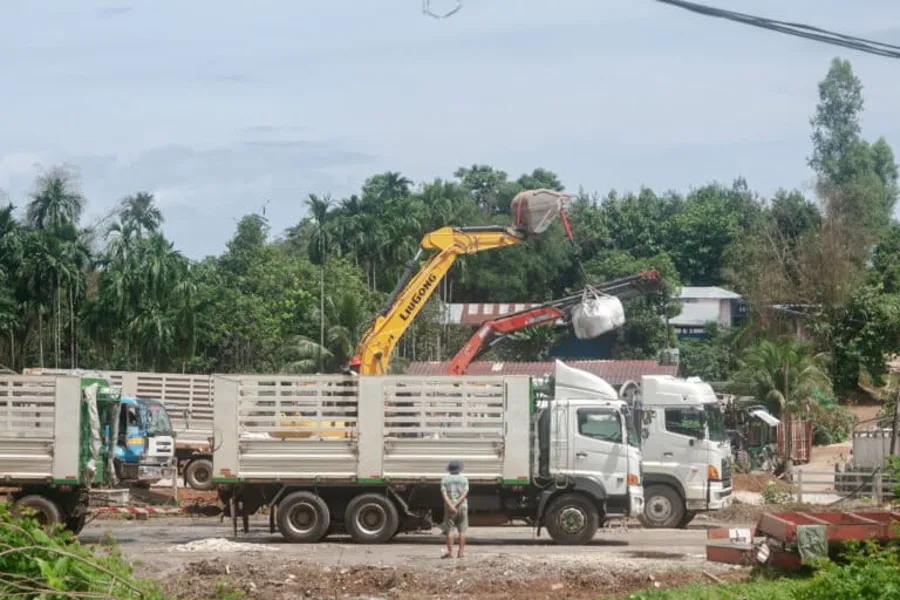
UMPHANG, Thailand — At 8 a.m. on June 26, at least 13 double-trailer trucks were lined up at the Pheung Khleung border crossing in northern Thailand — one of the few places where minerals can be legally transported overland from Myanmar into Thailand. Tensions were running high under the sun. The border gate had not yet opened and irate mineral merchants were yelling at reporters, demanding that no photos be taken. The previous day, the Thai military personnel that oversee the cross-border mineral trade had granted Mongabay permission to document the hundreds of tons of antimony expected to be delivered from Myanmar’s Karen state to Thailand’s Tak province, some 200 kilometers (124 miles) south of the city of Mae Sot. Reporters were forbidden from photographing soldiers’ involvement in the trade or the minerals themselves. It wasn’t until 10 a.m. that the border gates opened and the first truck from Karen state bearing antimony, a silvery mineral used in bullets, bombs, armor, semi-conductors and other defense, aerospace and tech industries, crossed into Thai territory. Bars of processed antimony were hoisted from Myanmar trucks into Thai trucks at the Pheung Khleung border crossing in June 2026. Image by Gerald Flynn / Mongabay. A crane, followed by a parade of battered trucks, rolled over from Myanmar and instantly workers from both sides frantically began attaching hoisting cables to 1-ton bags of what reporters were told was antimony ore and stacked bars of antimony ingot. Drivers sheltered from the heat as bags and bars…This article was originally published on
Mongabay
Follow the story
About this article
- Length
- 256 words · 1 min read
- Published
- October 1, 2026
- Byline
- Gerald Flynn
- Source
- Conservation news