

Ndlovu’s golden days aren’t over — he’s creating new champions

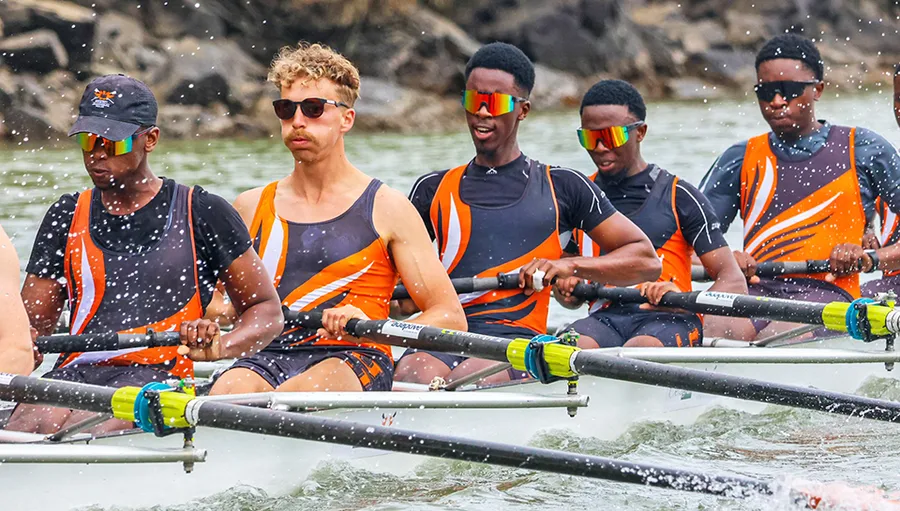
For Sizwe Ndlovu, retirement was supposed to be temporary. After helping South Africa win Olympic gold in rowing at the 2012 London Games, Ndlovu had unfinished business.
Another Olympics beckoned. Another medal was the dream.
But he got injured.
A hip operation ruled him out of the 2016 Games and forced the decorated rower to confront a question athletes eventually have to answer: What happens when your body says it is time to stop?
The answer, unexpectedly, came while he was on crutches.
In 2016, Ndlovu received a call from then-University of Johannesburg coach Dennis Howard asking him to help coach the UJ crew at a September boat race.
“I was like: ‘Listen, I’m on crutches,’” Ndlovu recalls during our interview in Port Alfred on the eve of the RMB Universities Boat race.
Howard’s response was simple: “Don’t worry. The students will carry the boat and even help you into the water.”
Ndlovu agreed, believing he would coach temporarily before returning to training.
UJ won the race.
Then came another phone call. Dennis and his wife Carol were preparing to relocate to Australia and encouraged Ndlovu to apply for the coaching job. What started as a stopgap became a new career.
By 2017, Ndlovu had taken on the combined role of manager and head coach. He has never looked back.
The decision was not easy. Deep down, the Olympic champion craved another shot at glory.
“I still wanted to go. I still wanted to get another medal in the Olympics,” he says.
But eventually he made peace with his decision.
“I convinced myself by saying: ‘But there’s no platinum. It’s gold. And I have it. What more do I need?’”
Almost a decade later, Ndlovu is pursuing a different prize: producing athletes who can go further than he did.
At UJ, his teams have remained among the top performers, while development has become a major part of his coaching philosophy.
For Ndlovu, a young rower finishing third or fourth can represent a victory if that athlete has only been in the sport for two years.
“You are forever developing,” he says.
That philosophy extends beyond the university gates.
Ndlovu remains involved in school development programmes and travels to rural schools to introduce youngsters to rowing — a sport many have never seen, let alone considered playing.
And this is where his Olympic legacy takes on another dimension.
As the only black South African Olympic rowing champion, Ndlovu knows the power of visibility.
He remembers seeing increased interest among black youngsters after the 2012 Games.
But he believes the sport has enormous room to grow.
“They don’t really know what rowing is, so you have to explain to them,” he says.
Unlike football and cricket, rowing is not something most youngsters encounter every weekend on television.
Ndlovu believes exposure can change that.
“Performance does [make an impact]. When they see, kids will see.”
His development work is about making sure they get the chance to see and then giving them somewhere to go.
Schools are the foundation. Universities bridge the gap. High-performance programmes can ultimately feed the national team.
“We are forever developing,” he repeats.
As Ndlovu’s UJ teams participated at the RMB Universities Games campaign, his role is no longer simply about winning races.
The Olympic gold medal is in the history books.
Now he wants to help write somebody else’s.
Follow the story
About this article
- Length
- 561 words · 3 min read
- Published
- October 4, 2026
- Byline
- Matshelane Mamabolo
- Source
- Sunday World