

Bloodshed for Power: the officer who investigated Amin for murder
On October 6, Mohsin Hassan, the son of Mohamed Hassan, the former head of the Criminal Investigation Department [CID] under Milton Obote regime, launched the book Bloodshed for Power: The Assassination of Uganda at the Four Points by Sheraton Kampala. The book is a collection of Mohamed Hassan memoirs. The ceremony attracted several high-profile figures […] The post Bloodshed for Power: the officer who investigated Amin for murder appeared first on The Observer Media Ltd .

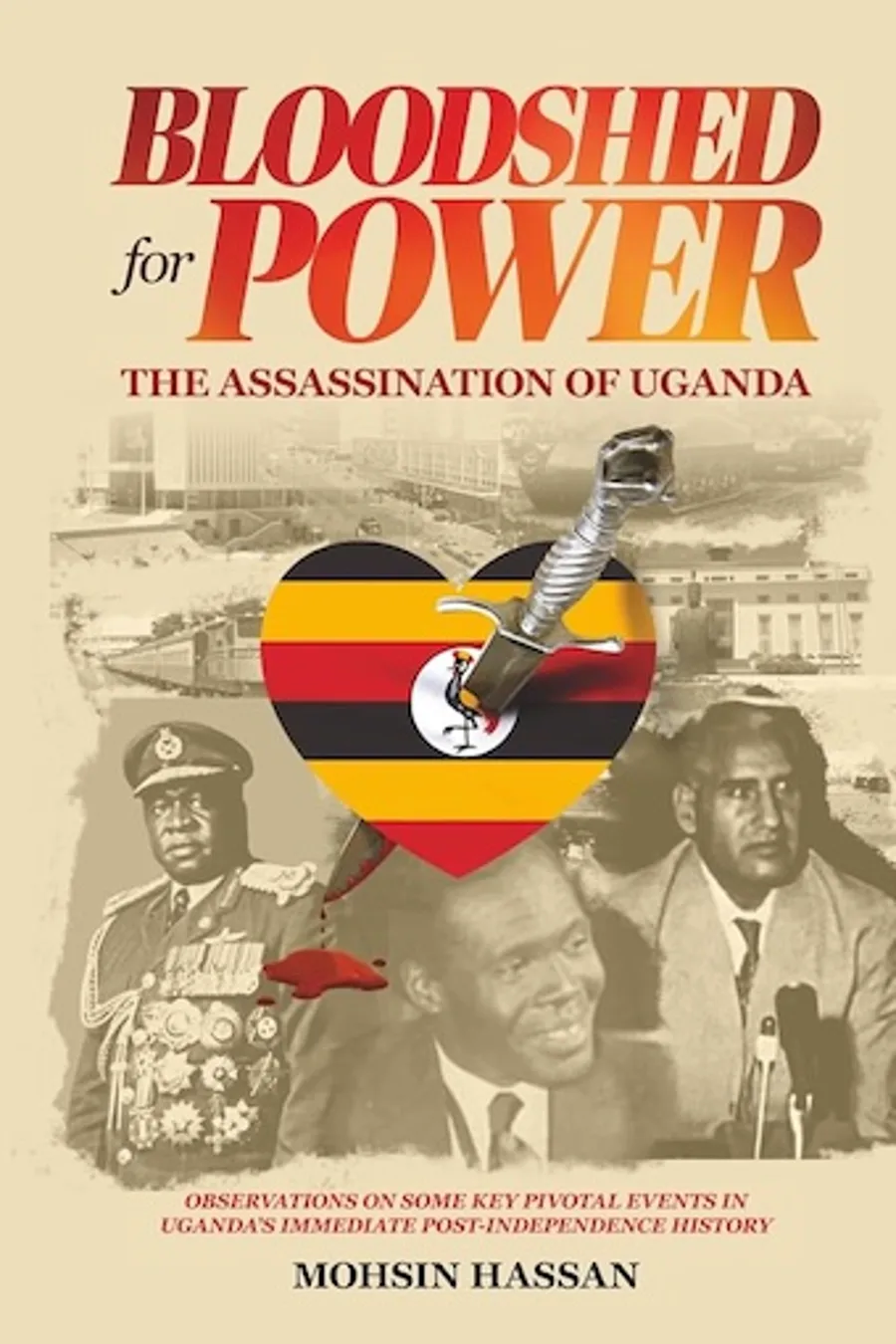
On October 6, Mohsin Hassan, the son of Mohamed Hassan, the former head of the Criminal Investigation Department [CID] under Milton Obote regime, launched the book *Bloodshed for Power: The Assassination of Uganda *at the Four Points by Sheraton Kampala.
The book is a collection of Mohamed Hassan memoirs. The ceremony attracted several high-profile figures but as Geofrey Serugo writes, it is the chilling revelations of brutality that captivate a reader.
Mohamed Hassan was a product of the partition, the breaking up of India into Hindu India and Muslim Pakistan in 1947. As a Muslim, he ended up in the new Pakistan. After leaving the sub-continent for Africa, and following an unhappy period in a racially-prejudiced Kenya of the time, he ended up in Uganda, in the police force.
A meteoric rise through the ranks resulted in his becoming head of the Criminal Investigation Department (CID). Inevitably, this ensured that he became directly and personally involved in some of the more high-profile cases of the day.
When the murder of a senior army officer and his naked wife was linked to a power struggle with one of his subservient soldiers, Hassan was called in to investigate. It was here that his troubles were to begin.
The prime suspect was an up-andcoming young army officer called Idi Amin Dada, a man who was to become globally infamous for his ruthless brutality. Amin came to power as president in 1971, as a direct result of the murder of the brigadier, and immediately started to remove any and all stumbling blocks to his quest for total authority.
It was only a matter of time before the man who knew all about his suspected involvement in murder would become the main focus of his attention.
This is the extraordinary story of how one man’s dedicated adherence to the rules and refusal to abrogate his responsibilities led to his imprisonment, appalling torture and summary execution without trial. Dubbed Bloodshed for Power: The Assassination of Uganda, the book’s title is, I hope, apt; for Uganda’s post-independence history is indelibly littered with bloodshed, murder and massacres.
Mohsin describes the increasingly rapid slide into anarchy that culminated in unimaginable barbarity and savagery during Idi Amin’s reign of terror. The sadistic and incomprehensible manner of the killings, torture, and abuse of human rights and dignity all bear testament to the levels of sheer depravity that man can descend into.
He entails the killing of Brigadier Okoya and his wife, Anna, and what was arguably the pivotal point at which Uganda’s modern history was to change forever.
“My father, together with his Ugandan colleagues SSP Wauyo and ASP Ochungi, investigated the case and gathered overwhelming evidence linking Idi Amin to the murder,” Mohsin says.
He says this proved to be his father’s fatal undoing, leading to his brutal treatment and untimely demise at the hands of Amin and his murderous regime thugs. Mohsin says it was a direct consequence of this double murder that, once the police investigations had been concluded, Amin realised that he was likely to face criminal prosecution and, if found guilty, would be facing the gallows.
The book lists over 80 people who were assassinated during Amin’s regime, including, former Chief Justice Ben Kiwanuka and Archbishop Janani Luwum. Mohsin says in an act of absolute self-preservation, Amin moved expeditiously and decisively.
With tacit moral and practical support, as well as inarguable encouragement from both the Israelis and the British, he planned and executed his coup d’état, ousting Milton Obote and replacing him as president of Uganda.
“It is the author’s contention that had Amin not murdered Brig Okoya, there would not have been any need for a criminal investigation. I am convinced we would not then have witnessed all the killings, abuses of human rights and the total disintegration of the economy. That one murder fundamentally changed everything, forever,” Mohsin said.
On numerous occasions, Hassan encountered Amin in his official capacity. These ultimately cost him his life in the gruesome and brutal massacre at Mutukula, which was then a small, sleepy and otherwise unremarkable town straddling the Uganda-Tanzania border.
Even as a man of honour, with high moral principles and values, Hassan could still have escaped into exile shortly after the Amin coup.
However, despite suggestions from several close friends and colleagues that he should leave the country, he desisted from doing so, claiming that he had not done anything wrong, was a mere civil servant, not a politician, and hence held no grudge against Amin.
“It still baffles me and my family how his naivety in this particular situation overcame logical reasoning and resulted in his suffering, torture and ultimate death.”
At the time of Amin’s takeover, Hassan’s family was living in the United Kingdom and this saved them from becoming victims of Amin’s atrocities. Following his death, Hassan’s wife abruptly started working on the shop floor in a factory to make ends meet.
Mohsin who had just been admitted to the College of Law in Lancaster Gate, London, dropped out to get a job and fend for his family as well.
“I had started studying law with the aspiration of becoming a solicitor or a barrister. The whole process was due to be a five-year affair. I had only just climbed the first rung of the long ladder when calamity befell us with my father’s death,” Mohsin said.
“My mother asked me to sacrifice my career to enable my siblings to complete their schooling. I acquiesced, seeing no other options. My mother did, however, encourage me to undertake part-time studies, and I completed my higher education with a diploma in Business Administration. My siblings went on to qualify too, accomplishing university degrees and then pursuing successful careers,” he said.
Following Hassan’s death, family solicitors in London, who were handling his probate in Uganda, received a letter from the Administrator General confirming that he was holding a substantial sum of Shs 200,000 as pension, gratuity and other benefits.
UK solicitors tried following up on the matter, but they were met with a wall of silence and the family never received any of their father’s hard-earned money. His home in Kampala was ransacked and everything they owned there was lost forever.
Mohsin’s mother met Obote following the fall of Amin’s government. At the outset of the meeting, Obote expressed his sincere condolences about Hassan’s death, to the extent of castigating himself for indirectly being the cause of his demise.
He then proceeded to pronounce that he was issuing directives that the late Hassan’s sole property be returned immediately to his wife and that she be given an additional house as a gift from the government, for her to reside in for the rest of her days.
He ordered the payment of his pension and gratuity, but before the family could receive it, Obote’s government was toppled. The family later repossessed the property.
**TESTIMONY **
Prof Charles Kwesiga was among those present at the launch and recounted his harrowing experience in detention under former Amin, describing the arrests, torture and mass killings that claimed the lives of hundreds of detainees at Mutukula Military detention camp in 1971 and 1972.
Kwesiga, who was among 80 men arrested on February 4, 1971, said the ordeal began shortly after Amin seized power in a military coup on January 25, 1971, when officials from the President’s Office were summoned to Republic House, now Bulange, only to be informed that all men were under arrest.
Kwesiga said the detainees were taken to Luzira Upper Prison, where they spent almost 11 months under harsh conditions before being transferred to Makindye Military Police Quarters and later Mutukula.
The professor recounted how detainees attempted to devise a plan to create confusion and escape so they could inform the outside world about the killings. However, the plan was frustrated after soldiers separated them and continued executing prisoners.
He described the killing of detainees in groups, including an incident in which soldiers opened fire on ten men who had been ordered out of a ward. He also recalled the killing of Mohamed Hassan, whose body was later exhumed from a mass grave and flown to Kampala on the orders of Lt Col Hussain Marella, one of Amin’s trusted officers.
Kwesiga said the remaining 64 detainees were eventually informed that they were free, although many initially doubted the announcement after months of living in fear of execution.
They were taken back to Kampala and released on February 9, 1972, but his freedom was short-lived as Amin’s operatives later hunted for him because, he said, the story of Mutukula was not supposed to be told. With help from friends and former schoolmates, Kwesiga went into hiding before escaping to Kenya in May 1972.
The book is available at Aristoc Booklex for Shs 100,000
The post Bloodshed for Power: the officer who investigated Amin for murder appeared first on The Observer Media Ltd.
Follow the story
About this article
- Length
- 1,484 words · 7 min read
- Published
- October 17, 2026
- Byline
- GEOFREY SERUGO
- Source
- The Observer Uganda