

Google Fitbit Edge vs Fitbit Air
Which fitness tracker should you buy?

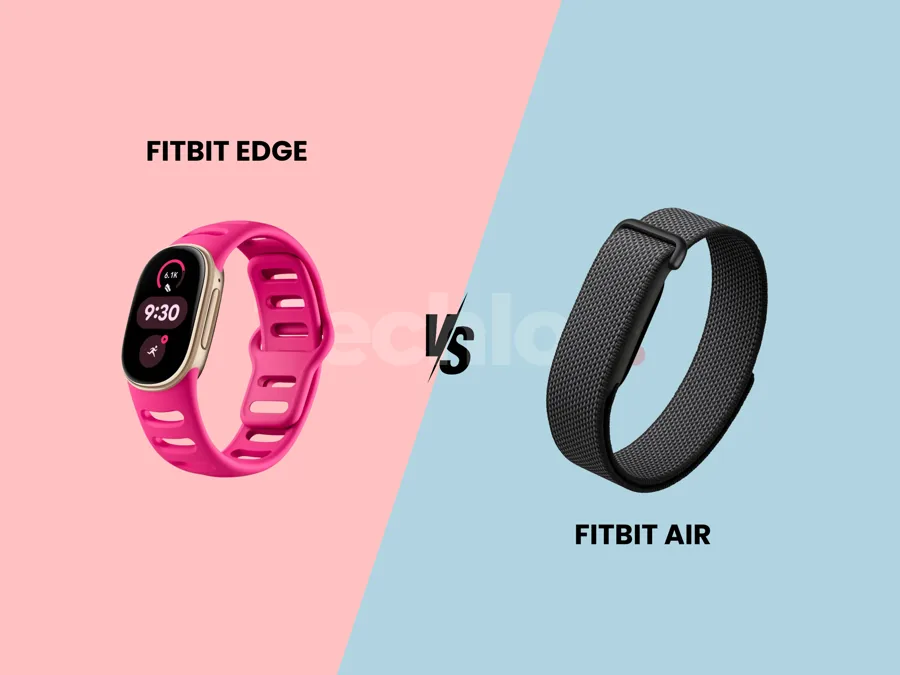
Choosing a fitness tracker depends on how much information you want at a glance. Some people prefer a simple band that tracks their health without a screen, while others want to see workout stats, check health readings and access more tools directly from their wrist.
Google's Fitbit Air and Fitbit Edge cater to these two preferences. The Air costs $99.99 and focuses on screen-free health tracking, while the Edge costs $179.99 and includes a colour display, built-in GPS, ECG support and additional workout features. Both promise up to seven days of battery life, but the extra $80 could make a difference depending on how you plan to use them.
Here's how the two trackers compare.
Apple HomeView vs Amazon Echo Show 11: Which Should You Buy?Has Apple's long-awaited smart display done enough to dethrone Amazon's smart home veteran?
/1. Design and Display
The biggest difference between these trackers is what you see when you look at your wrist.
The Fitbit Edge has a 1.34-inch colour AMOLED display with customisable watch faces, workout information and glanceable health metrics. A physical side button lets you control certain functions without relying entirely on the touchscreen. You can also check notifications, view weather information, control music and use Google Maps.
Its aluminium housing measures approximately 11.5mm thick, while the tracker weighs 17.7g without its band. Google also offers interchangeable straps, including a Stephen Curry Special Edition.
The Fitbit Air takes the opposite approach. It has no screen, so you won't be checking your heart rate, workout progress, or notifications directly on the device. Instead, your data appears in the Google Health app on your phone.
That makes the Air less distracting and better suited to people who want a tracker they can wear throughout the day and night without constantly looking at it.
💡
**Winner: **
Fitbit Edge. Its screen makes workout information and everyday controls easier to access.
/2. Health Tracking
Both trackers monitor everyday health metrics, including heart rate, blood oxygen levels, and skin temperature. They also track activity and sleep, helping you identify patterns over time.
The Fitbit Edge adds more advanced health-monitoring hardware. It supports an ECG app in selected countries, allowing users to take certain heart-rhythm assessments directly from the wrist. It also offers high and low heart-rate alerts and Google's Health Guardian features, which can track trends related to blood pressure and insulin resistance.
These features are intended to provide general wellness information, not diagnose medical conditions. The availability also varies by region.
The Fitbit Air is more focused on passive monitoring. You can wear it throughout the day and night to collect health and activity data without needing a display or additional controls.
For people who mainly want to monitor their daily movement, heart rate, and sleep, that may be enough. But anyone interested in ECG assessments and the Edge's additional health features has more reason to pay extra.
💡
**Winner: **
Fitbit Edge. It offers a broader set of health-monitoring tools, although some features depend on regional availability and a Google Health Premium subscription.
/3. Workout Tracking and GPS
If you regularly run, cycle or exercise outdoors, the Fitbit Edge has a clear advantage.
Its built-in GPS lets you track outdoor routes without carrying your phone. Google says the system offers up to 40% better tracking accuracy than previous generations of its trackers. The Edge also supports more than 50 exercise modes, with workout metrics displayed directly on the screen.
It can automatically recognize up to 100 activities, including walks, runs, and rides, so you can still record movement when you forget to start a workout manually.
The Fitbit Air is designed for simpler activity tracking. It monitors movement and exercise, but without a display or built-in GPS, it doesn't offer the same on-wrist workout experience. You'll rely more heavily on your phone and the companion app to review your data.
For casual walkers or people who mainly want to track daily activity, the Air can do the job. However, runners and outdoor fitness enthusiasts are likely to appreciate the Edge's additional controls and location tracking.
💡
**Winner: **
Fitbit Edge. Built-in GPS, on-screen workout metrics and more extensive exercise modes make it the stronger option for structured training.
Image Credit: Techloy.com
/4. Battery Life
Neither tracker requires daily charging under Google's stated battery-life estimates.
The Fitbit Edge promises up to seven days of battery life on a single charge. A five-minute top-up can provide up to a day of use, while a full charge takes around 90 minutes. Actual battery life depends on settings and usage, and enabling features such as an always-on display can reduce it.
The Fitbit Air also offers up to seven days of battery life. Its screen-free design means there's no display to manage, making it a straightforward option for people who want continuous tracking with minimal interaction.
Both devices support fast charging, so a short charging session can help when you're running low.
💡
**Winner: **
Draw. Both promise up to a week of use. Your actual results will depend on how you use each tracker, especially the Edge's display and GPS.
Follow the story
About this article
- Length
- 849 words · 4 min read
- Published
- October 15, 2026
- Byline
- Ogbonda Chivumnovu
- Source
- Techloy