

The 9.3 Million Nobody Owns
While Nigeria's politicians have been busy counting themselves, millions of young Nigerians have quietly acquired the power to count them. The post The 9.3 Million Nobody Owns appeared first on Channels Television .

THE SIGNAL
Nigeria’s politicians have spent much of the past year counting.
Governors. Senators. Defectors. Endorsements. States they claim to control and political structures they insist they can “deliver.” But while the politicians were counting one another, 9.3 million young Nigerians quietly joined the voters’ register. That may prove to be the more important number.
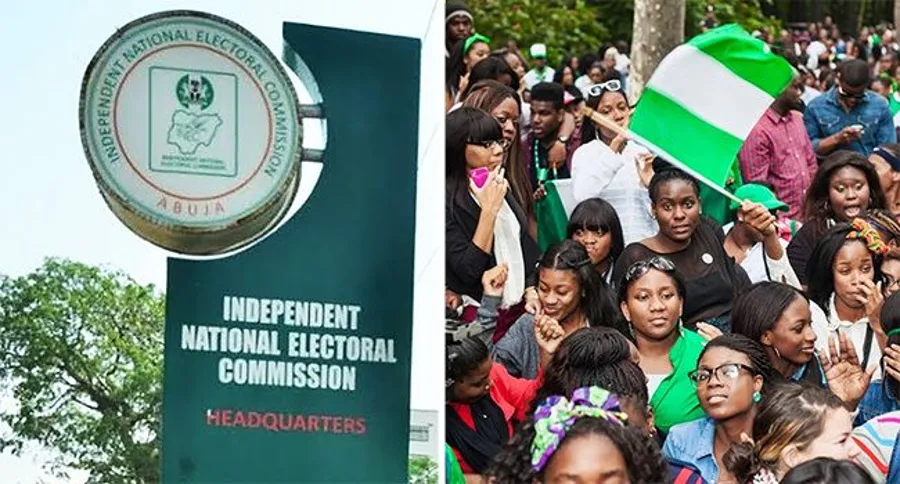
INEC says 9,324,349 young Nigerians were newly registered during the 2026 Continuous Voter Registration exercise. Nine-point-three million. Not a rally crowd. Not social-media followers.
Not an opinion poll. But Potential voters. And with the presidential election approaching, they represent something every campaign desperately wants, but none can yet claim: an enormous pool of political possibility.
The temptation, of course, will be to colour them immediately. Obi? Atiku? Tinubu? Makinde?
Not so fast. Young Nigerians are not a political party. A 23-year-old graduate searching for work in Lagos does not necessarily see Nigeria through the same political lens as a young farmer outside Katsina, an apprentice in Aba, a trader in Kano or a first-time voter in Makurdi. They may share frustration. They may share ambition. They may even share anger. But shared emotion does not automatically produce a shared ballot. That is why 9.3 million registrations are not yet 9.3 million votes. And that may be the first lesson of this week’s Political Signals: The youth have entered the room. Nobody should presume to know where they will sit.
TINUBU’S BRIDGE: FROM REFORM TO PROSPERITY
President Bola Tinubu chose Independence Day to tell Nigerians that the painful surgery is ending.
His message, stripped to its political essentials, was simple: We have repaired the foundations. Now prosperity must follow.
“The emergency treatment is over,” the President declared, presenting an economy that is growing above four per cent, with moderating inflation, stronger reserves, a steadier foreign-exchange market and rising non-oil exports.
On a spreadsheet, the argument is becoming easier to make. At the kitchen table, it remains harder.
And elections are not decided on spreadsheets. They are decided in homes where the price of rice matters more than the level of foreign reserves; in markets where traders measure economic recovery by what customers can afford; and among young graduates for whom GDP growth means little if the next job application produces another silence. That is the bridge Tinubu must cross before January: from macroeconomics to the marketplace.
The CBN’s recent reset gives the government more ammunition. The benchmark interest rate has fallen from 26.5 per cent to 23 per cent. Inflation has moderated. GDP growth has strengthened.
The numbers are beginning to tell one story. But are Nigerians’ pockets telling the same story?
That is where economics becomes politics.
ATIKU: LOOK BEYOND THE NUMBERS
Atiku Abubakar is effectively asking voters to look away from the dashboard and through the windscreen. His Independence Day response focused on poverty, insecurity, purchasing power and the cost of living. And so the economic argument ahead of 2027 is becoming sharper.
Tinubu’s case is increasingly: The reforms are beginning to work. The opposition’s answer is: Then why can’t Nigerians feel them?
That may become one of the defining arguments of this election. Because governments campaign with statistics. Voters often vote with experience. And somewhere between those two lies January 16.
THE YOUTH METER STARTS TICKING
This is where those 9.3 million registrations become politically fascinating. Imagine the campaign through the eyes of a 25-year-old Nigerian. He hears that GDP is growing. But can he find work? She hears that inflation is falling. But has the food bill fallen? They hear that the naira is more stable. But can they start a business, pay rent, travel safely, obtain affordable credit, or imagine a future that does not begin with a visa application?
These are not abstract policy questions anymore. They are campaign questions. And no amount of dancing at youth rallies will answer them. The candidate who wants young voters will have to do more than appear young at heart. He will have to make the future believable.
THEN THERE IS THE GROUND GAME
There is another number worth remembering. Four out of five. That is the APC’s score from the recent legislative by-elections across Gombe, Kano, Bauchi and Delta. Five constituencies cannot forecast Nigeria. But elections leave footprints before they arrive. And these footprints tell us that organisation still matters. Social media can create momentum. Crowds can create spectacle. Opinion polls can create headlines. But Nigerian elections are eventually won and lost in less glamorous places: polling units, wards, local governments, collation centres. This is where enthusiasm must become organisation. Where supporters must become voters. Where popularity must acquire agents, logistics, lawyers, transport, data and discipline. The APC possesses a formidable political machine. The opposition’s challenge is not simply to demonstrate that Nigerians are unhappy. It must prove that unhappiness can be organised. Because anger that stays at home on election day is politically invisible.
WELCOME TO THE WIKE EXPERIMENT
And then there is Nyesom Wike. Nigeria’s political laboratory rarely lacks an experiment, and the FCT Minister may now be conducting one of the most interesting. Wike has publicly staked his political reputation on delivering Rivers State and the FCT for Tinubu. But his emerging cross-party “Rainbow Coalition” raises a larger question. Can you tell voters: Tinubu for President — but someone else further down the ballot? In other words, can political loyalty be sliced? Can a governor, minister, or godfather still “deliver” voters wholesale? Or has the Nigerian voter become increasingly comfortable shopping à la carte? President from Party A. Governor from Party B. Senator from Party C. If ticket-splitting grows, one of Nigerian politics’ oldest assumptions may need rewriting: that politicians own electoral territories. Rivers and the FCT could tell us a great deal about whether that assumption still holds.
With January approaching, five needles on the Political Signals dashboard deserve watching.
The Youth Meter. Registration has surged. Turnout is the next test.
The Pocketbook Meter. If inflation continues falling, when does statistical relief become household relief?
The Ground-Game Meter. Can opposition enthusiasm build an electoral machine capable of matching the APC ward for ward?
The Wike Meter. Can political influence still be transferred from politician to voter on command?
The Trust Meter. As INEC preparations accelerate, confidence in the electoral process itself will become increasingly important.
Those five indicators may tell us more about January than another photograph of politicians changing party scarves.
For months, Nigeria’s political class has behaved as though the 2027 election were a giant chessboard. Move a governor here. Capture a senator there. Flip a state. Build a coalition.
Break another coalition. Count the pieces.
But elections have an inconvenient habit of reminding politicians that voters are not chess pieces.
They move themselves. And 9.3 million newly registered young Nigerians have just moved onto the board. Nobody owns them. Not Tinubu. Not Atiku. Not Obi. Not Makinde. Not a governor. Not a godfather. They will have to be persuaded. They will have to believe that voting is worth their time.
And then they will actually have to turn up.
So perhaps the most important political question this Friday is not which politician has acquired another governor. It is much simpler. Who is acquiring voters? Because while Nigeria’s politicians have been busy counting themselves, millions of young Nigerians have quietly acquired the power to count them.
That is the Signal.
The post The 9.3 Million Nobody Owns appeared first on Channels Television.
Follow the story
About this article
- Length
- 1,237 words · 6 min read
- Published
- October 3, 2026
- Byline
- Alexander Okere
- Source
- Channels TV