
INEC Has Fixed The Ballot, It Has Not Fixed The Opposition

AI summary
THE SIGNAL
INEC has settled the formal presidential field for the January 16, 2027 election. It has not settled the political contest behind it.
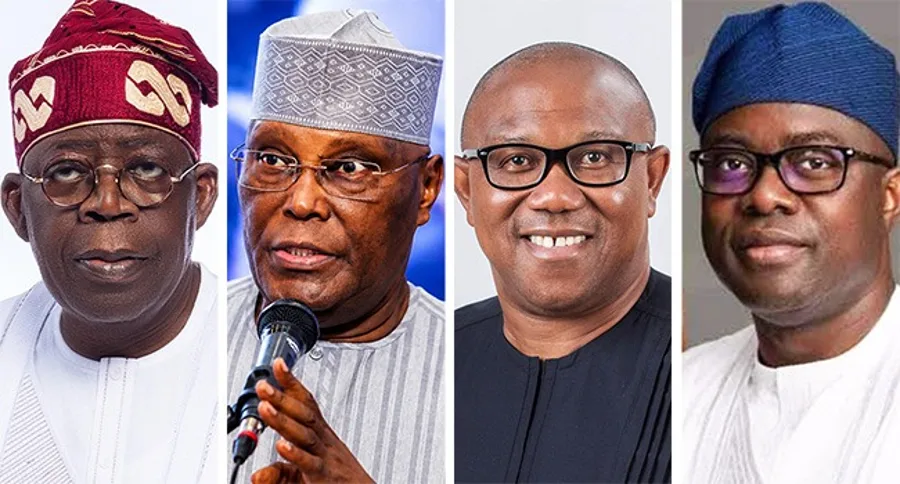
The commission has confirmed 18 presidential candidates and their running mates, including President Bola Tinubu of the APC, Atiku Abubakar of the ADC, Peter Obi of the NDC, and Seyi Makinde of the APM.
President Bola Tinubu of the APC, Atiku Abubakar of the ADC, Peter Obi of the NDC and Seyi Makinde of the APM
That gives voters a clearer list of names. But it also exposes the opposition’s central problem: several of its most prominent figures now have separate tickets, separate parties and separate campaign interests.
The nomination process has produced candidates. It has not produced a common strategy.
The question is therefore no longer simply who has secured a presidential ticket. It is whether politicians who have already been formally presented to the electorate can still coordinate, negotiate or reconsider their positions before voting day and whether they can do so without fracturing their parties and support bases.
That tension is now visible in the renewed contact between Peter Obi and Seyi Makinde.
And that is today’s Political Signal.
THE OPPOSITION’S NEW MOVEMENT
The most significant recent development is the renewed engagement between Obi and Makinde.
The two politicians have appeared together publicly in recent days, including at the inauguration of Makinde’s APM presidential campaign office.
Their contact matters because it brings together two figures with different political assets. Obi retains a strong national profile following his performance in the 2023 presidential election. Makinde is one of the country’s most prominent governors, with influence that extends beyond his immediate party structure.
Both men have played down suggestions that a formal alliance has already been reached. They have described their engagement as consultations and discussions around national political interests.
That distinction matters. A meeting is not an alliance. A public appearance is not a coalition. Consultations do not automatically lead to a joint ticket or a common campaign.
But the timing is significant.
INEC has now confirmed Obi and Makinde as presidential candidates of different parties. Their public engagement therefore shows that the formal nomination process has not frozen the opposition’s political relationships. The ballot may list them separately, but the politicians and networks behind those tickets are still testing whether they can work together.
The conversation is also moving beyond party labels. The relevant question is not only whether the APC, ADC, NDC or APM can campaign independently, but whether the personalities and networks associated with them can find enough common ground to coordinate their efforts.
That does not make a coalition.
But it does tell us something:
The opposition’s political map is still being redrawn.
THE ATIKU QUESTION HAS NOT DISAPPEARED
Atiku remains the presidential candidate of the ADC.
Obi remains the presidential candidate of the NDC.
Makinde remains the presidential candidate of the APM.
All three are officially recognised candidates, with parties that have invested in their nominations and supporters who have begun to identify with their campaigns.
That raises the political cost of any future adjustment.
Before the final list was published, cooperation could be discussed largely as a question of who might eventually emerge as the candidate of a broader opposition arrangement. Now, any such move would require existing candidates and parties to reconsider positions that have already been formally presented to the electorate.
A candidate who withdraws or supports another would have to manage the expectations of party members, campaign officials, donors, regional supporters and voters who may already have committed themselves to that candidacy.
The question becomes:
Who is prepared to change position, and what would that change require?
It would require agreement on the candidate, the platform, the campaign structure and the distribution of political influence after the election. It would also require each politician to persuade supporters that cooperation offers a better chance of victory than a separate campaign.
That is a difficult calculation.
Each candidate has a reason to believe that his own platform can attract a significant share of the vote. Each also has an established political identity and a constituency that may resist any decision to step aside.
This is why the opposition question remains unresolved. The challenge is not simply finding a candidate with national appeal, but persuading other candidates and their supporters to accept that person as the most viable vehicle for defeating the incumbent.
AND THEN THERE IS WIKE
The political picture is further complicated by the position of Nyesom Wike.
FCT Minister Nyesom Wike
The FCT Minister has again made clear that he supports President Tinubu’s re-election while insisting that the PDP can continue to contest governorship, National Assembly and State House of Assembly elections.
His position highlights the difference between presidential politics and other levels of electoral competition.
A politician or party may support one candidate for president while continuing to contest against that candidate’s party in legislative and subnational elections. Cooperation at the presidential level therefore does not necessarily require a complete alliance across every contest.
Wike has also rejected the suggestion that his so-called “rainbow coalition” is an arrangement with the APC. He has described it instead as a vehicle for mobilising support for Tinubu across political parties.
Whether or not that distinction satisfies other political actors, it reflects the fluid nature of the 2027 contest.
Political alliances are not necessarily following party boundaries.
Candidates may compete against one another at one level while political actors within their parties support different candidates at another. Party members may campaign for official candidates in some constituencies while backing a different presidential candidate, and political leaders may maintain their party identities while building informal networks across party lines.
Nigeria’s voters have demonstrated this kind of split-ticket behaviour before. Support for a presidential candidate does not necessarily translate into support for the same party’s candidates in governorship or legislative elections.
The labels on the ballot will therefore not tell the entire story of the political alignments behind them. Formal party structures will matter, but so will personal networks, regional calculations, local alliances and the influence of individual political leaders.
WHAT HAS ACTUALLY CHANGED?
Three things have changed.
First, the formal field is now clearer. INEC has published the presidential candidates and their running mates, giving the electorate a more definite picture of the contest.
Second, the publication of the list has raised the stakes for any future political adjustment. Candidates and parties must now weigh the organisational and political costs of campaigning separately against the possible benefits of a coordinated approach.
Third, political loyalties are becoming increasingly fluid across parties, personalities and levels of government.
The result is a contest in which formal party structures and informal political relationships may not always point in the same direction.
The next phase will therefore be less about announcing alliances than about determining whether political cooperation can produce an actual electoral structure.
A serious arrangement must be able to coordinate campaign offices, mobilise voters, raise funds, manage competing interests and present a consistent message across the country.
Without that structure, cooperation may remain symbolic.
With it, the opposition could begin to look like a serious national alternative.
THE QUESTION TO WATCH
Can the opposition convert conversations into coordination?
That means agreement on:
leadership,
platform,
party structure,
running mates,
resources,
campaign messaging,
voter mobilisation,
and ultimately who campaigns for whom.
It also means resolving what happens to the existing presidential candidates and their parties.
Would one candidate step aside? Would the parties adopt a common platform? Would the arrangement be formal or informal? Would supporters accept it? And could the coalition remain united after the election?
These questions matter because political actors may agree that the incumbent should be challenged while still disagreeing over who should lead that challenge. They may share concerns about the government but differ on economic policy, regional priorities, party structure and the distribution of power.
Until those issues are resolved, every new meeting is a signal — but not yet a settlement.
WHAT TO WATCH NEXT
Watch the Obi-Makinde relationship.
The key issue is whether their engagement remains a series of consultations or develops into a more defined political arrangement. The strongest evidence will come from joint statements, coordinated activities, shared policy positions and the response of their party structures.
Watch whether Atiku remains central to any proposed opposition arrangement.
His position as the ADC presidential candidate gives him a formal platform and a national political profile. Any serious opposition strategy would have to account for his candidacy, his supporters and the organisational strength of the ADC.
Watch whether the ADC can accommodate wider opposition interests.
Its ability to serve as a political home for different groups may determine whether it becomes the centre of a broader arrangement or remains one of several competing platforms.
Watch Makinde’s political network and whether his consultations produce a structure beyond Oyo State.
His influence will be measured not only by personal popularity but also by his ability to connect with political actors, voters and organisations across the country.
And watch Wike’s political network as the campaign develops.
His support for Tinubu could influence calculations within the PDP and other opposition circles. It may also reinforce the importance of informal networks that operate across party lines.
Most importantly, watch what politicians do, rather than what they say.
Between now and January, there will be declarations of unity, appeals for cooperation and assurances that discussions are progressing.
The evidence will be in the alliances that translate into organisation, campaign structures, voter mobilisation and votes.
BOTTOM LINE
INEC has fixed the ballot. The opposition has not yet built a campaign.
The decisive test is whether its leaders can produce one candidate or agreed strategy, a shared platform, coordinated structures, joint mobilisation and disciplined public messaging.
Until those things are visible on the ground, opposition unity is only talk.
That is today’s Political Signal.
EDITORIAL NOTE
Political Signals is an independent weekly political analysis produced for Channels Television. It examines political developments, personalities and electoral trends without endorsement of any political party or candidate. Its assessments are based on publicly available evidence and may change as events and evidence develop.
The post INEC Has Fixed The Ballot, It Has Not Fixed The Opposition appeared first on Channels Television.
Follow the story
About this article
- Length
- 1,714 words · 9 min read
- Published
- September 16, 2026
- Byline
- Khadijat Lawal
- Source
- Channels TV